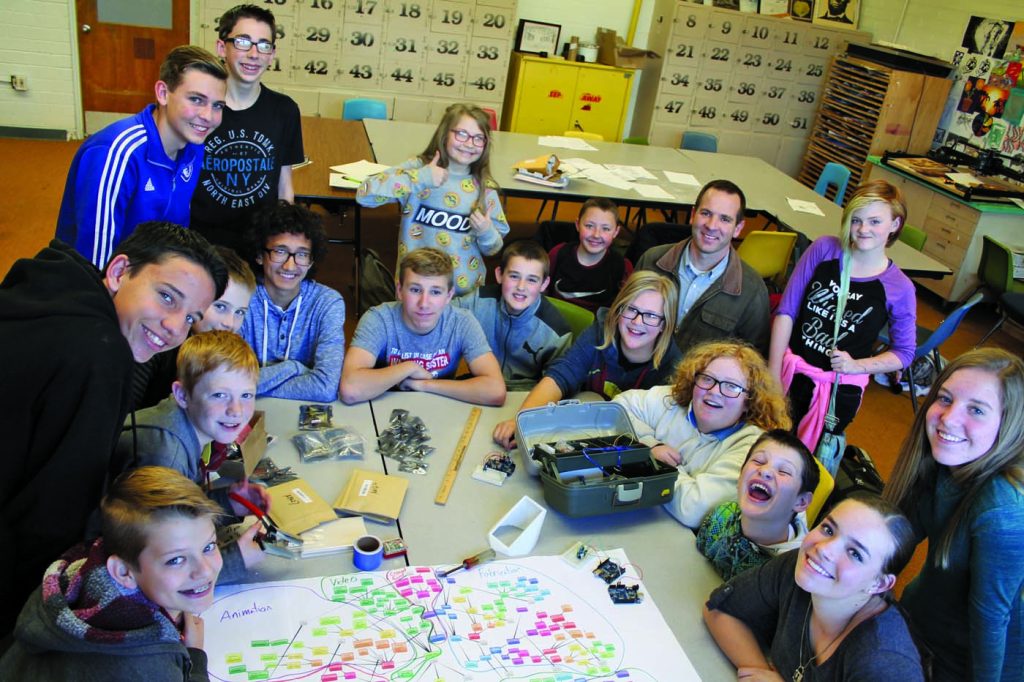
Snowflake Junior High School has been selected as one of three national winners in the Samsung Solve for Tomorrow science and technology contest. The prize includes $150,000 worth of technology products such as LED TVs, laptops and tablets.
As part of the competition, SJHS also won $20,000 to donate to a community nonprofit organization of its choice. The school’s donation will go to the Phoenix Herpetological Society to help support wildlife and science education programs.
Samsung also named SJHS as this year’s Community Choice winner for securing the most public votes for its team on social media. As the Community Choice winner, SJHS students won an additional $20,000 in technology for their school.
SJHS emerged from thousands of public school entries from across the country to take home one of three top prizes for its innovation: a low-cost wildlife detection system that will warn drivers when large animals like elk and deer approach the road. The winners were named after finalists presented their projects to a panel of judges.
The SJHS project addresses the need for a low-cost system that can be deployed on a widespread, connected basis. Collisions with large animals cause more than 150 deaths per year and countless auto accidents.
A video on the project is posted online at www.samsung.com/solve.