/wp:paragraph
wp:paragraph
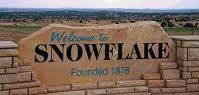
SNOWFLAKE — “Everyone knows that Arizona’s population is going up, but when you look at the proportion of people in Arizona who are hunting, you can see our numbers are going down for hunting and fishing as well,” said Diane Tilton, information and education program manager with Arizona Game and Fish Department (AZGFD), at the Snowflake Town Council meeting on Dec. 4.
/wp:paragraph
wp:paragraph
“Looking at trends over time, the highest one now is wildlife watchers, whether it’s backyard birding or making the drive out to find antelope,” continued Tilton. “People just want to see wildlife. Ninety percent of Arizonans agree that wildlife contributes to their quality of life.”
/wp:paragraph
wp:paragraph
AZGFD, which manages more than 800 species of wildlife in Arizona as well as off highway vehicles and boating, is not funded by state tax dollars. Rather the $120 million yearly budget comes almost entirely through discretionary funding, which is mostly from hunters and anglers as well as the federal excise tax on hunting and fishing equipment.
/wp:paragraph
wp:paragraph
Tilton also noted that in a national survey done in 2011, it was found that 786,000 sportsmen from across the country contributed $1.2 billion to the Arizona economy.
/wp:paragraph
wp:paragraph
But in the last few years there has been a growing shift away from hunting and fishing. Tilton said, “People are more urbanites with less exposure to nature and wildlife. People are less likely to go outside and it can be expensive to go outside, so our customer base is changing. It used to be that we had to go out and find our own food; now we go to the grocery store and hunt in our video games.
/wp:paragraph
wp:paragraph
“People aren’t hunting like they used to. It isn’t being passed down from generation to generation.”
/wp:paragraph
wp:paragraph
The goal of AZGFD is to find things that are easy to learn, inexpensive and close to home to encourage people to enjoy the outdoors. “This is where community partnerships come in,” shared Tilton, as she gave the example of Patterson Ponds in St. Johns that was recently developed into a Community Fishing Water, where fish are regularly stocked and educational events are held.
/wp:paragraph
wp:paragraph
“A local wildlife manager started working with the Town of St. Johns to implement the community fishing program whose motto is, ‘If people can’t get to the fish, we will bring the fish to the people,’” explained Tilton.
/wp:paragraph
wp:paragraph
Tilton also mentioned the Rocky Mountain bighorn sheep relocation from Morenci into the South Fork of the Little Colorado River near Greer as well as the Wallow burn area near Black River and most recently in the last few weeks some sheep were relocated south of Winslow near Leonard Canyon.
/wp:paragraph
wp:paragraph
In Morenci, the sheep were located on and near the copper mine. “We have the sheep that love the mine and they were getting hit by cars and trucks. Over a 10-year period, there were about 200 sheep deaths on the road, which is dangerous to people and sheep,” said Tilton. AZGFD partnered with the mine and helped to relocate a number of the sheep into Apache and Navajo counties.
/wp:paragraph
wp:paragraph
There’s also a new trout species in Arizona that can be found at Carnero and Becker Lakes in the White Mountains as well as Woods Canyon and Willow Springs Lakes on the Mogollon Rim. Known as the tiger trout, it is a cross between a brown trout and brook trout. Tilton said that while it is a sterile fish, which often forages in shallower water than the rainbow trout and favors clear water over murky or muddy, “it’s a pretty darn fun fish to catch.”
/wp:paragraph
wp:paragraph
AZGFD will continue to host fishing clinics, some that are annual and some that just pop up, to expose people to fishing. “If you come and check in with us that day, there is no need for a fishing license,” said Tilton. “It’s a great way to expose people to fishing.”
/wp:paragraph
wp:paragraph
Tilton reminded everyone of the annual eagle workshop that will be coming up at the end of January at the Nature Center in Lakeside, the Hummingbird Festival at Sipe White Mountain Wildlife Area on the last Saturday in July as well as the Elk Workshop, which is in October.
/wp:paragraph
wp:paragraph
“We just wanted to let you know what we are doing in the communities,” concluded Tilton. “If you have any ideas, give me a call and let’s see what we can do.”
/wp:paragraph
wp:paragraph
Councilman Byron Lewis noted that fishing is good for the economy, when he said, “Give a man a fish and he will eat for a day; teach a man to fish and he buys a boat, motor, krill, rod and more.”
/wp:paragraph