The 1 cent sales tax that has helped keep Little Colorado Medical Center’s emergency room stocked and its delivery rooms open lapsed last Wednesday and it will be at least several months and one election, before any of that money starts flowing again.
Winslow voters approved it in November 2020 as Proposition 426 and the city council enacted it the following March, which levied the additional 1% for five years beginning July 15, 2021, and was set to expire last week.
That reauthorization vote will come on Nov. 3. In an earlier era, it would have come last year, before the lapse and residents would likely never have noticed the seam. But Arizona has spent the better part of a decade pushing municipal elections onto even-numbered years and Winslow no longer has the option of a 2025 ballot. The result is a gap the city could not schedule its way out of and a legal wrinkle with real consequences at the ballot box.
Because the tax will have expired by the time voters see it, the city cannot present it as an extension. It has to be called a new tax. For most people buying groceries or gas in Winslow, nothing about the rate on the receipt will feel new. The levy has been in place, in one form or another for more than two decades. But the wording on the ballot will be different and in a town of roughly 9,600 people where the measure has never been controversial enough to require a campaign, that difference is not nothing.
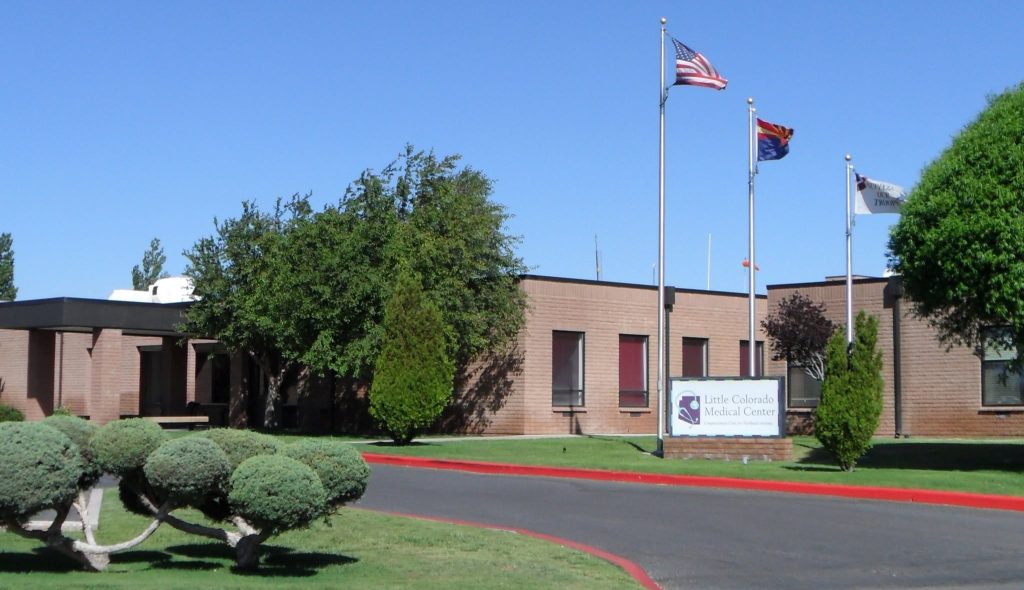
A quarter of the 1% goes directly to Winslow Memorial Hospital, which does business as Little Colorado Medical Center. That earmark is written into the city tax code itself and it runs until the hospital is “sold, transferred or conveyed or no longer necessary to pay operating expenses.” The rest goes to the city.
“The hospital is deeply grateful for the support of the community with this tax,” CEO Travis Udall said. “The tax money goes directly into important equipment and support for our ER and for our floor and OB, to deliver babies. It’s a vital piece of our budget that keeps us stable and strong. We appreciate the support and the trust that the community gives us and we want to honor that. We hope that people would consider voting yes to support this tax for the city, that benefits the hospital greatly.”
LCMC is not a large institution and never has been. It opened in 1954 as Winslow Memorial Hospital. Today it is a 25-bed Critical Access Hospital, a federal designation reserved for small rural facilities more than 35 miles from another hospital, with a Level IV trauma designation and about 75 miles of Interstate 40 between it and Flagstaff.
It is also on a list nobody wants to be on. After the federal budget reconciliation bill passed last summer, an analysis from the University of North Carolina’s Sheps Center identified five Arizona hospitals as vulnerable to closure under the law’s Medicaid changes. LCMC was one of them, alongside hospitals in Page, Bisbee, Nogales and Globe.
The obstetrics unit is where the math gets hardest and where it is hardest everywhere. Since the end of 2020, 139 rural hospitals nationally have stopped delivering babies or announced they will stop by the end of this year, according to the Center for Healthcare Quality and Payment Reform, that’s a 13% contraction. Fewer than half of the country’s rural hospitals, 41%, still offer labor and delivery at all. Births are down, insurance reimbursement rarely covers the cost of a delivery and the round-the-clock call coverage an OB unit requires is the kind of expense that does not scale down.
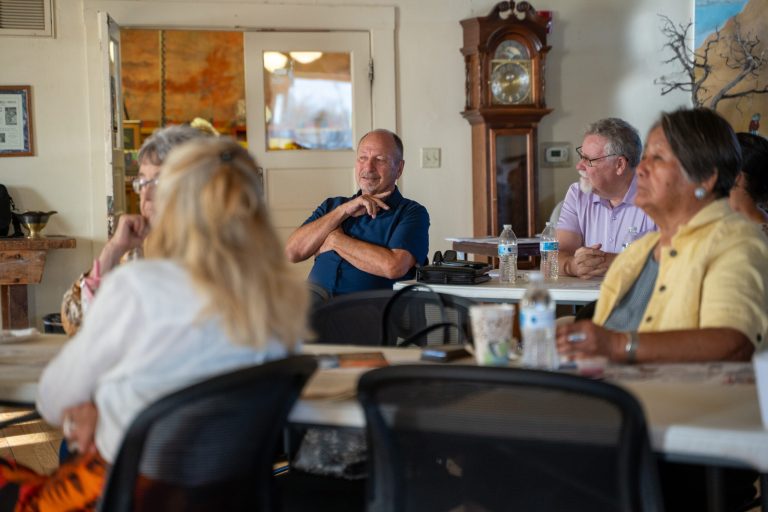
Speaking at a Good Morning Winslow meeting recently, Udall said he has watched expectant mothers travel from farther and farther away to deliver at LCMC, from Show Low, St. Johns and Springerville, as other hospitals in the region trim what they offer. It is a service, he said, that is getting rarer in this part of the state and one he does not want to be forced to cut.
Which is the case the hospital will be making between now and November, on a ballot where the word “new” will be doing more work than it deserves. The city is not allowed to endorse or speak against any matter being voted on by the public but as Udall will point out, he is not under the same restraints and is asking his neighbors to continue to support the hospital in the way they’ve been used to for years.