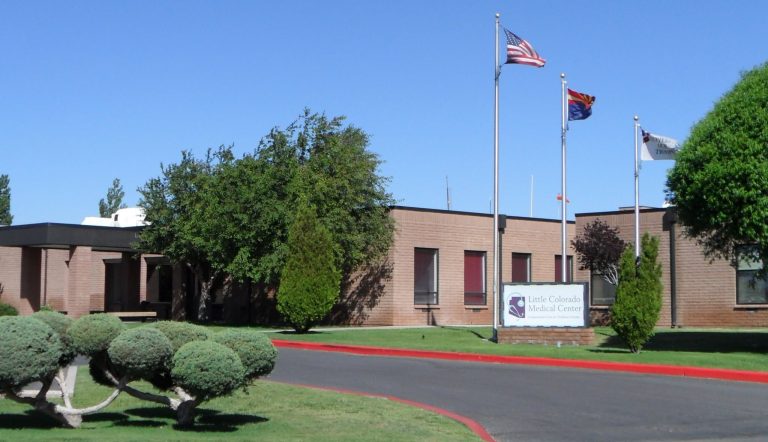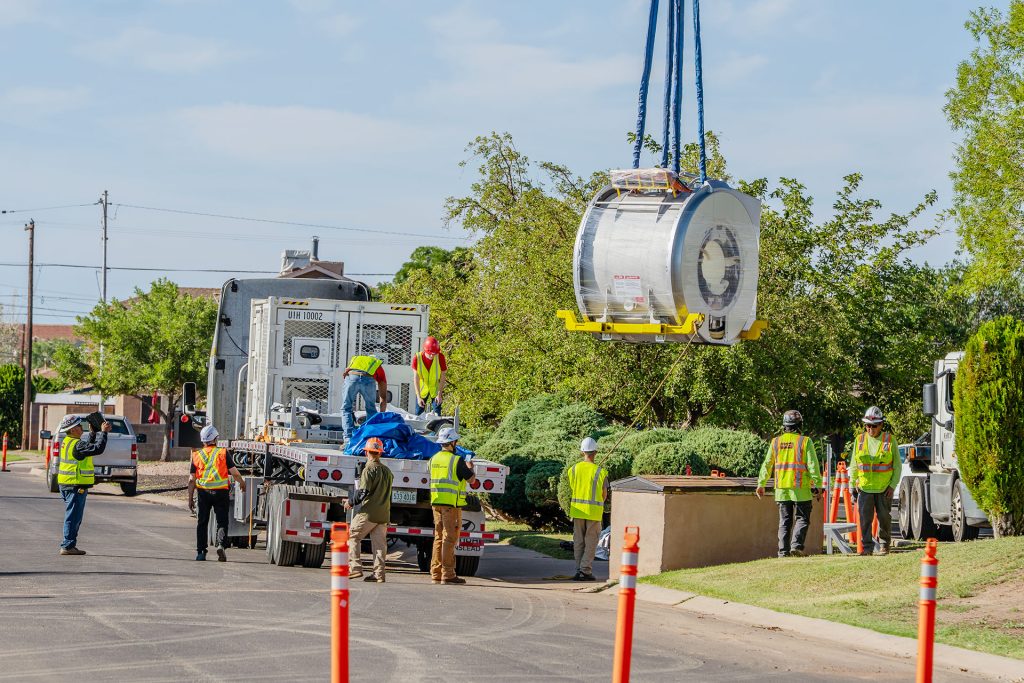
There is a new arrival at Little Colorado Medical Center (LCMC), and it came in through the roof. On Saturday, a crane lowered a state-of-the-art MRI machine, all 30,000 pounds of it, into a purpose-built suite at the Winslow hospital, capping a project years in the making and marking one of the largest single investments in the medical center’s recent history and over two years’ worth of work.
The total price tag came in just under $2 million, covering not only the machine and accessories and equipment it also covered the removal and rebuilding of a section of the hospital’s roof to get it inside. For a 25-bed critical access hospital serving more than 30,000 people across northeastern Arizona, this represents a significant accomplishment during a time when just a few months ago the hospital was listed as potentially at risk due to cuts to Medicare.
Until now, many local patients needing advanced imaging faced a familiar rural reality: the drive. A trip to Flagstaff often meant a half-day or more away from work and family, assuming an appointment could be found at all. And that is just for residents of Winslow. For the many patients who already travel 50 or more miles from the reservations and surrounding communities just to reach Winslow, a scan in Flagstaff could mean a round trip of well over 200 miles. The new machine changes that math, with routine outpatient MRI scans soon available right on Williamson Avenue and wait times that hospital leadership expects to beat larger regional facilities.
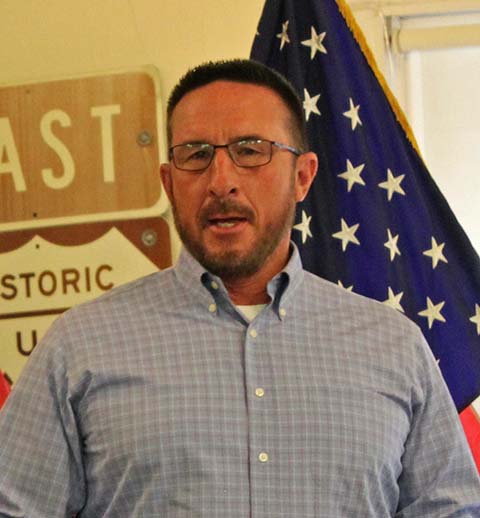
Anyone who has been through an MRI knows the drill: a narrow tube, loud knocking and the slow crawl of the clock. LCMC’s new unit was chosen with that experience in mind and hospital CEO Travis Udall lights up when he talks about it.
“Most of them are like two or three inches [from your face]. This one’s going to be eight or nine inches away,” Udall said, describing the experience as much better than an older machine. “It actually has surround lighting and music!” The table can also accommodate patients up to roughly 600 pounds, which means fewer people will be turned away or sent elsewhere because they simply could not fit. The larger space also allows for people, for instance, in a cast to fit even if they need to keep their body in a certain position that the smaller model could not accommodate as easily.
The project hit its share of snags along the way, including construction challenges, crane logistics and a delivery pushed back a full year. Udall said they purchased the biggest MRI machine that they make and it had to be delivered using the largest crane available in the state of Arizona. But the delay came with a silver lining. LCMC had placed its order with vendor United Images last year, securing the purchase with nothing more than a purchase order, and when manufacturing delays pushed the timeline, the company made it right.
“We didn’t even put any money down,” Udall said of the original order and the company even went above and beyond to compensate. Udall said they gave them the newer and more upgraded model instead of the one they originally ordered which he said usually costs $600,000 more. The service agreement carries its own protections too, with the vendor covering the hospital’s costs if the machine ever goes down.
The MRI has been on LCMC’s wish list for a long time. It appeared on a hospital strategic plan dating back to 2016, a document Udall says he discovered months into the job, only to realize his team had already checked off two-thirds of it. The machine joins a wave of growth at the medical center, which has been steadily adding services in recent years even as rural hospitals across the country cut back.
“The whole thing is going to be wrapped up in October, and then the state has to certify it,” Udall said, noting that certification applies to inpatient use while outpatient scans can begin sooner.
Among those counting down the days is Maggie Sepulveda, a radiologic technologist who recently joined LCMC from Round Valley and will operate the new machine. At her previous hospital, the MRI lived first in a trailer and later in a modular building, so the new suite came as something of a revelation.
“I’ve never worked on a brand-new machine, so I’m super, super excited,” Sepulveda said. “This is probably the nicest MRI room I’ve ever seen. It’s going to be something special.” The old setup, she said, “was nothing compared to this,” and the transition in Winslow has gone far smoother. She predicts the finished suite will compare to brand new rooms in big cities, then added with a smile, “but it’s going to be nicer, because you get us.”
The MRI’s obnoxious roar, dreaded in waiting rooms everywhere, softens into something like a hum more than howl for the people who, until now, never lived close enough to hear it.