Though A.F. Banta only owned the Argus for a short time, his paper would continue for many years to come. Its next publisher was J.F. De Rosear, a telegraph operator at the Holbrook station depot. He then sold the Argus to C.O. Anderson, who published the paper until 1900.
Anderson was born in Norway in 1862. His family immigrated to the United States in 1867. They did not settle, as most immigrants did, in the eastern United States, but moved quickly to the Arizona Territory. Apparently, the desert climate was too much for the family, so they moved to Minnesota and then to Wisconsin.
As a young adult, Anderson became ill with a lung infection. The soon to be world renowned Mayo Brothers of Rochester would advise Anderson to move to a drier region. Though trained to be a teacher, Anderson would work on the railroad while earning a law degree in Colorado. He moved back to Arizona and finally settled in Holbrook, where he practiced law and published the Holbrook Argus in 1896.
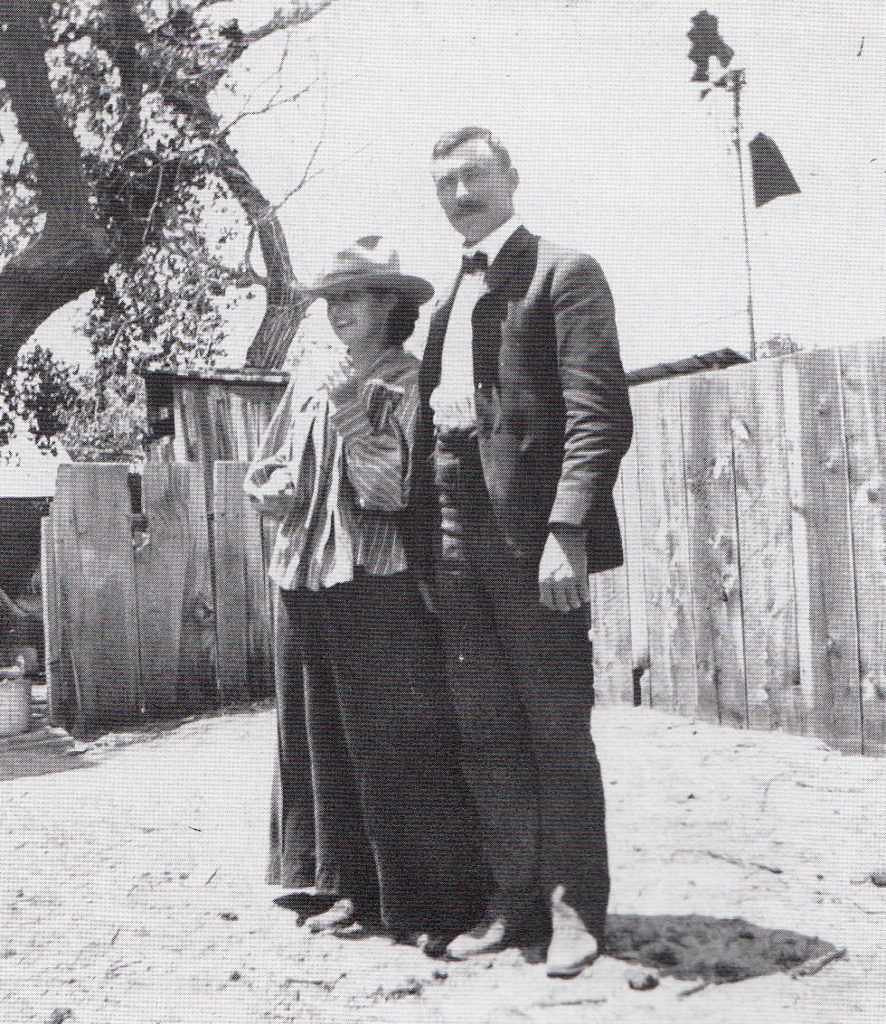
During the Spanish-American War, the citizens of Holbrook were hungry for news of the battles. Sheriff Frank Wattron, in his black suit and short cigar protruding below his black mustache, would stand on a chair outside the drug store and read war bulletins. C.O. Anderson, who was a good friend of Wattron, tricked Wattron with a fake war bulletin. Much of Holbrook was in on the joke, and had a good laugh at the sheriff’s expense.
The last issue of the Argus published by Anderson was dated April 28, 1900. He moved to Willcox, where he became the editor of the Range News. Anderson sold the paper to H.A. Pease, who moved to Holbrook from Amery, Wis.
The Albuquerque Daily Citizen carried a story noting that, “H.A. Pease is greatly improving the appearance of the Holbrook Argus. He is a first class newspaperman, and will make the Argus one of the best weekly newspapers in Arizona.”
Pease added the word Holbrook to the Argus name, and made several changes to the look and content of the paper during his year and a half as publisher. In January 1903, Pease sold the paper to John H. and L.D. “Dan” Divelbess.
Dan’s obituary, which ran in the Holbrook Tribune on Feb. 18, 1949, provided a short life sketch, which read, “After finishing school in the old adobe school house in the southwest part of town in 1897, he worked at various clerical jobs for local business houses and as a pumper for the Santa Fe Railroad, accepting his first public office late in 1903, when he was undersheriff for Chet L. Houck.
“About this time he was associated with his brother, John, in publishing the Holbrook Argus, purchased from H.A. Pease, and two years later sold back to Pease.”
Divelbess went on to serve Navajo County as county treasurer, livestock inspector and food administrator during World War I, and deputy sheriff from 1919 to 1922.
In 1923, he became sheriff of Navajo County and served five consecutive terms. He would later serve a sixth term, and would die in office at the age of 68 as he was beginning his seventh term.
In 1905, the Divelbess brothers sold the paper back to Pease, who then sold it to Lloyd C. Henning.
Lloyd C. Henning,
The Argus’ Last Editor
In 1889, Lloyd C. Henning’s family moved to the Arizona territory when he was only four years old. At age 16, young Henning became a printer’s assistant and worked for several newspapers, including papers in Gallup, N.M., St. Johns, Flagstaff, Phoenix, Winslow and Holbrook.
At the tender age of 19, Henning became the youngest newspaper editor in the country when he began working at the St. Johns Snips and Herald in 1904. One year later, he moved to Winslow, where he published The Winslow Mail for the next four years. And in 1907, he purchased the Holbrook Argus. On Sept. 25, 1909, Henning sold both papers to John F. Bauer.
In a statement published in The Winslow Mail, Henning said, “I will be associate editor of the Argus temporarily.” While Bauer looked for a new editor, Henning would remain the editor of the Holbrook Argus four more years, until the final edition on Feb. 4, 1913.
The Argus was Henning’s last working experience in the newspaper business. In 1916, he helped organize the First National Bank of Holbrook. He then opened the Henning Insurance Agency, which he owned until his death in 1968. The next owner of Henning’s Insurance was himself an editor and general manager of the Holbrook Tribune-News and The Winslow Mail, Alan Grace.
Henning would serve as the bank president and chairman of the board. He was one of the original owners of the Navajo-Apache Telephone Company. He served as clerk of the Navajo County Superior Court for 16 years, was mayor of Holbrook from 1923 to 1929, and was elected to the Navajo County Board of Supervisors in 1933 and served until 1936. He served in the Arizona Senate from 1941 until 1948.
Like many of the publishers before and after him, Henning understood that newspapers were a service to the community. This desire to serve would flow beyond the pages of the paper and into community service of all kinds.
***
Part 5 will be published in the June 19 edition of The Tribune.