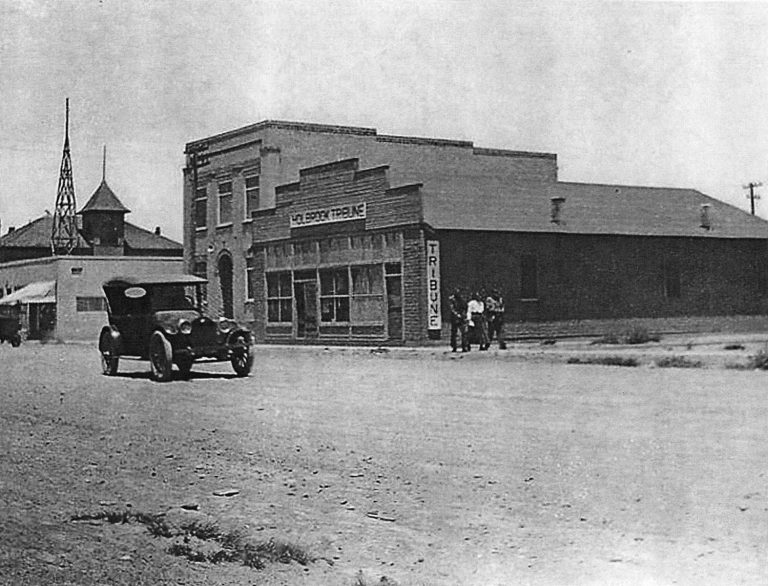
This month Tribune has marked its 115th year of providing the news and serving the communities of Central Navajo County and to commemorate this lengthy legacy, The Tribune will be running an eight-part history of the evolving newspaper industry in the region and the communities that benefited.
Part 2: Reporting on history in the making
Holbrook’s third newspaper was named the Apache County Critic. Though the town had a paper with a new name, the community already knew the publisher. It appears that Henry Reed and his son were planning to take on the power brokers of the area.
They began publishing in the spring of 1886. According to George Crosby, the paper was “a real live paper that stood for something. It ran about 18 months, and succeeded in getting Frank Reed licked by Harris Baldwin, the district attorney.” Holbrook historian Harold Wayte Jr. reported that the paper “beat its editorial drums” on issues concerning the citizens of Holbrook.
Reed’s editorials reflected his battles with the powers that be. In his first issue of the Critic, he noted that “while at St. Johns, the cry came to us from all sections of the county that the people were being defrauded, the county being impoverished by bad government…the Herald seconded their cry and the tax payers became aware of the frightful condition of this.” Reed went on to state his case for continuing to watch the public officials. Ernest Tee and Henry Huning were both Apache County supervisors at the time.
The lead story published in the first issue on June 5, 1886, was on a dispute between the Aztec Land and Cattle Company and sheep ranchers whose flocks were trespassing on their land. Ads for William Armbruster, blacksmith and wheelwright, appeared in most of the Critic’s issues. His slogan was “Prices reasonable, so don’t leave town unless your outfits are in perfect condition.”
The Cottage Saloon, owned by a Mr. Terrill, boasted the “best of imported and domestic wines, liquors and cigars” in his ads. The saloon also had the Stockmen’s Report on hand, and provided billiards, clubrooms and ice-cold St. Louis Beer on draught. Fancy drinks were the specialty. The Cottage would not, however, be remembered for its amenities, but for the card game that led to the deaths of two men. The pool of blood left on the saloon floor after the shooting would give The Cottage the nickname of Bucket of Blood Saloon.
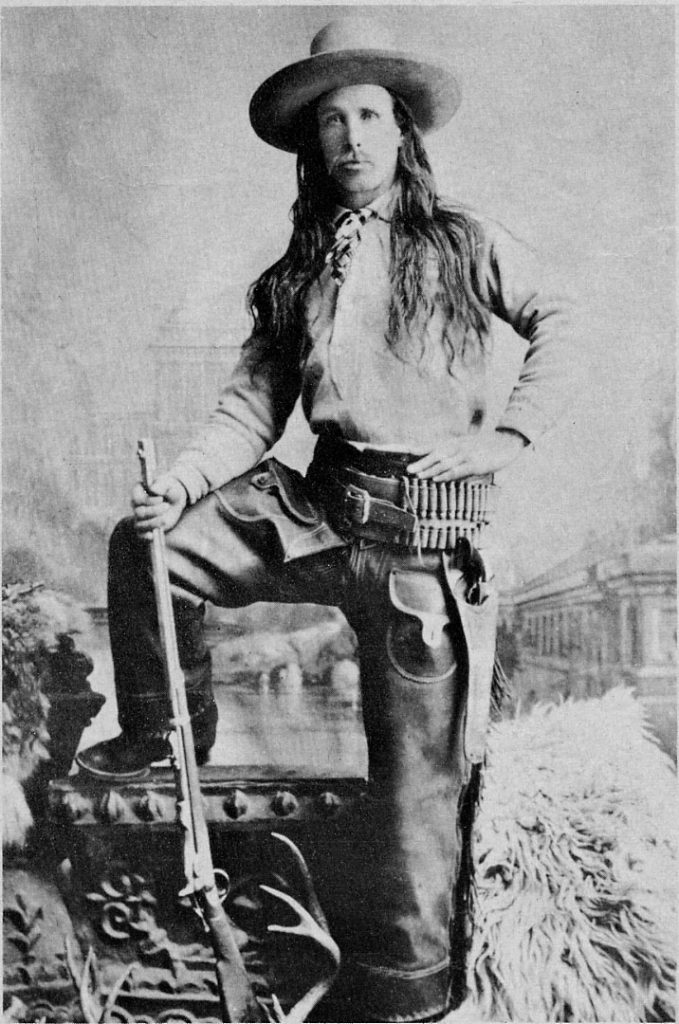
The Sept. 10, 1887, edition of the Critic would become a valuable piece of history, for it was in that issue Frank Reed would report on the attempt to serve a warrant on Andy Cooper Blevins by Sheriff Commodore Perry Owens. The story went into great detail about the event, describing the heroic actions of the sheriff. The story, however, did not appear on page one, as it would today, but was on page three of the four-page paper.
A few months later, the Apache County Critic would close up shop. In about six months, Holbrook would host its fourth newspaper, The Holbrook Standard.
Holbrook Standard
The next newspaper in Holbrook was the Holbrook Standard. It has the distinction of being published for the shortest duration, according to A.F. Banta, the future publisher of the Argus. Banta wrote that “Colonel Lamont of the Albuquerque Journal came to Holbrook in the summer of 1888 and started the Holbrook Standard; it lived but four to six weeks.”
After the Holbrook Standard ceased publication in 1888, Holbrook would rely on the St. Johns Herald for its news. There were many stories about Holbrook, as well as the comings and goings of its citizens. Holbrook would have to wait seven years before it would have its own newspaper again.
***
Part 3 will be published in the June 5 edition of The Tribune.