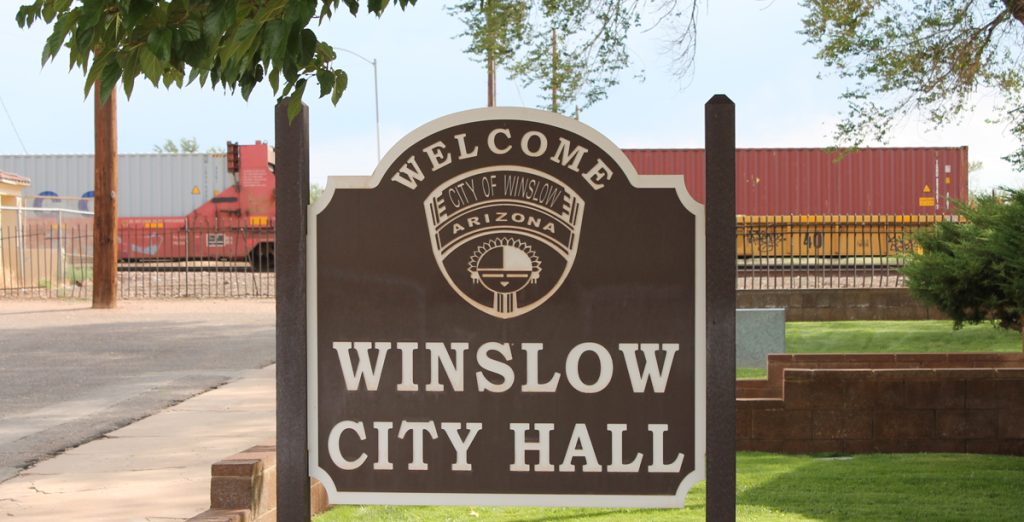
Public meetings were held last week in Winslow to provide information on the feasibility study and plans for the Winslow levee, and efforts to lessen the danger of flooding from the Little Colorado River.
Spokesmen were Colonel Kirk Gibbs, district commander of the U.S. Army Corps of Engineers, District II Navajo County Supervisor Jesse Thompson and Winslow Mayor Robin Boyd. Several other people from the Corps of Engineers spoke.
The public meetings are one step toward getting the levee authorized, funded and constructed. Public comments and suggestions could be made at the meetings and can be made otherwise by July 18. The chief of the engineers report is scheduled to be made by the fall of 2017. Preconstruction engineering and design should be done in fiscal year 2018 and authorization is expected in 2018. Construction is expected to begin in 2020.
Several plans were discussed, but the one that drew the most support from those studying the problem included the following measures: reconstruction of 2,000 feet of the Ruby Wash diversion levee; reconstruction of the Winslow levee from the Ruby Wash levee to Interstate 40; improving the flood conveyance under the BNSF Railroad bridge through river channelization and salt cedar removal; constructing a new levee segment north of and parallel to Interstate 40; and reconstructing the Winslow levee to a point eight-tenths of a mile north of North Road, including a setback levee across the river from the Homolovi I Pueblo.
This option is seen as a highly effective and efficient one for an estimated cost of $59.9 million. Construction of this project would provide a number of benefits to the community of Winslow. It would reduce the risk to life and property significantly. It would reduce flood damage by an estimated 80 percent. It would provide an estimated $5.35 million in average annual benefits. It would greatly reduce the risk of flood damage to critical infrastructure, schools, hospitals and utilities.
During construction, the area may expect many economic benefits, including an estimated 1,000-plus jobs, $27 million in labor income and $23 million in regional economic output.