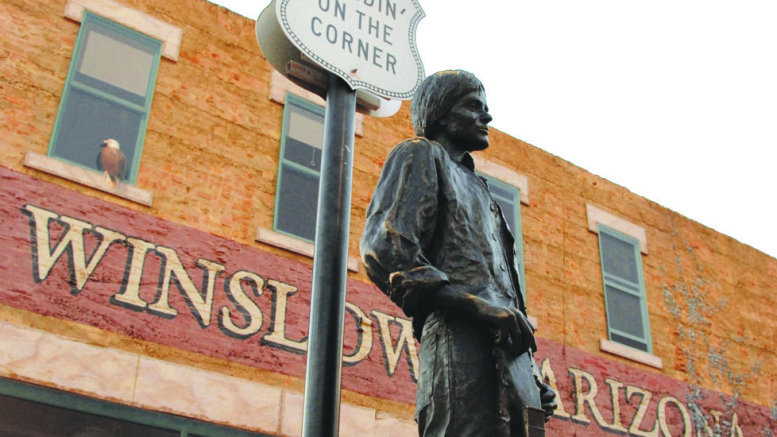
The Winslow City Council voted to shift final say over key department-head appointments from the dais to the city manager, a move City Manager David Coolidge said would bring municipal code back into alignment with the city’s charter. The ordinance passed with Mayor Birdie Cano, Vice Mayor Jim MacLean, and councilmembers Darcy McKee, Melcor Salazar, Daniel Tafoya voting in favor and councilmembers Samantha Crisp and Peter Cake voting against.
In presenting the change, Coolidge said the prior ratification requirement put the municipal code in conflict with the charter. He called the council-manager structure “the hallmark of [the] council-manager form of government,” adding that the amendments allow the city manager to make appointments to the police chief, fire chief and public works and facilities director “consistent with the council-manager form of government.” He told the council the city manager is the chief administrative officer with the authority and responsibility over personnel and that the change restores that division of duties as intended by the charter.
The charter’s language is explicit: “Appoint, promote, remove and demote for cause, subject to rights of appeal and in compliance with applicable personnel rules and regulations, all officers and employees of the city except the city attorney and city clerk.” The ordinance does not affect the council’s oversight of the city manager or its budgeting authority but removes council ratification from those three hires.
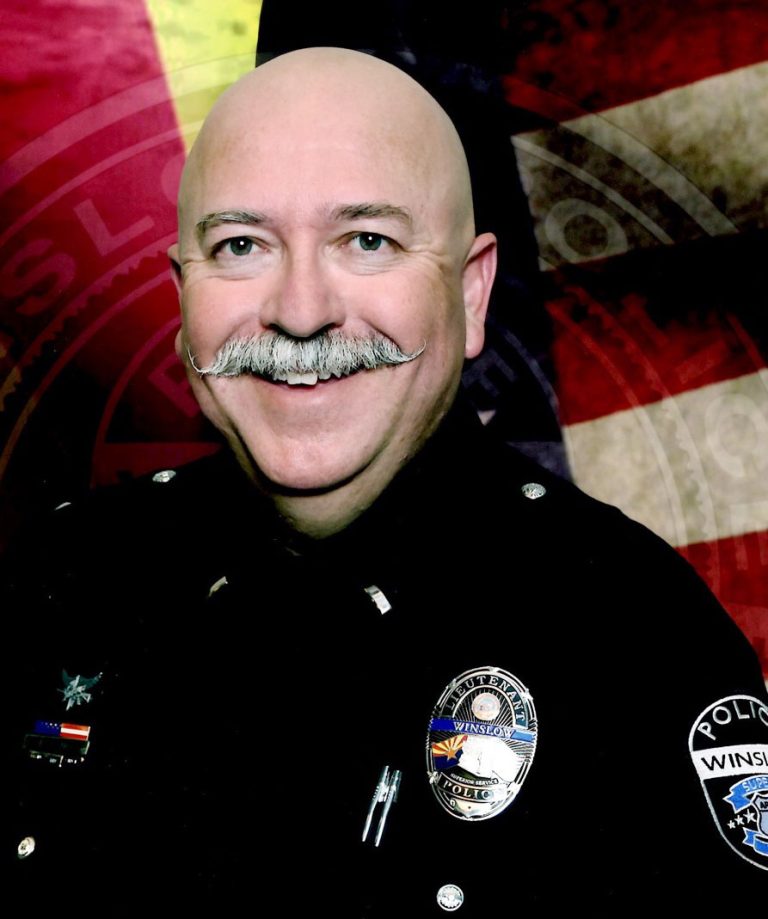
At a previous meeting of the city council, there was a multi-hour executive session held in which the council discussed the employment of police chief and sought legal advice on the recruitment process. In recent months, the city has held two unsuccessful campaigns to find a permanent police chief and this ordinance change could streamline legitimizing the current Interim Chief of Police Ernie Cano into a permanent position.
Coolidge also briefed the council on the progress of the Winslow levee project. Coolidge said the U.S. Army Corps of Engineers’ draft milestones show 35% design in December 2026, 65% by February 2028 and 95% in April 2029, with the 95% mark, triggering the request for proposals for construction. Procurement would begin in July 2029, an estimated contract award could land around May 2030, and construction would run roughly one to two years, followed by Federal Emergency Management Agency (FEMA) recertification which typically takes about a year.
“We expect those timelines will likely shrink a little bit,” Coolidge said, characterizing the Corps’ internal forecasts as “usually pretty conservative.” On the price tag, Coolidge said inflation means costs will “be greater than the original estimate of $100 million,” but said a more specific cost analysis should be ready next month.
Mayor Cano asked if FEMA would be involved throughout the process saying, “I don’t want any surprises at the end, people have waited too long for this.” Coolidge answered saying that FEMA will take the recommendation from the Army Corps of Engineers for certification and that the Corps, in all the projects, are able to make sure that they are building to FEMA standards.
Northland Pioneer College’s Associate Vice President of External Relations Rich Chanick, spoke during the meeting, promising a more open door to community groups and local governments. “We want to be what you want us to be. But for us to do that, we’ve got to listen to what you want us to be.” He said the college has simplified its event-use process and, in some cases, will waive insurance requirements when NPC co-sponsors an event. “We want to do events with you,” he said, encouraging anyone unsure where to start at the college to call him directly so he can route requests to the right office.
Chanick also highlighted scholarship support and timelines, noting roughly $250,000 in awards last year across NPC’s footprint and that spring scholarship applications open Oct. 1 through Nov. 13, with staff on hand to help polish essays and applications. Looking forward, he said NPC is seeking funding to expand classroom capacity at the Northeast Arizona Training Center in Taylor that serves police, fire and EMS. Keeping recruits local matters, he said, relaying what a chief told him about the difference between rural and metro policing and the risk of trainees who leave the region to attend academies and then stay to take jobs in the Valley. “It’s a different kind of policing,” he said, adding that expanded facilities would let NPC train more first responders close to home.
Public comment surfaced fresh frustration with storm-drain performance during last week’s heavy rains. Longtime resident Kim Gould said improvements around Desert View have unintentionally redirected water and pointed to specific locations where she observed failures. At the northwest corner of Wagon Wheel Road and Hipkoe Drive, she said the new sidewalk work “creates a perfect channel right down into Bonnie Brennan (Elementary School),” adding that “10 classrooms actually flooded” on Friday. She described coming up against running water on Mike’s Pike Street where, downhill from Hipkoe Drive, she saw no inlets until near Papago Blvd., adding “the water was flowing like a river.” She told the council the Ford dealership sat behind what she called a lake of water for more than a day despite a ditch on the east side and said, “It was disappointing to see that apparently there is no attempt to try to drain the water into that from Mike’s Pike.”
Gould also cited a rusted, collapsing pipe to the desert between 136 and 140 Papago Blvd., and overgrown weeds that impede the water flow. She urged the city to push engineers harder on drainage design and chase infrastructure grants “with the same vim and vigor” as amenities.
Mayor Cano thanked Gould for the specificity of her observations and said staff would follow up. “We can definitely take this back to Public Works,” she said, adding that the city is continually pursuing grants.
In a separate comment, resident Raymond Lucero asked for clarity on which cross streets and main routes would be affected near Coopertown and Southside by the tradeport and Atlas Global projects. Staff told him someone would reach out to discuss the details.
In other business, the council:
* Authorized acceptance of a grant from the Governor’s Office of Highway Safety to support employee related expenses for DUI enforcement in the amount of $20,000 and strategic traffic enforcement in the amount of $15,000.
* Authorized application of grant to the Arizona Smart Fund for design and engineering services for Winslow High School road improvements, the grant is for $250,000.
The next meeting of the Winslow City Council will be held at 6:30 p.m. on Tuesday, Sept. 23, in the meeting room located at 523 W. Second St.