Navajo County has a large population of Indigenous people and in November, Native American Heritage Month will be celebrated locally and nationally. In Winslow, the several activities throughout the month to celebrate the culture, traditions and arts on the city’s Indigenous people.
Winslow Unified School District Superintendent Connie Gover always looks forward to the month. “We have 22 Native American Tribes represented in our school district alone, so it is important to recognize our diversity and celebrate all of the people that make up our district.”
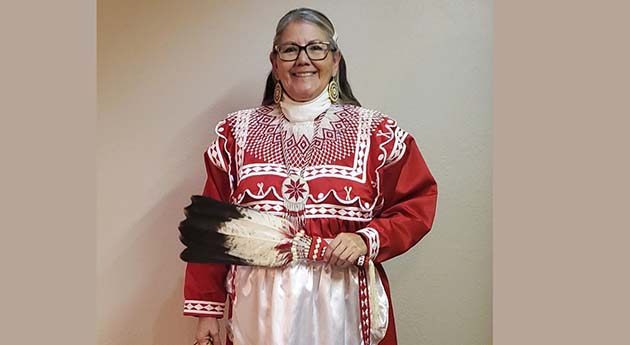
Gover herself is an Indigenous woman and proud of her heritage. “I am an enrolled member of the Choctaw Tribe of Oklahoma. Around 1830 some of the Choctaws were relocated from Mississippi to Oklahoma in what is referred to as the Trail of Tears. Today, a majority of the Choctaw people live in 10 counties in eastern Oklahoma.”
She often makes trips to the Oklahoma to attend fairs and Pow Wows and to expose her children to the traditions and language of the Choctaw people.
Gover said, “During September, we have a tribal fair where we learn about our traditional dances, how to make pottery or baskets and play stickball, which is like lacrosse.”
Denise Estudillo, the federal programs director at WUSD is of Pueblo decent with some Assiniboine/Chippewa ancestry. “My favorite aspect of my Laguna heritage is the Keres Language, spoken by only a few pueblos in New Mexico. I love to hear it spoken fluently. I was immersed in the language as a child and into my teens and even though I don’t speak it as well as I need to, I teach my grandchildren what I can. I have to remember to use it and it comes back.”
Larrilynn Oso, the administrative assistant at the City of Winslow agreed with the need to continue passing language and traditions to younger generations. She said, “. In recent years I have tried to educate myself and ask questions so that I can at the very least familiarize myself with traditions and language. The wonderful thing about Indigenous culture is that it is rooted in speaking to one another and having that special relationship with your elders and matriarchs. If you are willing to listen and learn, then you’ll find that gaining your cultural identity can be a very beautiful experience even when you didn’t have that connection when you were younger, and every little step counts.”
Oso continued, “I am Laguna, Zuni and Hopi. I was born for the Big Bear and Little Kachina clans. My maternal grandmother’s village is Paraje, located in Laguna, New Mexico. I was not raised within traditional sensibilities such as attending dances or ceremonies given that my family life is based here in Winslow and my cultural heritage is based in New Mexico. However, there still is a deep sense of pride and knowing where I come from that is important to me.
“One way I am honoring my heritage is that I’m currently preparing for my graduation next year from Northern Arizona University. Education is a very important aspect that my grandparents and parents wanted for me, and I have chosen to receive my degree in psychology (with a minor in sociology) in traditional dress as a symbolic way of having those who are no longer here still present and taking the walk with me. It is solely on their prayers and hopes that I complete this achievement for myself and for them. As a first-generation college student in my immediate family and it being entirely on academic scholarship, this means a lot.”
Both Estudillo and Gover mentioned the importance of education to Indigenous people and future generations as well. Estudillo said, “As a younger woman I struggled a lot with identity and there were times I felt far from my Native culture in my efforts to complete my education. I realize I was shaped by my caretakers and my culture and that’s what I always come back too. Many of the sacred aspects of my culture that I have been blessed to be a part of come back and give me strength and I need to emit and model that for my family. This is especially important in my chosen field of education. I taught Native American children for over 30 years on the reservation. I believe I learned more from them and the community than they did from me. As a leader in my current field, the duties include being the of director of Indian Education in WUSD, I have parents and students that look to me for support and guidance. Most Native American cultures are matrilineal and it’s important to be that figure of “motherhood” for our Native
stakeholders.”
As Native American Heritage Month approaches, Oso spoke about how non-Native Americans can celebrate and appreciate Indigenous cultures without stepping into appropriation. “I think that one of the most important things is to be able to have an open and respectful dialogue where there’s a mutual understanding for what the main purpose or goal is when it comes to educating others about culture and how hurtful and damaging appropriation can be. I have been fortunate to be able to talk with people to let them know a little about myself, the history of the Laguna Colony and what the Laguna people did in the course of building the railroad. I also realize that it is very different to be an Indigenous female in this modern world versus what situations and circumstances our mothers and grandmothers grew up in.
“In many ways I feel very liberated, and I am thankful for what they endured so we can chase after our dreams and speak our minds openly. I appreciate when non-Indigenous people express that they want to learn because that’s one further opportunity to tell our story, to let people know that we are still here and that we as a people are diverse, beautiful and doing amazing things.”
This was a common sentiment with Estudillo and Gover as well. Estudillo said, “I believe that just being present at the Native American month celebrations shows that people support and respect the diversity in our community. The activities are for everyone and it’s very complimentary to see people of differing heritage gather.
“I think it’s appropriate for any non-native to ask questions for better understanding of the culture but they should be ready for a subtle joke or to be teased, which is sometimes the case with Indian humor! I’m seeing a renaissance in younger generations wanting to learn and be part of their Native cultures. They should make efforts to practice a part of their culture on a daily basis no matter how small. So many children are of mixed race and heritage and they need to be proud of it all. Learn simple greetings and refer to family and relatives using the Native language. Language is crucial and it’s how people identify as a culture and society. It’s been said by elders that once the language is gone, we cease to exist as a people. I think a lot of young people realize that Native languages are considered endangered and if not that’s where they need to start. Don’t be afraid or shy to ask for help. As someone who has grown up in this community, I see a great increase over the years in the improvement of recognizing, appreciating and respecting Native culture. The Winslow City Council has for years proclaimed Native American month. There are more Native Americans in leadership positions. I believe more people are mindful of the contributions because we take the time to share information.”
Native American Heritage Month is an opportunity for the entire community to celebrate its diverse roots and the contributions made by Indigenous peoples to the building and maintaining of Winslow.
At the Winslow schools, the first week of the November, beginning on Tuesday, Nov. 1 will feature themed days for students and teachers to take part in.
Tuesday, Nov. 1 is hair bun day; Wednesday, Nov. 2 is Native jewelry day; Thursday, Nov. 3 is moccasin day; and Friday, Nov. 4 will be full traditional dress day.
On Saturday, Nov. 5, a Native American Festival will be held from 10 a.m. until 5 p.m. at the Vargas Field ramadas, located on Maple Street. This event will feature arts, crafts, dancing, singing and traditional food available for purchase.
The following week beginning Tuesday, Nov. 8, a Native Film Festival will take place at the Winslow Theater, located at 115 N. Kinsley Ave. All movies begin at 6 p.m. and are free to attend. Movies featured include Neither Wolf nor Dog on Tuesday, Nov. 8, Little Bear Wednesday Nov. 9, and The Warrior Tradition will be shown on Thursday, Nov. 10.
On Tuesday, Nov. 15, students and staff at Winslow schools are invited to, “Rock your Mocs,” and are encouraged to wear their traditional footwear. On Thursday, Nov. 17 at 5 p.m., an Indian Taco sale will take place at the Girl Scout House on Cherry Street. This is a drive by fundraiser, meaning orders will be taken at and delivered to your vehicle. The sale is a fundraiser to benefit the Winslow High School Native American Scholarship.
Any questions on Native American Heritage Month can be directed to Loretta Chischilly at 928-288-8373.
Gover concluded, “I am very proud to be a Native American woman. Even more now than ever before because I have hit that golden age of 60. The respect that is given to us as elders from the younger generation is absolutely beautiful. It is important to know your history and understand what your tribe was about long ago and what it has become now. Our young people need to know who they are and where their people come from. Most tribes offer culture and language programs so they do not lose their identity. It is important to take advantage of those programs in addition to the knowledge that is handed down from our grandparents to our parents then to our children and grandchildren.”