

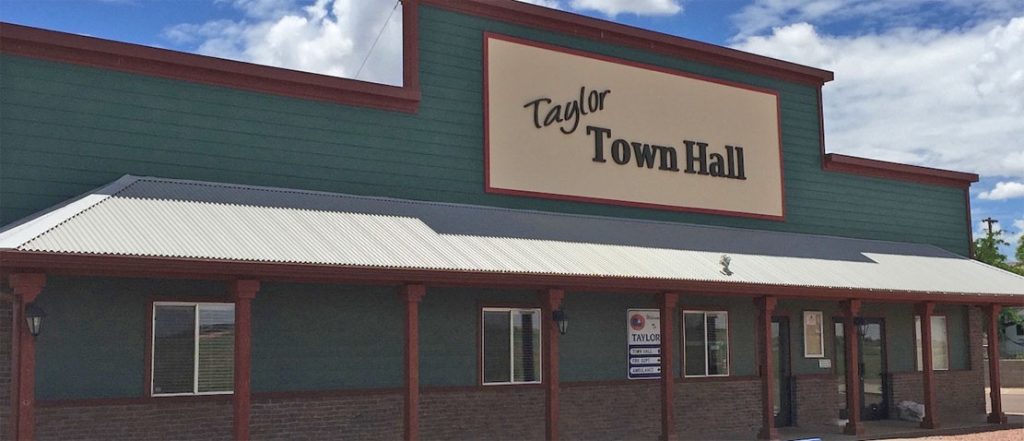
By Toni Gibbons During the Taylor Town Council meeting on Nov. 1, the Navajo County Public Health Services team, led by Director Jeff Lee, gave an overview of the five health concerns facing the public within the county with one of the most prevalent problems being sexually transmitted diseases (STD). Lee initially shared that the Community Health Assessment (CHA) identified key health needs as well as the current health status through systematic data collection and analysis. “The Community Health Improvement Plan (CHIP) is a five year effort to address those health concerns.” Navajo County Community Outreach Specialist Allison Hephner noted that the CHA was the result of a countywide survey, of which one percent of the population participated in two focus groups, one in Winslow and one in Show Low. “When you look at the data in the CHA, this is the community telling us what our priorities are,” said Hephner. Navajo County epidemiologist Edwin Rodriguez stated one of the big concerns was the spread of STDs. “This issue wasn’t something that was highlighted in the results of the survey or the meetings, but given that the county has one of the highest rates of STDs, we had to consider this was one of the top priorities.” Navajo County Public Health Nurse Janelle Linn informed the board, “I have been with the health department for 17 years. For the first 13 years that I worked there, we never identified a case of syphilis internally and I never had one reported to me from a private provider. In the last five years, on average, I now have between 30 and 50 cases in my inbox on any given day.” Rodriguez went on to say that Navajo County is currently competing for the number one spot with Apache County in the areas of syphilis, gonorrhea and chlamydia. “Just about a month ago, the State of Arizona declared an outbreak of congenital syphilis, and Navajo County is one of the essential counties involved in that outbreak.” Councilman Jason Brubaker wanted to know how the data was compiled for that outcome and how the cases were reported. To which, Rodriguez responded, “It is in total counts of cases as compared to the population of the county. Every provider in the county is required to report any cases of chlamydia, gonorrhea and syphilis.” Mayor David Smith asked, “Are there areas that are worse in Navajo County? Is it a bigger problem in the Native American population?” Rodriguez said, “When we were looking at how the cases are spread throughout the county, we tried to see if there were clusters anywhere, but it is actually evenly spread all the way from Kayenta to Whiteriver. About a third of the cases are off reservation and a third of our geographic distribution is off reservation.” Smith further asked if the remaining areas, substance abuse, poverty, mental health and chronic diseases, were also evenly spread across the county. Rodriguez said that analysis was not done. “We are trying to increase counseling to minimize the risks of STDs. Instead of going with the old standby of just use a condom or abstain, we are having to resort to encouraging the limiting sexual partners and exposures.” Councilman Shawn Palmer asked, “As far as the counseling, who does it and how would someone know to go to a place for counseling.” Linn clarified that the counseling offered for STDs is different from mental health. “We offer those services at the health department,” said Linn. “A person can get tested through their private provider or at the health department. When a patient comes to us, we do a risk assessment and tailor the education based off their risk factors, so that we can reduce the risks.” Continuing his question, Palmer asked, “If a person is at their doctor or someplace where an STD is brought to their attention, then are they pointed in your direction?” Linn replied, “Yes, a lot of times the doctor identifies the problem. STDs are becoming such a problem that we are going to have to spread this message throughout the community. We realize it is a sensitive subject and we need the support of elected officials in getting out the message as well.” Smith asked, “How is this counseling received? Are these individuals with STDS willing to go to counseling?” Linn answered, “When a patient comes in, they do a risk assessment and then we have a very frank conversation with them.” She explained that all of the nurses have either received training or are certified to do the counseling but the people need to be tested first. What is not always well received is carrying the message into the communities. Lee shared that one of the future plans was to create peer support groups in the schools. “There is no reason to reinvent the wheel. We can take trusted groups within the schools and teach them. In turn, the students teach each other.” Palmer agreed, saying, “You are right, it is something that needs to be carefully put out there. I like the idea of educating the kids, especially starting at the junior high level.” Smith concluded, “If we don’t realize it is a negative, how can we improve it.” Rodriguez then informed the council of the rest of the results from the information gathered by the county. “Navajo County is just about four times the rate of the state in alcohol-related deaths, which include motor vehicle accidents and cirrhosis of the liver. We are looking to reduce substance abuse among the youth, through education, in-school and after-school programs, assessments and intervention.” The second issue named is poverty. “About a third of our residents live at or below the poverty line,” said Rodriguez, who noted that a family of four making $25,000 a year is at the poverty line. Additionally, 25 percent of the residents have no transportation and are jobless. “The way we are addressing this issue is through mapping out our resources throughout the county, identifying gaps in resources, creating online resources and a media campaign to address the specific issues,” Rodriguez said. The county is considered a mental health care provider shortage area due to the current statistic that there is one provider for every 15,000 residents. Rodriguez went on to say that residents want more counseling and treatment available as well as the need to train schools and employers to see the needs and have the resources available to help.




