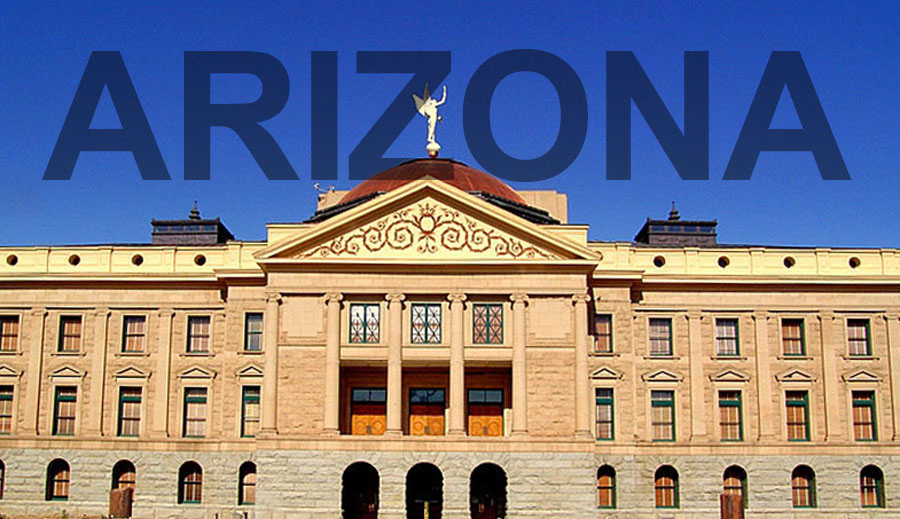
Governor Doug Ducey put his stamp of approval on the state’s upcoming fiscal year budget, which comes to approximately $9.8 billion.
Among the changes is that schools will receive an additional $163 million in new funding this year, that’s above the $76 million for inflation and enrollment increases. That, combined with $318 million in Proposition 123 funds, will provide a total of $577 million for new education spending in 2018.
The budget also includes $3 million in matching funds for rural school access to Internet connectivity and broadband, as well as $2.6 million for small and isolated rural schools.
Gov. Ducey vetoed six bills and signed 27 bills last week.
Among the vetoes was one that dashes any hopes of industrial hemp being grown in Arizona in the near future. Proponents of industrial hemp touted the bill for allowing a new cash crop for Arizona following a 2014 federal law allowing industrial hemp to be grown for research purposes. Although industrial hemp contains no psychoactive component, it is a type of marijuana, and as such is banned as an illegal drug. The reason noted for the veto by the governor was the lack of a funding mechanism.
Another veto will keep student journalists from achieving the First Amendment protections afforded professional journalists. Ducey noted in his veto of the bill that he had concerns “that this bill could create unintended consequences, especially on high school campuses where adult supervision and mentoring is most important.”
Among the bills signed by the governor is one that restores coverage for two years for Temporary Assistance for the Needy Families program, but with more restrictions. Drug offenders who have completed prison terms will also now be entitled to nutrition assistance, but must submit to random drug testing as a condition of participation.
A controversial law passed restricts cities seeking voter approval of sales tax hikes to only even-numbered years and only in a November election. The current law allows for elections on four specific dates each year.
Several other measures are aimed at economic development.
One will allow state licensing fees to be waived for people who fall 200 percent below the federal poverty level to encourage business development.
Another law will extend and expand existing state corporate income tax credit for research and development activities, which will mainly benefit large corporations.
The “angel investors” program will be expanded to give investors in small companies a 30 percent income tax credit, or 35 percent for certain targeted industries. The measure was controversial, as it gives even more financial gain to those who are already reaping the rewards of their investments without those profits benefiting the state.
There will also be an expansion of the Arizona Competes Fund that provides grants to companies to include “micro enterprises,” a business operation with a sole proprietor and fewer than six employees.