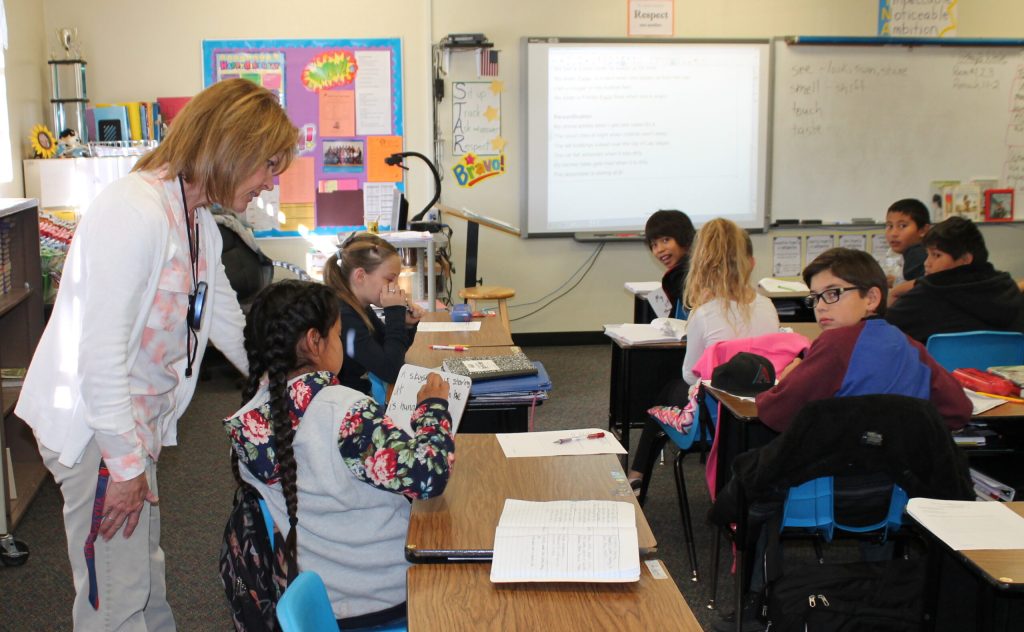
A shortage of teachers throughout Arizona has become an increasing concern for local school districts that have the additional challenge of enticing teachers to a rural area. Arizona is ranked as one of the lowest in teacher pay, leaving districts trying to appeal to teachers with classroom technology, community amenities and professional development.
A look at a report published by the Learning Policy Institute gives an idea of the impact of Arizona’s teacher shortage on the school system. In 2013–14, 62 percent of the school districts in Arizona had unfilled teaching positions three months into the school year. In the same school year, close to 1,000 teachers were working on substitute credentials, a 29 percent increase from the previous year. With one of the highest turnover rates of any state and 24 percent of the workforce eligible to retire by June 2018, the future outlook points to continued shortages.
In the Holbrook Unified School District, where more than 2,000 students are being served, officials are taking action to accommodate the shortage. While they actively work to fill positions by searching locally and attending out of state job fairs, they have also decided to provide additional funding for teachers with a higher number of students in their classrooms.
“We are currently short nine teachers over normal staffing levels. Some positions have not been filled over the past two years,” stated Superintendent Robbie Koerperich.
The current needs include a kindergarten teacher at Indian Wells Elementary School, where class sizes are up to 24 and 25 students.
A second grade teacher is needed at Park Elementary School as class sizes have increased for the past two years, and are also at 24 and 25 students. The school has moved a reading specialist into the kindergarten classes after a teacher resigned last month. There is also a long-term substitute teacher filling the physical education teaching position there.
At Hulet Elementary School, the fifth grade classes are running from 25 to 30 students per class. “We have moved a reading specialist into fifth grade for this year, which reduces reading intervention services, but it still leaves us shorthanded,” noted Dr. Koerperich.
At Holbrook High School, the English Department is getting assistance from long-term substitutes and at Holbrook Junior High School, a long-term substitute is teaching a math class.
The concern with this type of endeavor is that it means students are more likely to be taught by inexperienced teachers. The Learning Policy Institute report notes that in Arizona, high-poverty and high-minority schools had more than one in four of their teachers still in their first or second year of teaching, when they are typically much less effective than more experienced teachers.
“The teacher shortage has been a concern over the last two years. Generally, we are able to fill teaching positions through teacher recruitment fairs, online advertising and through teachers interested in working for the district. Over the past two to three years we have seen a dramatic decline in the number of applications we are receiving,” explained Koerperich.
He noted that it isn’t just Holbrook facing this problem and that the shortage extends throughout the U.S. In Arizona alone the current numbers show a shortage of more than 2,000 teaching positions. “Unfortunately, we do not see this dilemma getting better in the near future,” said the superintendent.
As a result, the district is doing what Koerperich calls “creatively addressing” the realities of the teacher shortage. “Traditionally, we have focused on small class sizes to ensure our diverse learners have the best opportunity to learn. The smaller the class size, the more individualized instruction we can offer. Due to the shortage of quality applicants, we are trying to be creative in ensuring we have quality teachers rather than having a specific quantity of teachers,” he said.
That creativity includes a decision made by the school board Nov. 8 to provide a stipend to highly qualified teachers in the district willing to take on larger class sizes. The stipend is $500 per pupil to be paid for each student over the classroom limit, and to be assessed at the end of the second and fourth quarters. The rationale behind the decision is that having more students placed in a high quality teacher’s classroom is more academically beneficial than hiring teachers who are of lesser quality to reduce class sizes. Although not a perfect solution, it does provide the district with options, according to Koerperich.
“It is important that our district ensure we recognize our current staff for the additional responsibilities that are placed before them with increased class sizes, but most importantly that we ensure we are placing all students in a classroom with a high quality teacher,” he concluded.