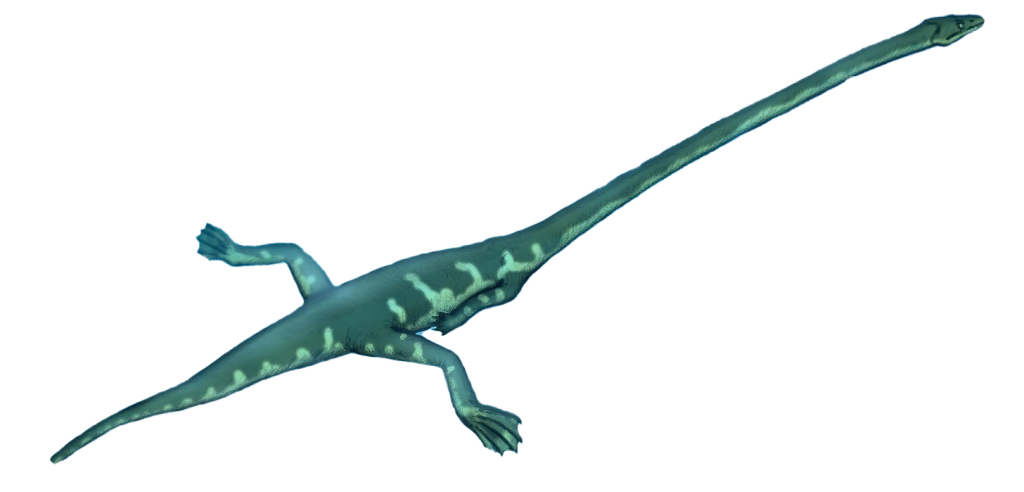
Paleontologists from Petrified Forest National Park partnered with the Smithsonian National Museum of Natural History to name and describe a new aquatic reptile discovered in the park. The new species is a kind of tanystropheid reptile, some of which have a neck twice as long as the body and tail combined.
The study, led by seasonal paleontologist Alaska Schubert, describes the anatomy of Akidostropheus oligos and compares it to other related Triassic animals from fossils that are relatively common from Europe and China but are extremely rare in North America. This study shows that 220 million years ago in the Triassic Period, northern Arizona was a warm, wet place. The tanystropheids that inhabited the area might have lived in swampy ponds or small rivers.
The new species itself is named Akidostropheus oligos, meaning “tiny, spiked back bone,” because a single neck bone is remarkably small (less than 7 mm tall, smaller than the average pinky fingernail) and has a unique spike on top.
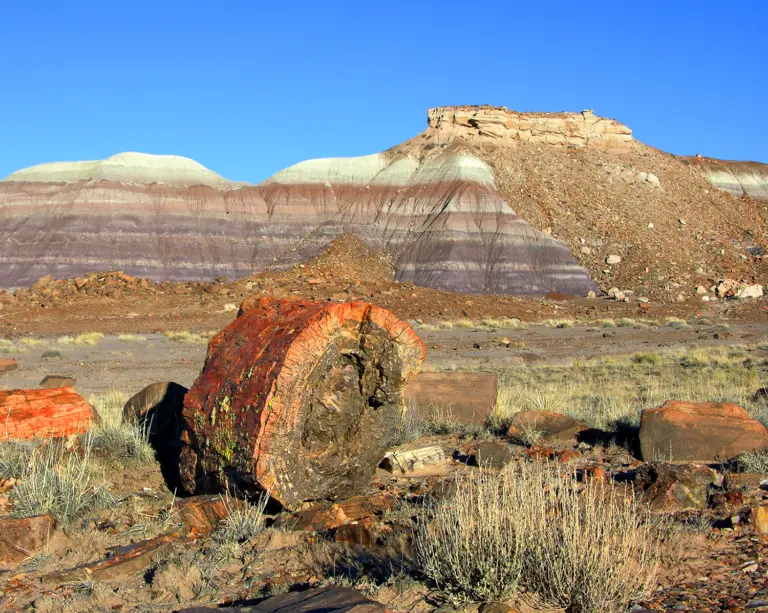
The new fossils are from a site at Petrified Forest known as “Thunderstorm Ridge” and are all considered micro fossils. They were found by collecting large amounts of rock from the site, rinsing that rock with water through fine metal screens to break it down, and then looking at the remaining sediment under a microscope to find the tiny fossils.
The study was published in the journal Palaeodiversity on Aug. 1.