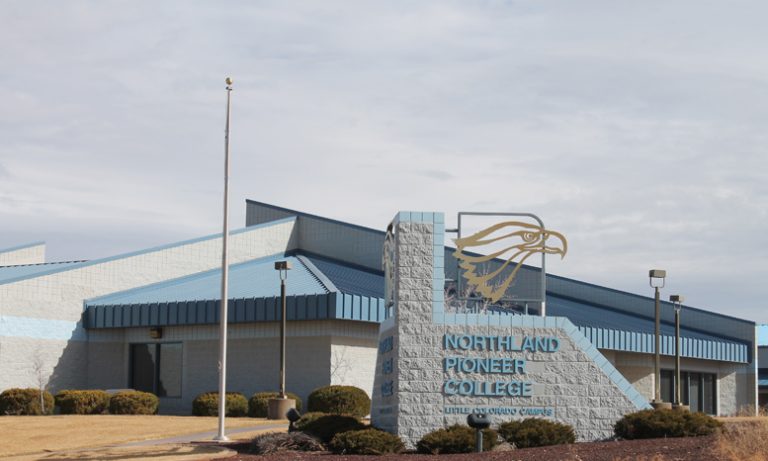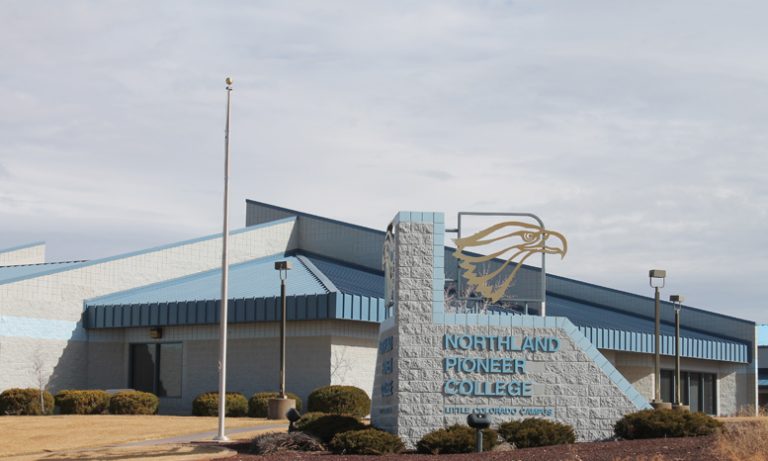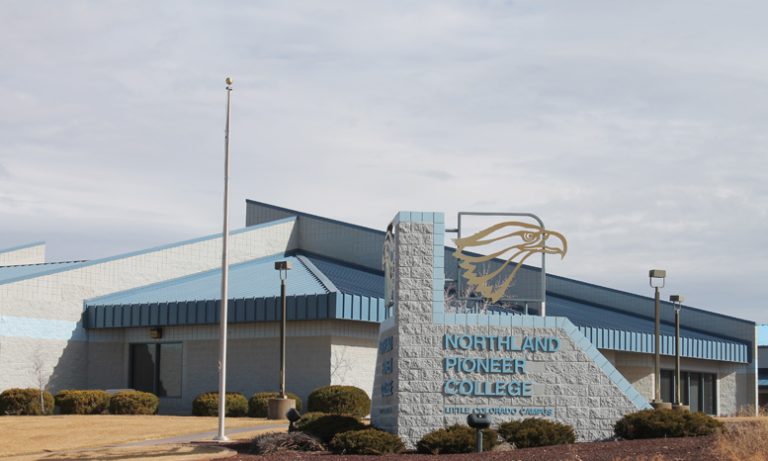
The Navajo County Community College Governing Board convened for a special meeting on July 28 to review grievances filed by faculty and staff members Allison Landy, Andi De Bellis, Autom Christensen, Colleen Marsh and Pat Lopez. The board held an executive session to review the grievances. Reconvening, the board stated that it found by the board that the grievances filed by Landy, De Bellis and Lopez had partial merit regarding conduct expected of Northland Pioneer College President Dr. Von Lawson and approved motions to meet with President Lawson on presidential conduct and behavior in the future based on each grievance. Grievances filed by Christensen and Marsh were found to have no merit and the board voted that no further action be taken regarding those filing. The Tribune received a letter also submitted to the board last month that was signed by a group of employees, former employees and long-serving leaders of Northland Pioneer College, citing grievances related to several administrative practices that raised concerns regarding accreditation compliance, stewardship of public resources.
The letter cited what was perceived as a growing pattern of executive-level decision-making and overreach that bypasses established supervisory structures, particularly in matters involving personnel actions, organizational restructuring, and institutional planning. The letter stated, “In recent months, there have been multiple instances in which employees have been terminated or separated from employment without meaningful consultation with, or notification to, their immediate supervisors or cabinet members in charge of the areas affected.”
The letter also states that there have been half a dozen resignations due to the erosion of institutional culture and trust that has been exacerbated by the president’s unilateral decisions. “The number of vacancies plus the contract non-renewals decided by the president have made it impossible for the college to meet the needs of all students in the upcoming semester,” the letter states.
It was also stated that significant growth in upper-level administrative positions and compensation structures has occurred during a period when instructional, student support and frontline operational areas continue to face increasing demands and limited resources.
Also expressed were concerns regarding the board’s fiduciary responsibility to ensure compliance with Arizona law governing community college expenditures and fiscal accountability (expenditure limits).
The letter lists six requests for consideration including an independent review of personnel decision making processes, a review of the growth of executive and administrative positions, the investment in student-facing services and staffing related to executive expansion, soliciting confidential feedback from employees, reaffirming the college’s commitment to shared governance principles and increasing transparency regarding organizational restructuring, position creation, and major personnel decisions that have broad institutional impact.
Those who signed the letter included former college presidents, Dr. Jeanne Swarthout, administrator emeritus (18 years of service) and Mark Vest, administrator emeritus (21 years of service); John Deaton, faculty emeritus (47 years of service); Dr. Eleanore Hempsey, former faculty in biology, resigned (13 years of service); Paul Hempsey, former registrar, resigned (12 years of service); Dr. Susan Hoffman, faculty emeritus (eight years of service); Cynthia Hutton, faculty emeritus (18 years of service); Rickey Jackson, administrator emeritus (23 years of service); Kathy McPherson, administrator emeritus (22 years of service); Melody Niesen, former Dean of Arts & Sciences, resigned (eight years of service); Shannon Newman, faculty emeritus (20 years of service); BetsyAnn Wilson, administrator emeritus (28 years of service); and Ruth Zimmerman, administrator emeritus (10 years of service).
Regarding this request Board Member Derrick W. Leslie spoke on approving the acknowledgment of the email, adding “We also wanted to let everyone know that faculty contacted the Higher Learning Commission with similar issues and the HLC found that we are substantively in compliance. The board is committed to addressing the email in future board meetings.” The board approved a motion to review and discuss the matter in future meetings. During call to the public, Ed Wilson spoke on his longstanding commitment to NPC and concerns on the college’s fiscal year (FY) expenditure limitation. “I attended the college’s June board meeting and saw the FY 25 expenditure report, in which the college had exceeded its expenditure limitation of $15,282,620 by $1,833,987. I found it very troubling that the district governing board seemed to pass this, and the $20,000 penalty for it off without concern.” Although NPC has routinely exceeded the expenditure limitation, it is not out of the norm for some colleges. In 1980, Arizona voters approved Arizona Constitution, Article IX, §20, which prescribed an expenditure limitation for political subdivisions. The expenditure limitation adjusts mostly for inflation and student population. This typically doesn’t account for the increase of modern costs, new programs, facilities, technology, or workforce demands. Even when the district has enough overall revenue to pay for legitimate expenses, it will still be fined for surpassing that state limitation. Due to this, state legislators temporarily lowered the penalties in such that an excess between 10% and 12% resulted in a $20,000 state-aid withholding. NPC employee of 23 years Rickey Jackson also spoke during call to the public. “I remain concerned about the centralized decision-making personnel actions occurring without meaningful involvement from immediate supervisors and organizational changes made without adequate transparency or consultation.” Jackson cited exclusion of pertinent supervisors in the decision-making matter and employee turnover. “Employees have reportedly left without securing other employment. Others have expressed fear that raising concerns could lead to retaliation. Whether board members agree with every concern or not, the existence of that level of fear should prompt serious independent examination.” Jackson stated that although HLC did not find NPC was being noncompliant, the fact that it was investigated by the HLC alone is enough to make the concerns viable enough for the board to investigate further. Jackson also requested a channel which employees may discuss workplace issues independent of the President’s office. Board Member Kristine Laughter was not present during the meeting.