At nearly 90 years old, Brantley Baird is still building something new. For years, visitors traveling through Joseph City have been able to stop at Baird’s Pioneer Museum located at Randall Avenue and Route 66, a place where historic buildings, artifacts and personal stories from the area’s early settlers are preserved on an open property visitors can walk through at their own pace.
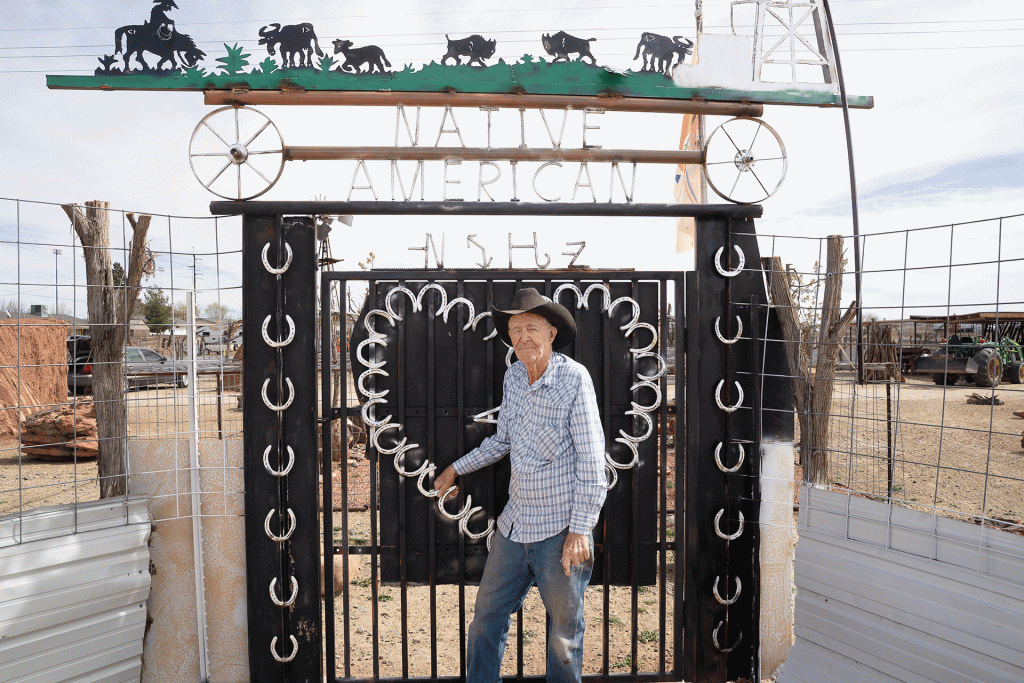
Old structures, ranch equipment and metal silhouettes of pioneers and wildlife dot the grounds, telling pieces of the region’s history. Over the last year, however, Baird has turned his attention to the property across the street from the Pioneer Museum, where he has been steadily creating a second site focused on Native American history and culture, something he felt was missing from the way the area’s past is often remembered.
“We give thanks to the pioneers that come in here,” Baird said as he walked through the new museum. “But how about the Native Americans that were here when they came in and shared and helped them too?”
That realization is what inspired the project. After spending years building the Pioneer Museum, Baird said he began thinking about the people who were living in the region long before settlers arrived and how their stories were rarely told alongside pioneer history. The new property, still being finished, is meant to help fill that gap. “That’s the reason why I’m doing it,” Baird said. “I thought it’s no more than right.”
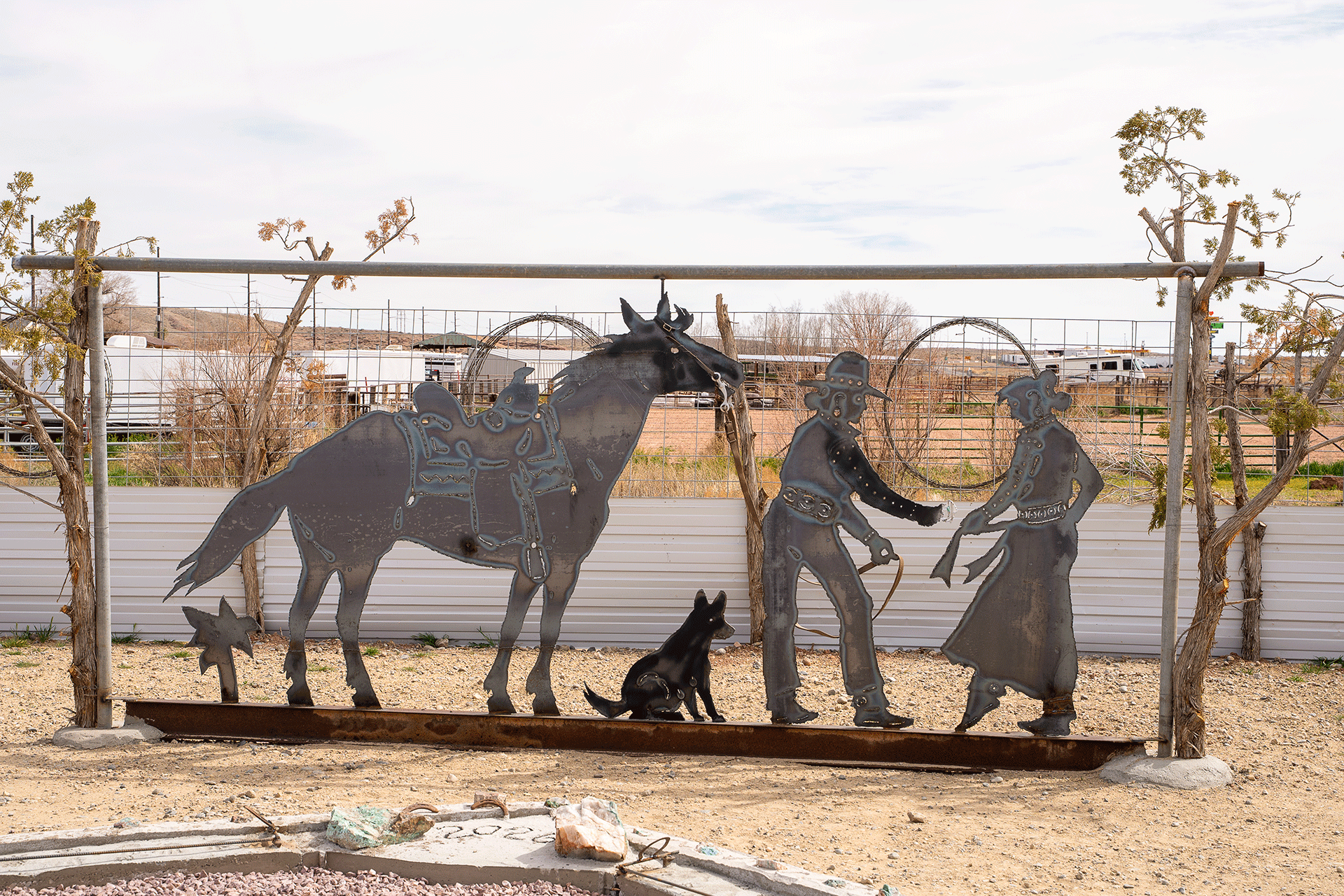
Like the Pioneer Museum, the Native American Museum is not a traditional indoor museum with cases and display boards. Instead, the grounds are designed for visitors to walk through and explore. Metal cutouts of people, animals and scenes from the past stand throughout the property, creating a kind of outdoor storytelling landscape that blends art with history.
Many of those metal silhouettes were created by artist Mel Bradshaw, who has worked with Baird on the project. Cut from large sheets of steel, the pieces depict animals, riders on horseback and scenes from everyday life in the Southwest. Some show figures traveling by wagon or tending to animals, while others portray wildlife native to the region. The figures are scattered throughout the property so visitors encounter them as they walk along paths and around the buildings. “Mel’s one of the best,” Baird said. “He’s done that kind of artwork all his life.”
Baird said a number of people have helped bring the project together and he wanted to be sure they were recognized. “There’s four or five people that have helped me so much that I’d never have been able to do it without them,” Baird said. Among them are Bradshaw, Baird’s son and daughter Randy and Teddi Baird, Tillman John, Dan “Navajo Dan” Walters and Don Mosier, all of whom have contributed work, ideas or labor as the property has taken shape.
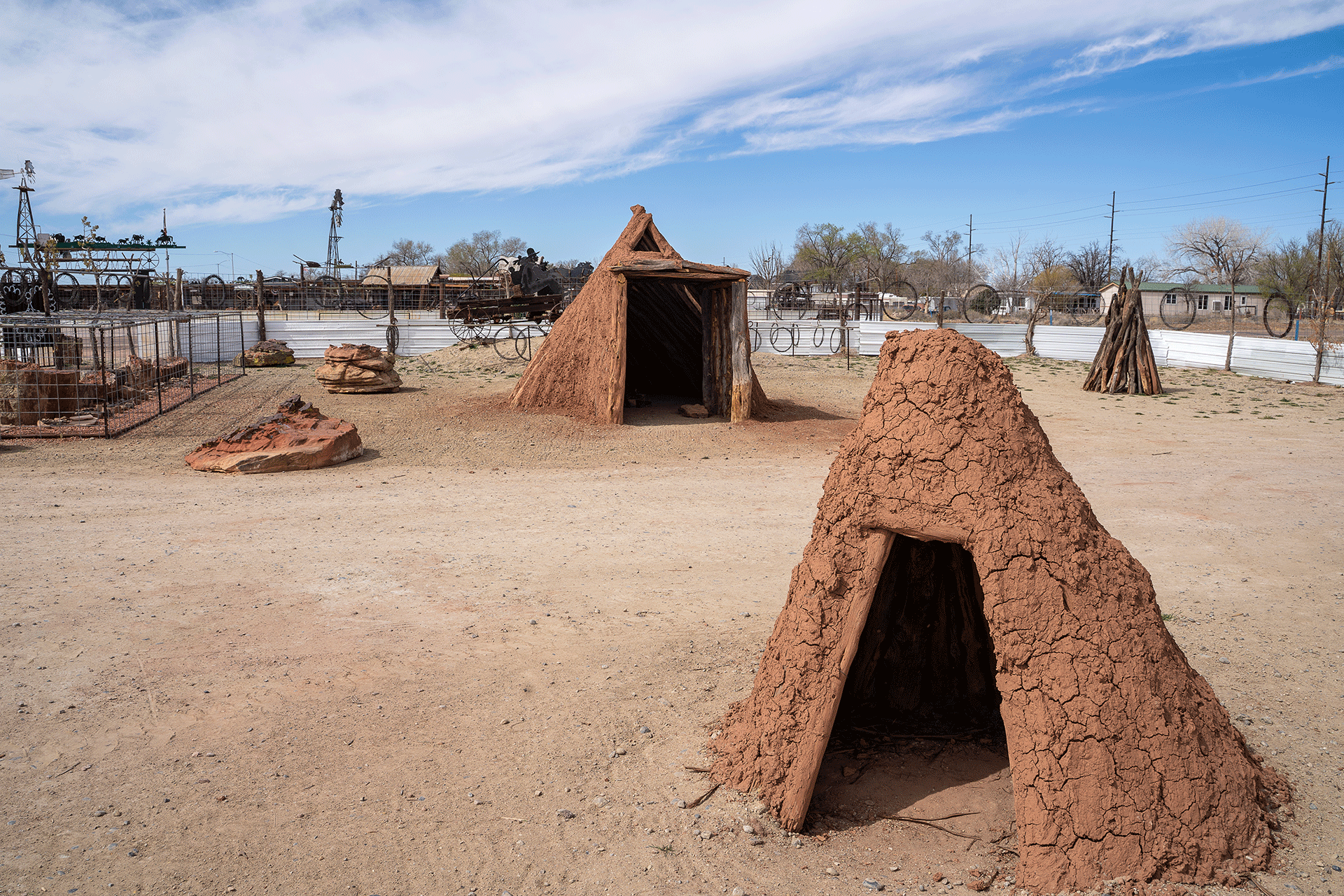
One of the central features of the new site is a traditional hogan that once stood near Indian Wells before it collapsed with age. Baird said a Navajo friend salvaged the remains, hauling the pieces away in a pickup truck and rebuilding the structure on the property.
“It fell down out there,” Baird said. “He went in and loaded it piece by piece and brought it in and put it back up.”
The building now stands as a reminder of how families once lived and worked in the region. Baird said part of the goal of the new property is to explain aspects of daily life that many visitors may not know about.
“A lot of people don’t realize the male didn’t live here with the female,” he said while describing the traditional living arrangements. “The male lived separate. He actually lived outside. He’d come in maybe if it was cold and build a fire, but the female had the little ones so she lived in it day and night.”
Nearby, another feature demonstrates how people once tracked the passing seasons using the sun rather than clocks or calendars. Standing beside a row of markers that show the sun’s changing position through the year, Baird explained how the system worked. “When the sun come up this morning it was here,” he said, pointing to one position. “When it goes down tonight it’ll be here. As the sun comes back it lowers, and that tells them when winter’s over and when to plant their crops.”
Across the road, the Pioneer Museum continues to tell another side of the region’s history. That property includes a bunkhouse connected to the historic Hash Knife Cattle Company as well as artifacts Baird has collected over decades while ranching in the area. Among the pieces on display is a 100-year-old Maxwell automobile that still runs and occasionally appears in local parades.
The Pioneer Museum also includes metal artwork that depicts moments from early settler life, including one piece inspired by Baird’s own family history. The cutout shows his grandmother kneeling beside a wagon after losing a three-year-old child during the pioneer era, when medical help could be days away.
“My granddad had been gone for two weeks and she couldn’t get him well,” Baird said. “She went around behind the wagon and knelt down and prayed the good Lord either to take him or get him well. She picked him up and he looked up in her face, smiled and died.”
While the Pioneer Museum preserves those settler stories, Baird said the new Native American Museum is meant to add another layer to the history of the region, recognizing the people who lived there long before towns and ranches were established.
Despite the time and money he has invested into both properties, Baird said he does not think of the museums as something that belongs to him.
“This belongs to everybody,” he said. “I’ve got a lot of money tied up in here, but the money ain’t no good. This is a remembrance for (the next generation of) kids and you and everybody. That’s what it’s all about. It’s not for me. I sure ain’t going to take it with me.”
Visitors will have a chance to explore the new Native American property during Joseph City’s upcoming Founders Day celebration on March 21, when Baird plans to open the grounds to the public and from 2 to 4 p.m. Navajo community members will be present to talk with visitors and help explain some of the cultural traditions represented on the property. After the event the museum, much like the Pioneer Museum, will be free to visit and hours will be set for people to visit and give themselves self-guided tours.
Even as he approaches 90, Baird still spends his days walking the grounds, adding new pieces and thinking about the stories the land can tell. Asked about slowing down, he just laughed. “I tell people I’m only 90,” Baird said. “So I’ve still got a few good years.”