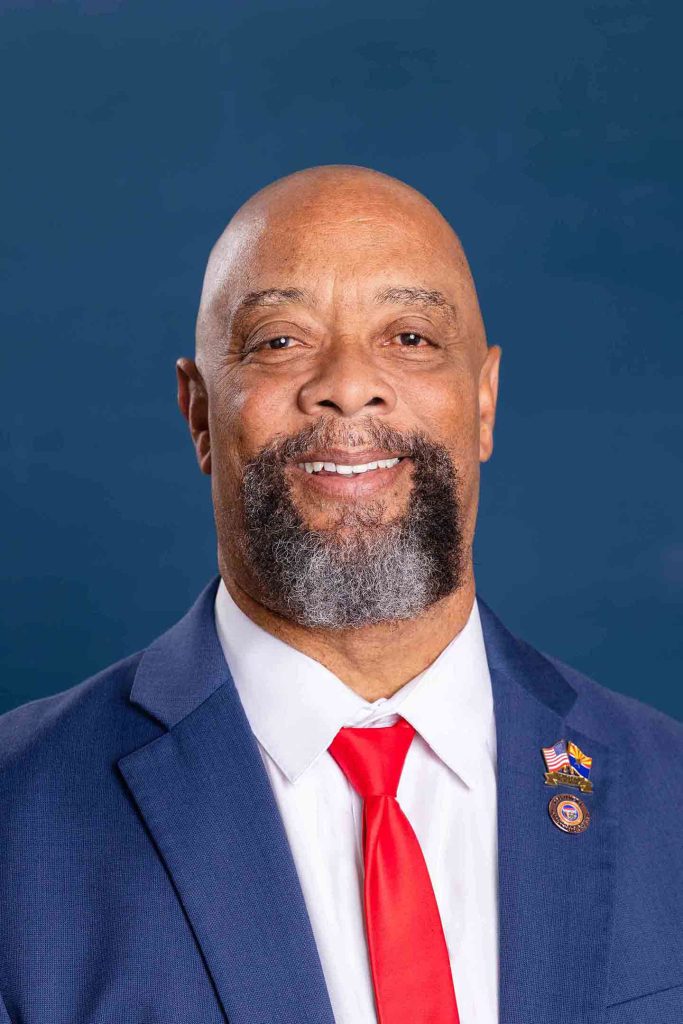
Navajo County Recorder David Marshall is facing a potential legal challenge from the Arizona Attorney General’s Office over whether he is eligible to hold the county office after resigning from the Arizona House of Representatives before being sworn in as recorder.
Attorney General Kris Mayes sent Marshall an April 24, letter stating that her office believes he is ineligible to serve as Navajo County Recorder because he had been elected to a two-year term in the Arizona House beginning in January 2025 and ending in January 2027. Mayes wrote that Article 4, Part 2, Section 5 of the Arizona Constitution bars members of the Legislature from holding another public office or being employed by the state, county, city or town during the term for which they were elected or appointed, except for school trustee positions and public school teaching jobs.
Marshall resigned from the House to accept the recorder position after the Navajo County Board of Supervisors voted to have him fill the position and was sworn in as recorder on April 21. Mayes wrote that, because Marshall’s elected legislative term would not conclude until January 2027, he is “not currently eligible to hold another public office” or be employed by a county. The attorney general said that unless Marshall resigned as recorder, her office would be required to file a quo warranto action in the Arizona Supreme Court, a legal action used to challenge whether a public office is being unlawfully held.
Marshall, through attorney Linley Wilson of Holtzman-Vogel, responded May 6, disputing the attorney general’s interpretation and arguing that Marshall is lawfully serving because he resigned from the Legislature before taking the oath as county recorder. Wilson wrote that the “material facts are undisputed,” but that the legal conclusion reached by the Attorney General’s Office is incorrect.
According to Wilson’s letter, Marshall had been reelected to the Arizona House of Representatives for the term beginning in January 2025. After a vacancy occurred in the Navajo County Recorder’s Office, the Navajo County Board of Supervisors conducted a selection process under state law to fill the vacancy. At its April 14 meeting, the board held a call to the public on the appointment, heard from several residents supporting Marshall, and then interviewed three finalists in executive session.
Wilson claims that Marshall tendered his resignation from the Arizona House the next day, effective April 17 and was sworn in as Navajo County Recorder on April 21. Wilson argued that Marshall never simultaneously held both offices and was not a member of the Legislature when he took office as recorder.
The dispute centers on how to interpret the constitutional phrase stating that “no member of the legislature, during the term for which he shall have been elected or appointed shall be eligible to hold any other office” or be employed by the state or local governments. Mayes’ letter relies on prior Attorney General opinions from 1977, which said the provision prohibits taking another office during the elected term whether or not the legislator resigns and that a legislator who assumes another office in violation of the provision could be subject to ouster.
Wilson’s response argues that the provision applies only to someone who is currently a “member of the Legislature,” not to someone who previously served but resigned before taking another office. The letter says the purpose of the constitutional provision is to prevent conflicts of interest, self-dealing and dual office-holding by sitting legislators who could influence the creation, powers or compensation of another public office they later seek to hold.
Wilson cited several Arizona Supreme Court cases to support that position, including State ex rel. Pickrell v. Myers, State ex rel. Nelson v. Yuma County Board of Supervisors and Laos v. Arnold. The response argues that those cases support a status-based reading of the provision tied to whether someone is actually a member of the Legislature and whether they are in a position to influence legislation. Wilson wrote that a person who has resigned from the Legislature cannot vote on legislation, participate in legislative deliberations or influence the creation or compensation of an office.
The response also argues that Arizona’s resign-to-run law does not apply to Marshall’s appointment because that law concerns offering oneself for nomination or election to another salaried office, not seeking appointment. Wilson cited a 2017 Attorney General opinion that said an elected salaried official may apply for an appointment without resigning from office because seeking appointment is not the same as seeking nomination or election.
Wilson further argued that the 1977 Attorney General opinions cited by Mayes are advisory, not binding on courts or successor attorneys general and said they did not adequately address later or controlling Arizona case law. The letter states that those opinions should not be the basis for seeking to remove a duly appointed public officer from office.
The response also challenges whether the Attorney General’s Office has authority to bring the threatened quo warranto action under the circumstances. Wilson cited Arizona Supreme Court decisions involving former Attorney General Mark Brnovich and the Arizona Board of Regents, arguing that the attorney general must identify a violated law and an unlawful exercise of public office. Wilson wrote that Mayes’ letter does not identify an unlawful act by Marshall but instead rests on what Wilson called a flawed reading of the constitutional provision.
Mayes’ letter says her office is seeking to ensure that public offices are held lawfully under the Arizona Constitution. Wilson’s response asks the Attorney General’s Office to withdraw its threat of legal action and says Marshall remains willing, through counsel, to discuss the matter further if the office has additional concerns or legal authority it wants to raise.