

Aaron Colon was living in a modest apartment in Holbrook and knew he needed to move his family into something bigger. He was shown a house, with the price a bit more than what he wanted to pay and when he told that to the person showing him the home, he was told there was something that might be more in his price range.
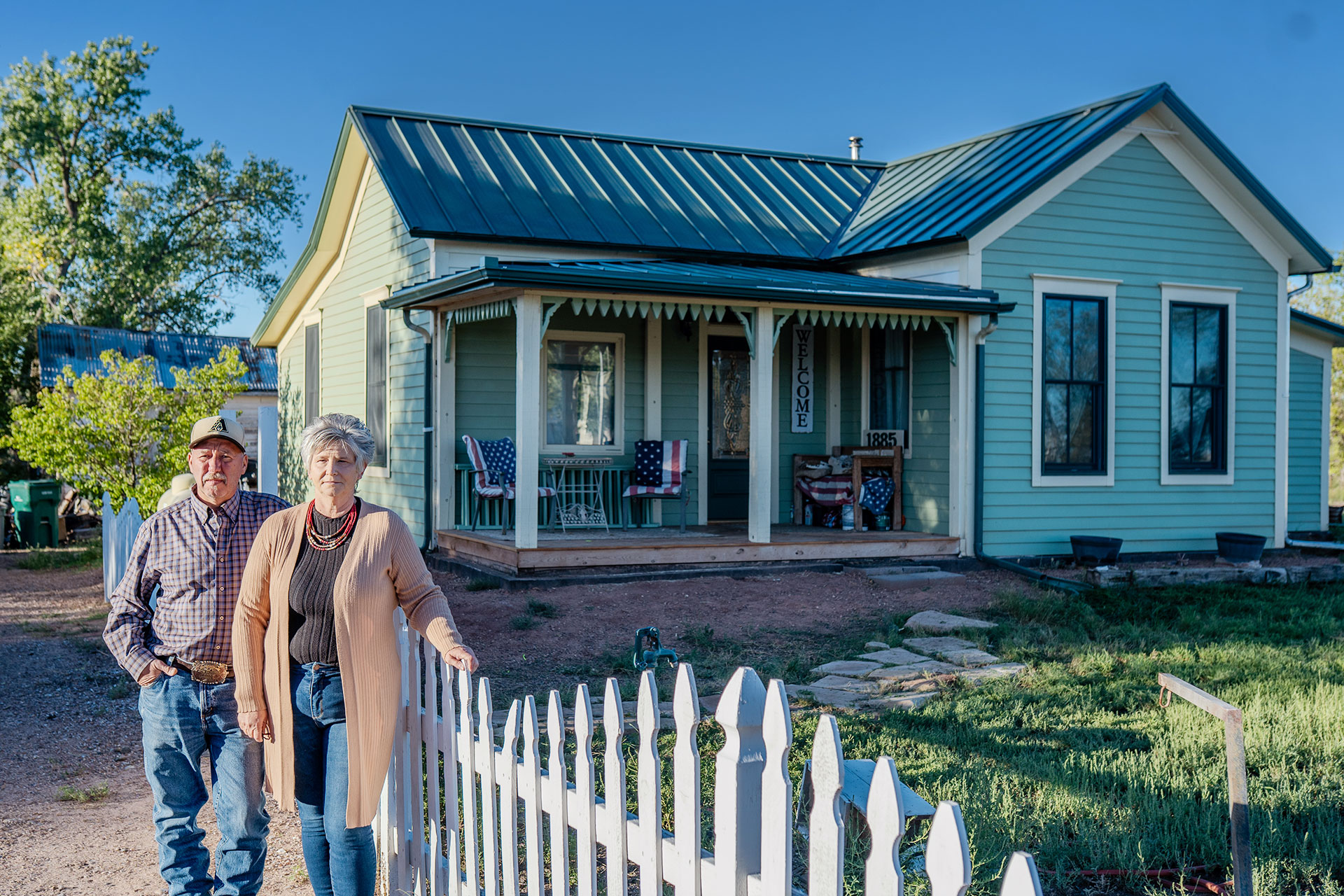
His wife Becki joined Aaron to investigate the house that is located at 171 Alvarado Street in Holbrook, and when they crossed the property line, they found a house that had not been lived in for decades and seemed better suited for a bulldozer than a family. Becki was not impressed to say the least, but Aaron, on the other hand, was immediately taken with a Victorian-era building that reminded him of the houses he grew up around in Chicago.
He examined every square inch of the home, went underneath through the crawl space, and investigated the attic and every piece of dust and rotted-out beam, and saw a vision, not to mention something he could easily afford.
Aaron wasted no time getting to work, and explained it would be easier to describe the parts of the home that didn’t need replacing, but occasional stints in the construction industry had prepared him for such a feat. Now that it has been restored, Aaron is looking to get the home, which was built in 1885, on the state and federal historical registry.
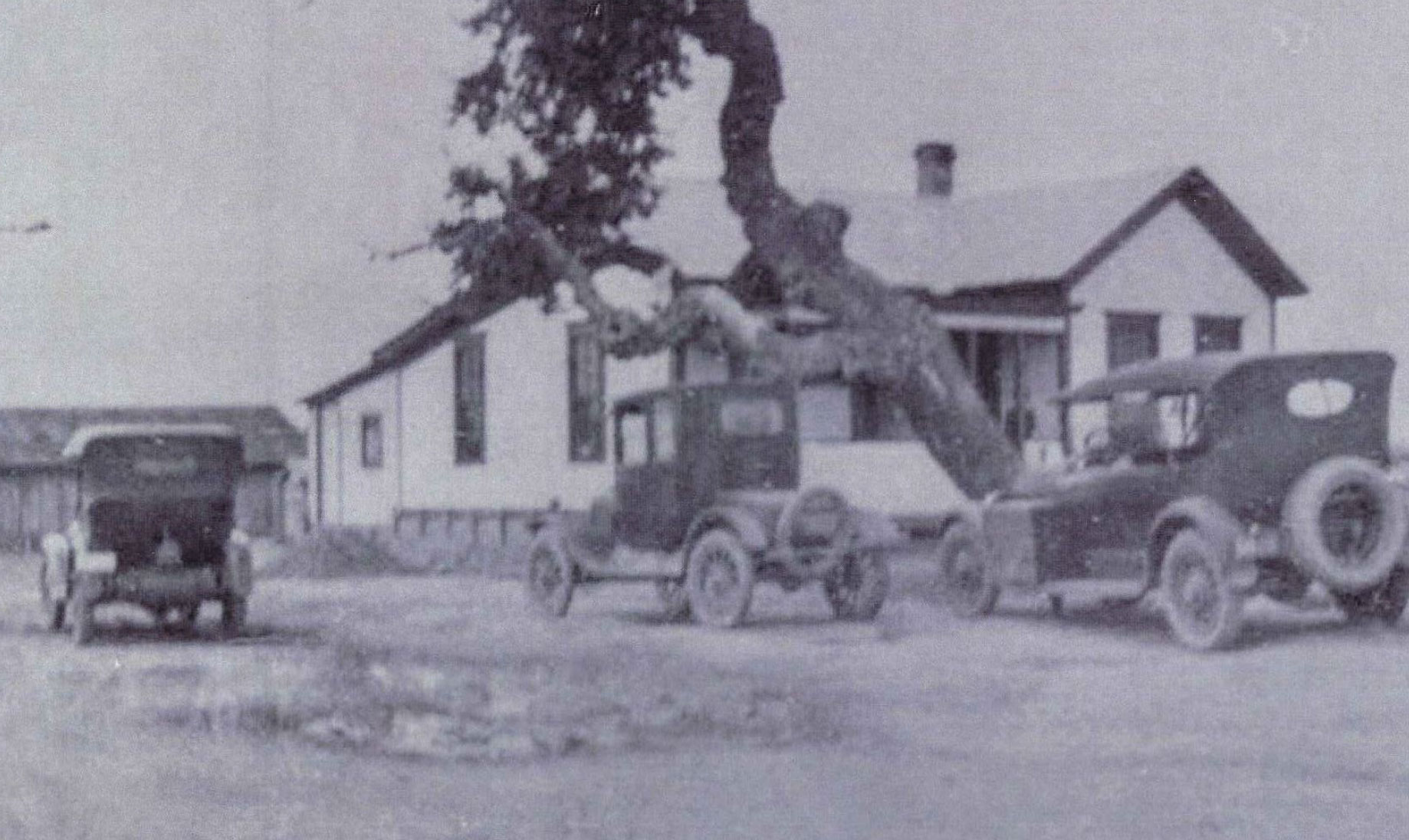
The home had survived two major disasters: the big Holbrook fire of June 26, 1888, when a textile company burned and sent flaming cloth directly to the homes and businesses across the city. Most of the buildings in town were affected if not completely destroyed in the fire. It also sits at a high point, which allowed it to survive the Great Holbrook Flood of 1923, which caused significant damage to the town.
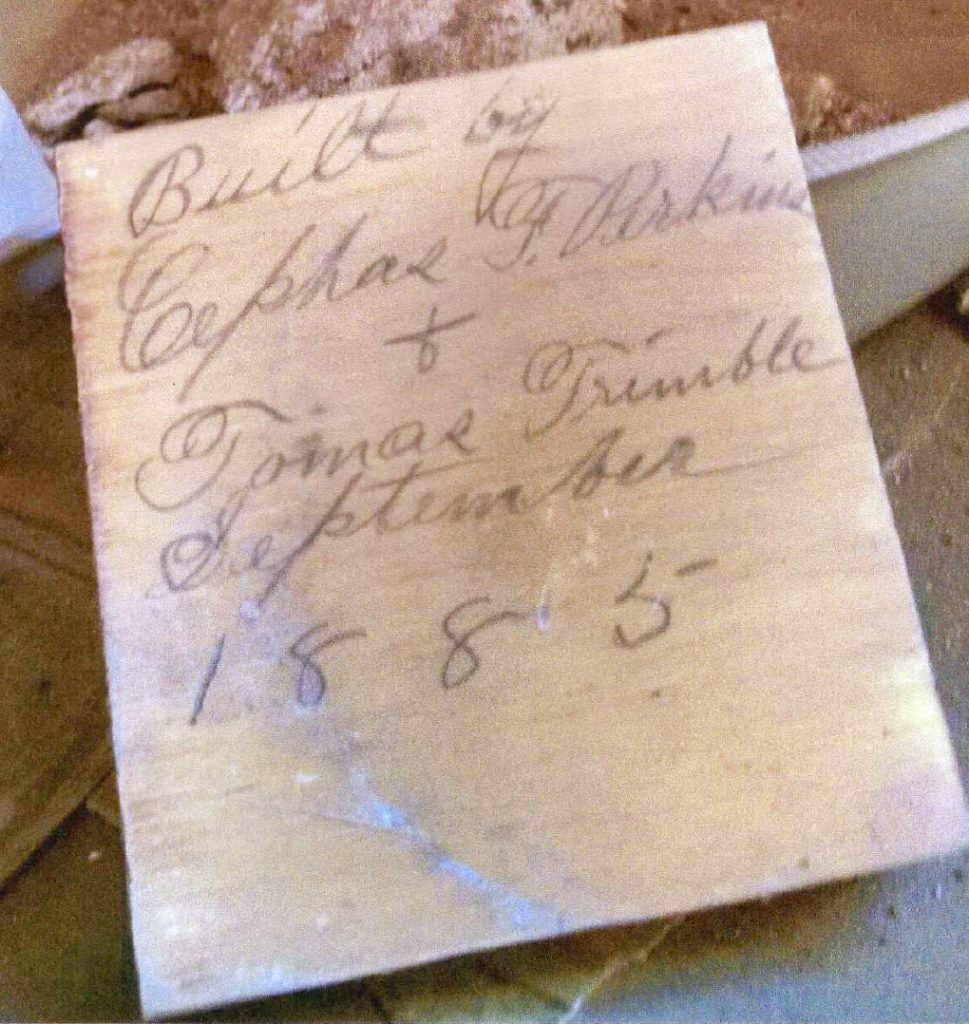
The age of the home is far from the only historically significant thing about it. The home was built by notable locals Cephus Ford Perkins and Tomas Trimble while they were working for the Atlantic and Pacific Railroad.
Perkins was the first man to lay a land claim to Perkins Valley; hence the name and members of his family are living in Holbrook to this day. Perkins, who had come to Holbrook at age 24 because of his job with the railroad, was originally from Connecticut. The house is built in a Victorian-style cottage or “Cape Cod” style, likely influenced by Perkins’ New England roots.
Perkins was described in an 1895 edition of the Holbrook Argus as a “shrewd businessman [who] has accumulated considerable property. He owns a number of blocks in the best residence portion of Holbrook and has also 80 acres joining the townsite on the south and 160 acres west of town, on which is located a well-equipped slaughterhouse.” He also owned and supplied Holbrook’s meat market at the time.
Perkins also owned the Billiard Saloon and sold it before it became Terrill’s Cottage Saloon, the site of Holbrook’s most iconic Wild West incident, the shootout at what is now known as the Bucket of Blood Saloon. The gory nickname had already adorned the reputation of the saloon even before the shootout.
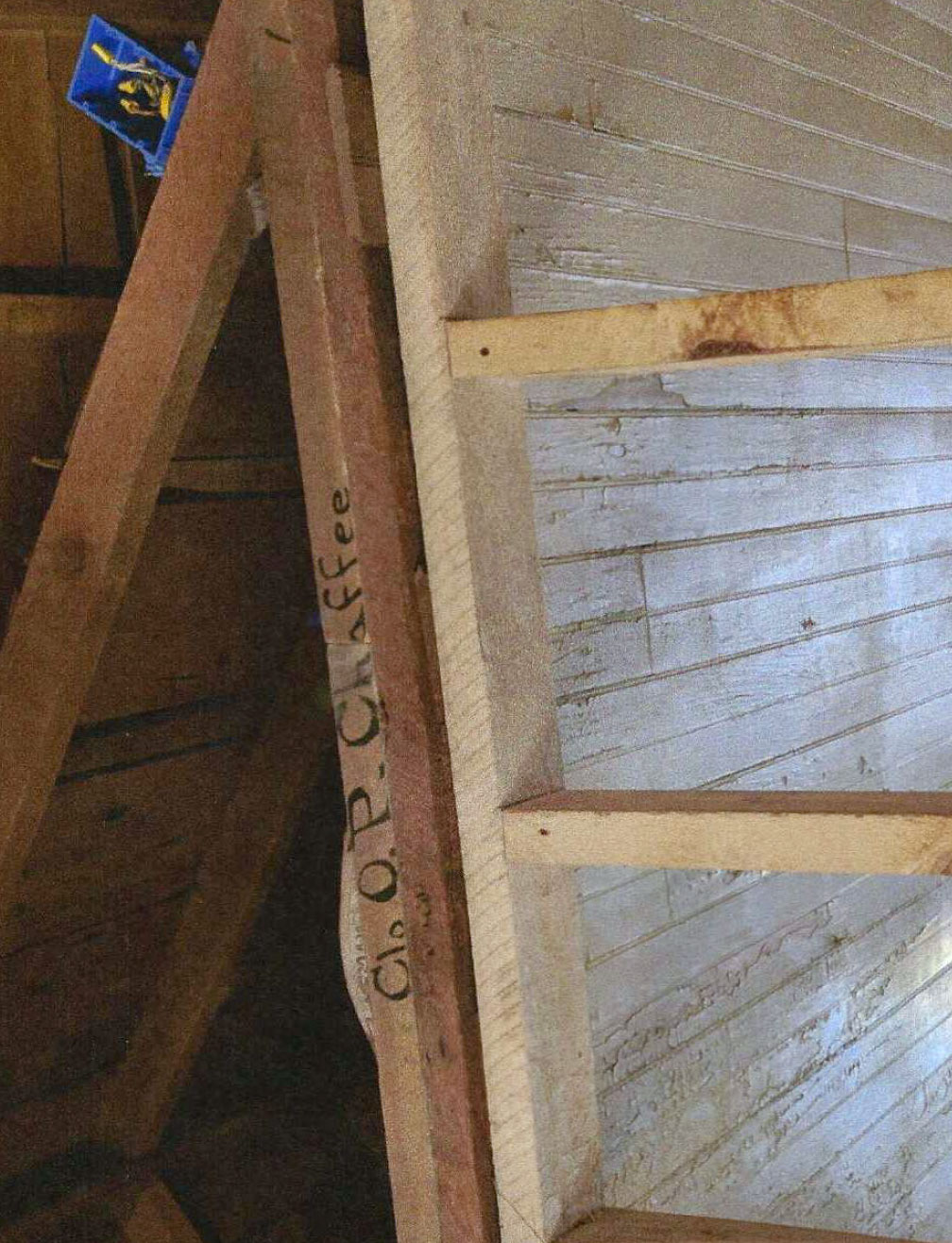
While Aaron was restoring the home, he discovered a wooden beam stamped “O.P. Chaffee.” That name led him down an unexpected trail of history. Orestes Parmeno Chaffee was a man with an extraordinary biography. Born in 1832 in Bloomfield, Ohio, Chaffee’s early life took him across the frontier as an express rider before he enlisted in the Confederate Army. He rose through the ranks for “gallant conduct” at the Battle of Shiloh and served as a quartermaster under several Confederate generals, including Braxton Bragg and Joseph Wheeler, surrendering with Wheeler’s command in 1865.
Chaffee was even displayed on a piece of Confederacy currency which was officially recognized by confederate states. He was also the brother of General Adna R. Chaffee, who later became chief of staff of the United States Army, and after which Fort Chaffee in Arkansas is named, this sharp contrast underscores the divided loyalties of the era.
After the war, Chaffee was one of six Confederates not given amnesty by the U.S. government for his role in the war. He fled to Brazil, where he claimed to have served as a cavalry inspector during the Paraguayan War and was granted land in the Amazon Valley. He later returned to the United States and, by the 1880s, found himself in Holbrook, where he married Helen Nichols and worked as a quartermaster’s agent, postmaster and local representative for the Ayer Lumber Company of Flagstaff.
At the time, the Ayer Lumber Company was among the largest suppliers of building materials in northern Arizona, shipping milled lumber along the railroad to growing frontier towns like Holbrook. Chaffee handled sales and distribution locally and likely supplied lumber to most homes, including this one.
Chaffee remained in Holbrook for about a decade before moving on to serve under General Leonard Wood in Cuba and later working for the Quartermaster’s Office in New Orleans. He died in Kansas City, Missouri, in 1908, leaving behind a life so improbable that a New Orleans journalist once described it as “part fairy tale, part dime novel.”
The first owner of the home was J. E. Derosear, who also played a significant role in Holbrook as the owner of the Holbrook Argus, which was Holbrook’s first newspaper although he was not its first owner. He was also a railroad man who spent many years as a telegraph operator in the city.
The home carries with it fingerprints from some of the most prominent names in Holbrook’s history and now, more than a century after it was first built, the house that once seemed destined for demolition has been given new life. What started as a risky handshake deal and a vision through the dust and wood-rot has become a careful restoration of one of Holbrook’s oldest surviving homes. The 1885 home has weathered fire and flood, hosted railroad men and businessmen, and even carries the mark of a crooked Confederate soldier turned Arizona tradesman. As it moves toward official recognition on the historical registry, the home serves as both a tribute to the city’s beginnings and a testament to the people who still believe in preserving its story.



