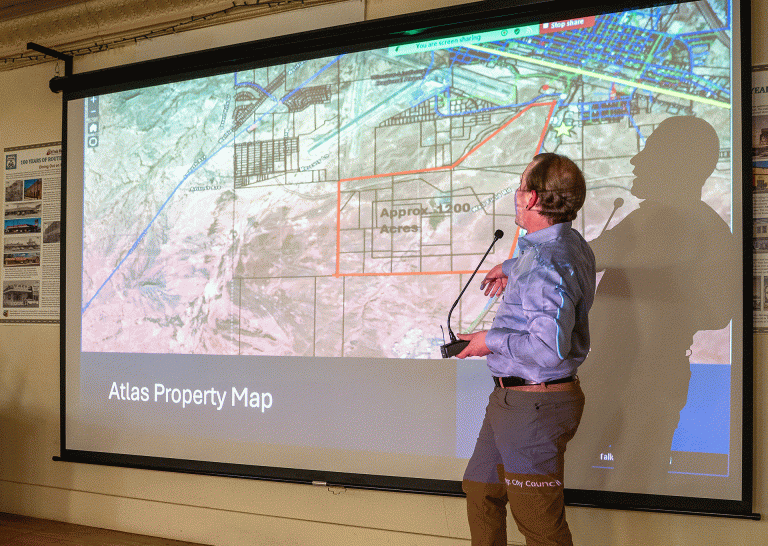
During last week’s meeting of the Winslow City Council, the city’s Economic Director Jack Fitchett gave several updates on the business projects in the city. Fitchett said work continues on relocating the GLD I-40 Trade Port project from the Second Mesa exit to a site off State Route 87 with terms and conditions to be released soon.
The city also received a submission on its airport development proposal and is now awaiting conceptual designs.
On the grant side staff is waiting on a decision from the Economic Development Administration for a $30,000 incubator program that could be housed in the current police department. A larger application for $500,000 through the Local Food Promotion Program would sustain the farmers market once its current grant expires Oct. 1. The popular program is likely to continue in some form regardless of the outcome.
The Business Retention and Expansion Incentive is also open with $30,000 available to small businesses until Oct. 31.
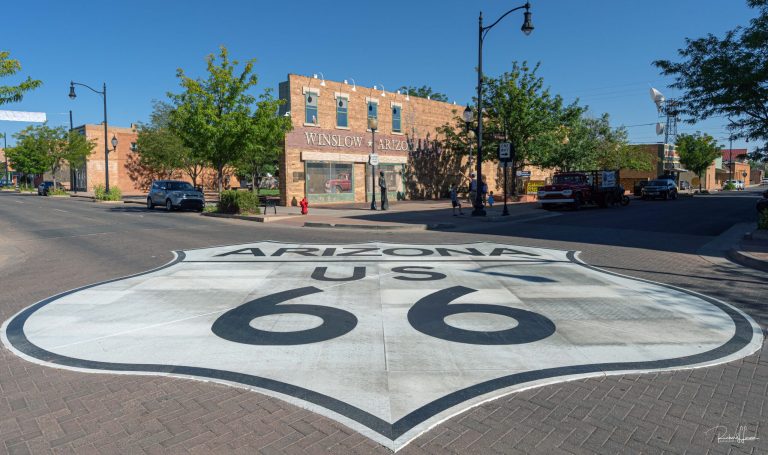
Fitchett tied the city’s new “Road Tunes” musical rumble strip to the Route 66 centennial and said Winslow is seeking a seat on the governor’s Arizona Energy Promise Task Force to ensure the community has a voice in planning for new transmission and generation.
Fitchett spoke to the council about a list of projects that reflect the city’s growing momentum. Construction on the new Circle K truck stop on North Park Drive is expected to begin soon while ACE Hardware is preparing to open in the former Bashas building nearby before the holidays. Hampton Inn & Suites has received full permitting and is slated to break ground by the end of October. A 290 unit housing subdivision is also in the pre-development stage, a sign that Winslow is being pulled into a regional housing crunch that a 2023 study estimated at more than 17,000 needed homes across northern Arizona.
During the meeting the council also heard from Andrew Myers of Sustainability Partners presented an unusual option for tackling large public works projects. His firm offers “infrastructure as a service,” covering 100% of upfront design, equipment and construction costs while the city pays a monthly fee once the asset is in use. Maintenance funds are built into the contract and the city keeps operational control.
The model allows projects to move forward months or years faster than traditional bond financing and helps avoid inflation. Unlike debt the agreement can be exited at any time with a buyout at the prorated original cost. Winslow’s wastewater main was identified as a prime candidate since its expansion is a prerequisite for new development.
Council members pressed Myers on costs and whether later grants could still be applied. He said they could, noting the firm charges a management fee of less than 1% annually plus the cost of capital, a rate designed to be comparable to traditional financing while reducing risk and delay.
Auditor Michael Lazan delivered the results of the city’s fiscal year 2024 audit to council at the meeting and said Winslow earned an unmodified opinion, the highest possible rating. The review confirmed the city’s finances are materially accurate and in compliance with state and federal law. He cautioned that the process was delayed due to staff turnover which slowed the year end closeout.
Auditors also recommended improvements in cash reconciliation and found errors in HUD reporting and housing voucher files, as well as a missing step in checking vendors against federal suspension lists. None of the vendors were improper but the step must be added. The city has submitted a corrective action plan and auditors will return in two weeks to verify progress. Council members noted the issues were relatively minor and praised staff for ending the year with a half million-dollar surplus.
The quarterly report from Little Colorado Medical Center added both encouraging news and serious concerns. Chief executive officer Travis Udall said the hospital has replaced all of its inpatient and emergency beds with new models at a cost of about $20,000 each after welding the old ones together for more than two decades. Services are seeing a surge after the closure of Gallup’s obstetrics department and the loss of OB doctors at Summit. Winslow has gone from two or three births a week to as many as three or four a day, forcing the hospital to hire two new nurses. Outpatient visits have tripled and surgeries have doubled, a trend Udall said reflects community trust. Financially the hospital is having one of its strongest years yet but it is bracing for two million dollars in state payment cuts. He said 2026 is manageable but 2027 and 2028 could pose deep challenges for small hospitals if patients do not continue to use their local facilities. Council members pledged to work with the hospital to keep residents informed and insured.
In other business, the council:
*Approved past meeting minutes and the check register.
*Approved a contract with McCauley Construction and Trucking LLC for cemetery expansion at a cost of $252,060.
*Authorized acceptance of two grants from the United States Department of Transportation for $172,052 and $157,004 for airport infrastructure.
*Approved designating Daniel Hendrix as Chief Fiscal Officer to be able to submit the fiscal year 2024 expenditure limitation to the auditor general.
*Approved the sale of real property near Virginia Street and Madison Street to Mary Alice Hayes at a cost of $1,000.
*Approved the sale of real property at 321 Jefferson Street to Ronald Lucero and Sylvy Galvan Lucero at a cost of $8,000.