Travis Udall, the chief executive officer of Little Colorado Medical Center (LCMC), addressed the Winslow City Council during their most recent meeting. He began by saying, “I think there is a strong correlation in our efforts to invest in partners with our community and getting our trust back.”
He explained that the hospital’s clinic volume has grown at a rapid pace and that LCMC is adapting to meet demand. “Our clinic volume has tripled and we’re almost to the point where we cannot keep up. We are expanding our clinic hours later in the evening and expanding on Saturday’s as well.”
Udall noted that although there have been concerns about federal healthcare funding, “to be clear, with this budget, there have been no Medicare or Medicaid cuts.” However, he told the council that while the state has allocated money for Medicare, it has not actually been awarded for about three months. He stated that the figure associated with this delay amounts to approximately $3.5 million. He also said that he believes this issue will be resolved soon, because the president of the state hospital board has been in conversation with Governor Katie Hobbs about distributing the money.
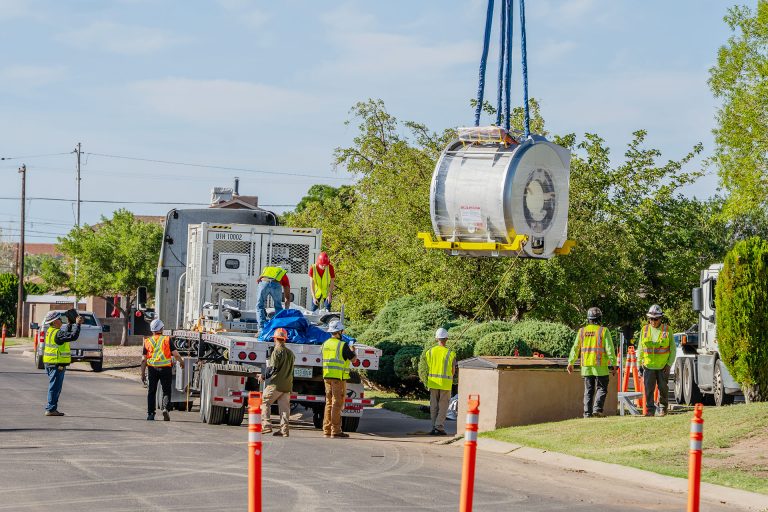
Udall emphasized the importance of improving and expanding healthcare services in the region. He explained how LCMC recently secured a full-time MRI machine, which he said now eliminates the need for a rotating service that once visited Winslow and other rural Northern Arizona hospitals. This change is intended to provide better access for local patients who need immediate testing or do not wish to travel. In addition, Udall outlined several programs that have been initiated at LCMC, including a pain management program and a behavior health program.
He also spoke about LCMC’s decision to invest more in women’s health services, saying, “Future investment is going to go more towards women’s health services. We feel like that’s a gap in this area and that is something we need to address. In the future we are going to be looking to invest in a mammography machine so we can do mammograms here, so women don’t have to travel.”
Udall told the council that the hospital has reduced its emergency room wait time by one hour since he started last May and he stressed the benefit of a recently revived swing bed program, which allows patients additional time at the hospital, up to two weeks, if they need it for recovery. According to Udall, this extra time significantly improves patient health outcomes. He also announced that a new occupational therapist will be joining LCMC to support these initiatives.
The council then heard from City Manager David Coolidge, who spoke about the city’s ongoing projects and how they are proceeding, especially regarding federal and state funding.
The $3.5 million water tank project in collaboration with the Army Corps of Engineers had been moving slowly, but Coolidge reported that progress was made after councilmembers recently visited Washington, D.C. He stated that representatives of the Army Corps of Engineers contacted him while those councilmembers were still in the nation’s capital, and Coolidge told council that finalizing the agreement with the city should happen in the coming weeks.
Coolidge also provided updates on local infrastructure and recreational amenities. He indicated that construction on the ramada at the Hayden Walton Sports Complex is almost complete. Tom Harris Field, which needed accessibility updates and turf-related improvements, is also nearing completion and should be ready around the start of Little League season in April. The council learned that the gazebo at the 9/11 park will be upgraded and is on track as well.
Regarding the grant funding for the Coopertown park upgrades, Coolidge explained that a grant from the state parks was frozen. A basketball court was installed there, but the city is still waiting for funding to be unfrozen so it can purchase playground equipment, shade structures, tables and benches. In contrast, Coolidge said that the Mother Road Farmers Market grant, which had been on hold as of Jan. 19, has now been reimbursed and will remain in place through September.
The council concluded its meeting by voting on an ordinance related to marijuana dispensary licensing. In November, members discussed removing the requirement for facilities to hold both medical and recreational marijuana licenses, with some city officials pointing to potential economic and tax benefits. The matter was tabled at that time. At the most recent meeting, many councilmembers again supported the medical and economic benefits of the city.
Vice Mayor Jim MacLean was the sole nay vote and prefaced his vote by stating, “I don’t want to be more friendly to this industry.” However, he also expressed that he understood why other members supported the change. Ultimately, the council passed the ordinance, removing the dual licensing requirement. Now dispensaries are allowed to have either medical marijuana, recreational marijuana, or both, based on their own choice.
In other business, the council:
* Approved reappointment of Randal Sahmie and Monique Chavez to the Winslow Arts Council.
* Approved a declaration of vacancies on the Winslow Historical Preservation Commission.
* Approved the purchase of a Ford F-150 for animal control at the cost of $89,074.
* Approved a bid for street maintenance project with USS International Inc., in the amount of $420,120.
*Approved an intergovernmental agreement with Navajo County for the provision of election services.
* Approved a contract between the city and Yavapai County for use of Home of My Own Design and building plans. These are free single family home plans that are available for anyone to use as plans to build homes within Winslow.
*Approved a property split of the parcel located at 729 W. Mike’s Pike St.
The next meeting of the Winslow City Council will be held at 6:30 p.m. on Tuesday, April 8, in the meeting room located at 523 West Second St.