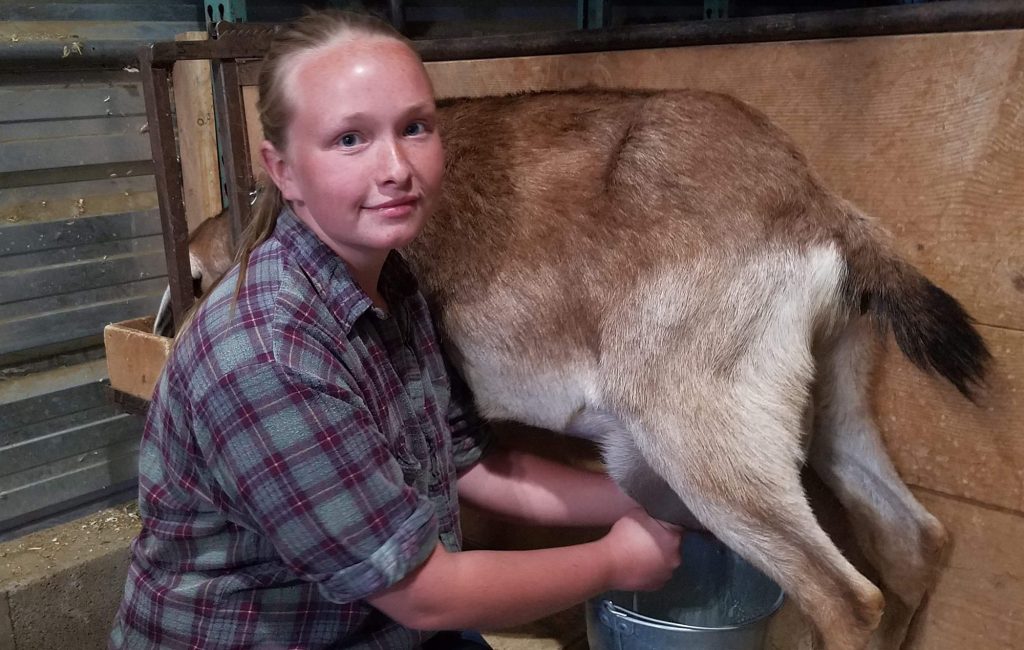
By China Cassidy When it was announced that COVID-19 had reached the United States, many businesses had to close, leaving several people without income or a way to provide for their families. One of Holbrook’s long-time residents who has been working with her family of eight to become more self-reliant, has several tips for those who are taking this downtime to do the same. Shari McLaws said that although their preparedness has benefitted them recently, her family made the change towards self-reliance years ago. “We’re self-employed. Some months we do well, some months we don’t, but that doesn’t change our expenses, so we’ve done a really good job at trying to keep our expenses as low as possible. We try not to keep any debt because you just never know when things are going to go down,” explained McLaws. Because she and her husband Alonzo are self-employed, they had to ensure that the lifestyle they wanted did not affect their ability to provide for their family. “It wasn’t based off of some future emergency. It was based off the life we intended to live. Being self-employed, we needed to make sure that we can take care of our family if something happens. Things change, and you never know. We kind of try to do it in a way that we can be considered independent of anything that is going on around us,” offered McLaws. She said that one element that contributes to their self-reliance is growing whatever produce they can throughout the growing seasons. “We have a decent garden every year,” said McLaws. She explained that they plant their own fruits and vegetables from seed. One thing McLaws said she has found to be beneficial is planting things that will continue to come back each year, which lightens the workload. “We’ve got our sage and our rhubarb and our goji berries, for example, that come back every year. As well as some asparagus and strawberries,” said McLaws, adding that they will continue planting more as the appropriate seasons approach. “We haven’t put any of our melons or squashes in the ground yet just because it’s not the right season yet.” In addition to growing their produce McLaws has milking goats, which she said consistently produces a gallon of milk a day. Aside from saving on the milk bill, McLaws can sell the baby goats when she breeds the momma goat. McLaws explained, “Our momma goat had four babies this year and we’ve sold the three. We have her companion goat that we had for her last year that is still for sale and we’re going to keep the little doe she had.” She noted that the doe would also be used for milking, increasing the amount of milk they get a day. The homesteader said she has a recipe for cheese, which she also uses the milk for. “So, when we get to the point when I’ve got more than three or four gallons in the fridge because we haven’t been using it that fast, then I’ll make homemade goat cheese. I use about a gallon and a half of milk to make a batch of goat cheese,” said McLaws. Her recipe is very inexpensive as it only requires the goat’s milk, vinegar and salt. They do not keep too many goats at one time but always ensure that their mother goat is taken care of in all aspects, including companionship. “We try to keep our numbers low. So, this year we had the momma goat and her companion because you don’t want them to get lonely.” While the goats produce plenty of milk to provide a little back stock of cheese, one of the aspects she enjoys about being able to make an abundance is to be able to share. “I mean, we try not to have too much (but) we always have friends that we have enough to share (with),” said McLaws. She and her friends also have a barter system. Although she cannot legally sell her goats’ milk, she does give it away in exchange for things like their homemade cheddar cheese. Not only do they get milk and cheese from their goats, but they even use it to make their soap. “It takes about a half a gallon to make a big batch of goats milk soap and that’s always a fun thing to gift and share,” said McLaws. She said it was beneficial to have on hand with the recent shortages in stores all over. “So when the rest of the world was running out of soap, I was able to use it for bartering abilities.” Another aspect that keeps them ahead of having to buy meat from the store is buying, raising and selling pigs. “When we buy pigs, we buy two or three. One of them will go in our freezer, and then we’ll sell one or two, depending on how many we have at the time. Then we have the money for our butcher fee and our feed for the next one,” explained McLaws. She said they buy and have one butchered about every eight months. “Our grocery bill is always low because I’m not buying much at the store as far as hamburger goes. I go to Sam’s Club and buy a big box of hamburgers but if we’re making meatloaf, we’re making it with sausage. If we’re making tacos, I’m making it with sausage because it’s what is already in my freezer. Because of that, my grocery bill is really low for a family of eight.” Also, on her list of tips is her love for repurposing anything leftover into a soup. “If you have leftovers, it can be made into a soup. It doesn’t matter what it is. It can be chopped and added to something. If you have rice, if you have extra baked potatoes, everybody loves a good potato soup,” she said. Additionally, their entire household runs off solar energy. Because the investment depends on the individual’s circumstances, it would be difficult to suggest how much money could be saved. McLaws said that anyone making changes to become more self-reliant in terms of raising and growing their food, switching to solar, or creating their own dairy and cleaning products should know that it takes patience and the understanding that it will not happen overnight. She said it’s also essential to think about what responsibilities can be taken on. McLaws stressed, “The hardest part of doing any level of self-sufficiency is don’t try to do too much at once.” She and her family have been working on making changes for the last 13 years to determine what works for them. “We add one item a year, and we go all the way through the winter season because you don’t know if you hate taking care of chickens or pigs, or whatever animal in the dead of winter.” McLaws suggested that an automatic watering system would be in the best interest of the animals to ensure that life’s busy schedule does not affect the animal’s quality of life. With the current events, McLaws is aware how fortunate her family is and sensitive to the fact that many people are struggling to adjust to the change. “People are experiencing a very heavy load right now, and luckily, I’m not one of them, I’m very grateful that our load is actually lighter right now. When everything gets back to normal, we really need to think about what part of normal is worth getting back to and what part is not and we need to make sure we’re really thoughtful in what we’re adding back to our lives.”