/wp:paragraph
wp:paragraph
With summer rapidly approaching, Arizona Public Service (APS) has launched 100 Days of Helping as a way to educate their customers, especially those in need, about assistance programs and energy-saving options available to them through APS.
/wp:paragraph
wp:paragraph
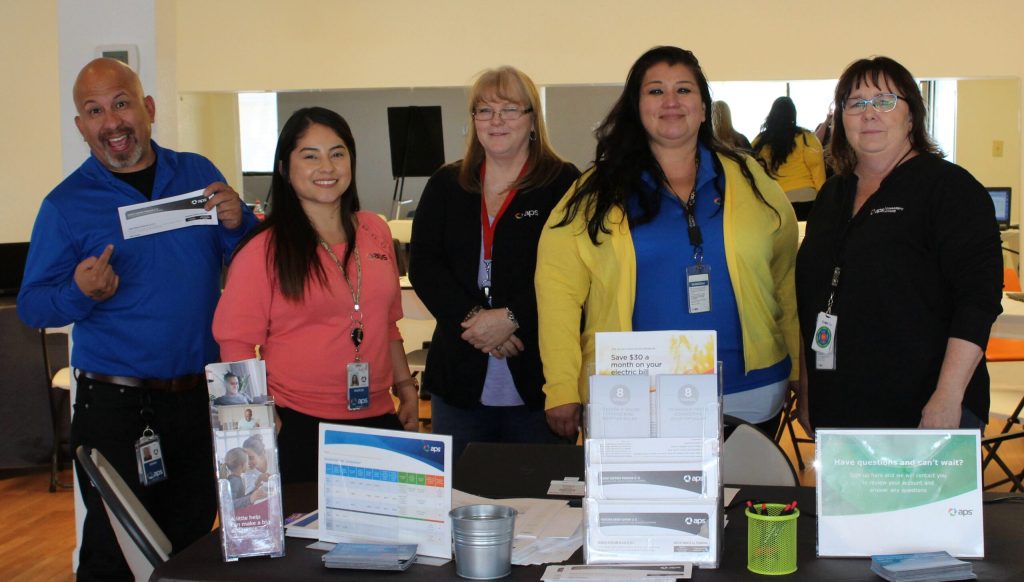
Last month, as part of the program, six members of the APS staff set up at the Machusak Recreation Center in Holbrook to spread the word about the Energy Support Program, which provides a 25 percent discount on the monthly bill for limited income customers, as well as other assistance programs.
/wp:paragraph
wp:paragraph
Janet Dean, community affairs manager, said, “We have been doing a series of these open houses for our customers to help connect them to our assistance programs that they might not know about. Two weeks ago, we were in Winslow and now we are in Holbrook.”
/wp:paragraph
wp:paragraph
“Increased energy usage in the summer means higher electric bills and for some of our most vulnerable customers, this can be difficult. It may mean having to balance other important expenses,” continued Dean.
/wp:paragraph
wp:paragraph
John Ruiz, team lead with APS Customer Service out of Phoenix, noted that one of outcomes of the 2016 Rate Review by APS, was increased funding for the Energy Support Program in order to help even more customers.
/wp:paragraph
wp:paragraph
The Energy Support Program guidelines are based on the number of people living in the household and the monthly gross household income. For example, a one-person household would potentially qualify if their gross household income was under $1,517 per month. For each additional person in the household, $540 is added to the $1,517 per month.
/wp:paragraph
wp:paragraph
Monthly gross household income is defined by the total household income, before taxes, which includes all money and no-cash benefits available for living expenses from all sources, both taxable and non-taxable before deductions.
/wp:paragraph
wp:paragraph
According to Dean, “100 Days of Helping is just one of the ways we’re ensuring customers who need a helping hand know where to turn for assistance. We’ve also partnered with the Department of Economic Security (DES) to allow their staff to enroll APS customers into our Energy Support Program when they qualify for programs such as SNAP or TANF.”
/wp:paragraph
wp:paragraph
Another APS assistance program is the Medical Care Equipment Program, which is designed to give limited-income customers who require electric medical equipment and are enrolled in the Energy Support program an additional 10 percent discount off on their monthly electric bills, bringing the total discount to 35 percent. In addition to qualifying financially, customers also need a physician’s verification of the need for medical equipment to access this program.
/wp:paragraph
wp:paragraph
Prisicilla Brockman, an advisor in the APS Call Center, explained that customers who rely on life-sustaining equipment but don’t qualify financially for the Energy Support program should still have their physicians fill out the verification form. “Through our Medical Care Preparedness Program we can help our customers who need equipment such as feeding tubes, ventilators and oxygen concentrators be prepared for outages.”
/wp:paragraph
wp:paragraph
Dean agreed, saying, “When we know who these customers are, we can coordinate with emergency services if necessary.”
/wp:paragraph
wp:paragraph
The Crisis Bill Assistance program offers temporary support for APS customers facing unexpected financial hardships such as losing a job or medical expenses. An APS customer can receive up to $400 in bill assistance annually through this program.
/wp:paragraph
wp:paragraph
Since 2015, APS has provided more than $5 million in Crisis Bill Assistance, helping more than 14,000 households across the APS service territory. In Navajo County, customers access this assistance through Northern Arizona Council of Government (NACOG) Community Services.
/wp:paragraph
wp:paragraph
For more information on these programs or to fill out an application online, visit aps.com/helping or call APS at (800) 253-9405.
/wp:paragraph