On the south side of Holbrook on McLaws Road is the Holbrook Indian School (HIS). Set on the edge of fields that once produced crops of alfalfa and grass, the school creates a respite from the high desert heat, as large cottonwoods shade the lawns that have felt the footsteps of students from numerous tribes since it was established in 1946.
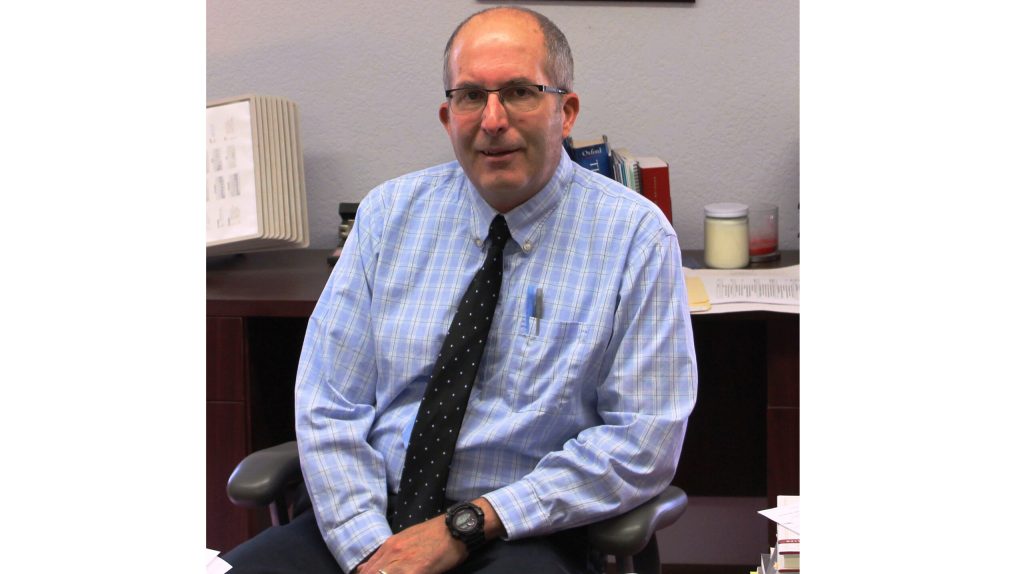
In a history almost as unique as Holbrook’s, the school is the only boarding school for Native American children offered by the Seventh Day Adventist (SDA) North American Division. Principal Pedro Ojeda said the school is part of the Pacific Union Conference, which includes the states of Arizona, California, Utah, Nevada and Hawaii.
“The SDA school system is part of the second largest parochial school system in the world,” shared Ojeda. “We have universities, colleges and schools all over the world that includes the Loma Linda University Medical Center in California.”
At its peak in the 1970s, the school had as many as 200 students, but today only 65 are enrolled in the first through 12th grade program. Much of the $3 million in funding the school receives is from the donations of SDA members, as the cost per student is only $85 a month which covers tuition, dorm room and book fees.
The curriculum is developed by the SDA North American Division Department of Education and includes welding, automotive, construction and horsemanship, as well as gardening. “We have our own standards. If you compare them across to the public school system standards, they are comparable and exceed those standards in my opinion,” said Ojeda, who added, “We have the added benefit of being able to teach about God within Bible courses, so our students get more classes for graduation. The classes definitely adhere to the common core and beyond.”
Most of the students are from the local tribes, including the Navajo, Hopi and Apache tribes. “This is the first year we have not had students from the Havasupai tribes,” said Ojeda. “In the past, we have had students from the Lakota and Crow tribes as well.” Navajo is the primary modern language taught at the school with Spanish available if needed.
Ojeda openly admits that melding the tribal traditions of the students to the tenets within the SDA faith can be challenging. “The more traditional our students are, the more distance we have with them when we consider spirituality,” shared Ojeda. “They have ceremonies they like to attend and some of those ceremonies clash with Christianity. We try our hardest to intertwine their concept of their creator with what the Bible teaches.”
The school is in session for nine months with the summer months open. “This summer we will be on our third year with a summer program,” remarked Ojeda. It is a program that is broken into two three-week sessions that include classroom teaching as well an outdoor school and summer camp-style activities. “Our goal is to provide the students with an opportunity to be here rather than in their homes where life can be destructive.”
Ojeda has made a lifelong career of working with the SDA schools. He and his wife have been with the HIS for the last six years. “We came from Bozeman, Montana, where my wife had a job at the boarding school and I was the fifth through eighth grade teaching principal at the elementary school,” shared Ojeda. “We spent 11 years there and loved it. You couldn’t see the ground for seven months out of the year because of the snow. Here it is completely different, but I love the desert. Not as cold or snowy and definitely more arid than Bozeman.”
Five years ago, HIS adopted the NEW (Nutrition, Exercise, Wellness) You Initiative to bring a better standard of wellness and health to the students. “We don’t want to be blind to the fact that Native Americans have the highest percentage of obesity, heart disease and diabetes in this country,” said Ojeda.
Built on the four pillars of mental, physical, spiritual and academic, the initiative seeks to improve every dimension of the student’s life. From the Garden-to-Plate Program and getting adequate sleep to spending time with the horses as a way to find mental peace and understanding. Ojeda said the program fits in well within the tenets of the SDA faith, which include eating no meat. At the school a lacto-ovo vegetarian diet is strictly adhered to.
Within the gardens on campus, the students help to grow tomatoes, vegetables, greens, corn and potatoes. Ojeda said about 40 students participate in every aspect of the agriculture within the gardens, including planting, cultivation and harvesting.
“A lot of what we plant shows up by design on their plates in the cafeteria, which we call our Garden-to-Plate Program,” commented Ojeda. “The hope, of course, is to help them find ownership and thereby eat what we serve.”
Ojeda said for quite a while the cafeteria served the iceberg lettuce received from the food bank donations, “but we have phased that out so that we now serve the nutritionally dense greens that have a strong taste. In the beginning, our students didn’t eat very much of it, but they have gotten used to the flavor.
Included within the diet are grains, nuts, eggs, milk, cheese and vegetarian-based foods that imitate hamburger and bacon. “While we don’t serve meat, we do try to serve some items that taste like the real stuff to help the students transition into the vegetarian diet.”
Beyond the schoolroom and the gardens, is a volunteer task force worker, Amy Loredo, who provides music enrichment to the students. “She also works with the kids on the horses,” noted Ojeda. “Kids at any age can commune with the horses, no matter what needs the student faces. The kids can go down and chat with the horses, feed them and even ride them.”
Looking beyond the high school diploma, the HIS staff is acutely aware of the challenges so many students face as they work to enter the world beyond high school. As a result, HIS offers a transition program for students who have completed their high school education.
If a student wants to stay and there is a staff host family available, they can continue their education at Northland Pioneer College (NPC), while working part-time. “We require that the student take at least three classes each semester and work 15 hours a week off campus,” said Ojeda. “We will keep them here for up to two years and help them transition from this safe haven to the real world.”
With NPC just miles away from the campus, Ojeda continued, “We are also working on getting our students who are currently enrolled here to take some courses at NPC, such as welding and construction, where they can get certificates and be job ready.”
HIS is a non-profit organization that can accept donations. For more information, check out their website at www.holbrookindianschool.org.