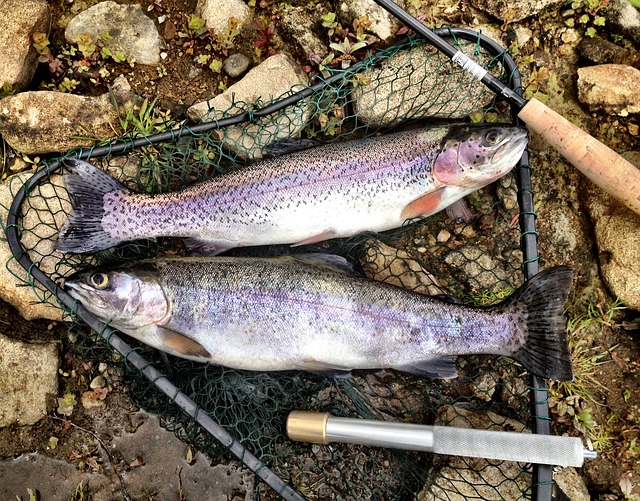
Trout stocking from Alchesay-Williams Creek National Fish Hatchery Complex is underway. Workers at this federal fisheries facility near Whiteriver have been busy, and anglers will benefit. The hatchery complex raises four species of trout: rainbow, brook, brown and Apache trout. “We started putting trout out in area waters earlier this spring,” said hatchery manager Bruce Thompson. “We’re on our regular schedule and stocking will continue at least through the month of June, perhaps longer.” Numbers of trout going into area waters, including Horseshoe Lake, Hawley Lake, Reservation Lake, Sunrise Lake, Big Bear Lake, North Fork White River, and several other lakes and streams, remain similar to numbers put out last year from the hatchery. The hatchery workers are fully immersed in raising trout for angling in spite of a significant setback last year with Apache trout production fish kept at the Williams Creek station. Routine fish health testing revealed the presence of bacteria that can cause bacterial kidney disease, which is found only in fish. The disease cannot be transmitted to people and poses no human health risks. The trout that harbored the bacteria were destroyed and hatchery facilities were disinfected as a precautionary measure only. No trout showed any signs of the disease. The hatchery has sufficient numbers of healthy fish on hand to meet most of its stocking requests. Fish stocked out this spring and in the weeks to come are certified disease-free. Thompson offered this important reminder: “Don’t forget to buy your fishing license. Fishing permits are required from the White Mountain Apache Tribe for fishing waters on the Fort Apache Indian Reservation. A license from the Arizona Game and Fish Department is necessary for fishing on national forest waters.” Alchesay-Williams Creek National Fish Hatchery Complex is one of 70 such facilities found across the United States. The Williams Creek facility was established in 1939 and the Alchesay portion added in 1963, both with the express purpose of conserving trout fisheries. Both are open to the public and visitors are encouraged to stop by.