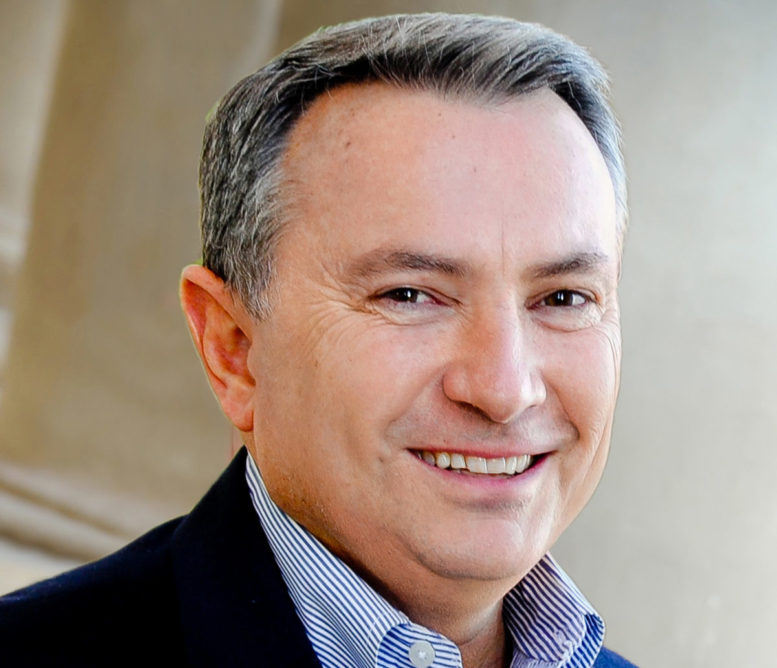
Although he now calls Phoenix home, Mike Gardner was born and raised in Holbrook, and remains very passionate about issues affecting rural schools.
After graduating from Holbrook High School, he earned an AA in Business Management at Eastern Arizona College and a BS in Marketing at Arizona State University.
“Growing up I remember watching the news at night with my dad. He was the choir director at Holbrook High School. He was always politically aware, but he never really wanted to get engaged. I just wasn’t wired that way, I wanted to go out there and make change, not sit back and watch it,” said Gardner.
At 29, he was working for the Phoenix Symphony Orchestra when a friend encouraged him to run for an opening in the House of Representatives. He won the election and went on to serve three terms as a representative. After leaving the legislature, he was the State Senate’s chief of staff for two years.
These days Gardner works to help form policymaking decisions as a lobbyist with Triadvocates, the top government relations firm in Arizona, and serves on the board of directors of the Arizona Education Foundation. As a lobbyist specializing in contracts, he acts as the spokesperson for a wide variety of companies and organizations to the legislature.
“As a member of the House, I got to vote, and that was very powerful and exciting. Now I get to be the voice of an organization and it’s an honor to be their spokesman. I might represent firefighters one day, Dish TV the next and then maybe Microsoft. Politics gets in your blood and the ability to shape policy is addictive. I helped improve the lives of 700 firefighters and that makes me feel good,” noted Gardner.
The term lobbyist often brings to mind heavily funded special interest groups coercing and buying politicians’ votes. To that image, Gardner responds, “There’s a lot of misinformation about the power and influence that lobbyists have. A good lobbyist will never lie. The legislators rely on me to give them accurate information. If I lie to them, they aren’t going to want to talk to me again.
“It’s your constitutional right to tell your government your opinion, but it’s hard to go and petition your government. It’s complicated, too. That’s where lobbyists come in; we can be your voice for you and we’re pretty good at it, because that’s what we do all day long. Last year over 1,500 bills were introduced, out of those about 380 passed. Legislators don’t have all day to educate themselves on the issues, so they rely on lobbyists to make informed decisions. What we’re really good at is taking complex problems and making them easy to understand.”
Gardner recalls one memorable evening while working as a member of the House when six well-dressed oil lobbyists pushing for a bill to pass were defeated by a group of truck drivers in jeans. The drivers showed up to say that the bill’s passage and the resulting price increases would put them out of business. Following that powerful testimony, the bill was voted down.
For average Americans wondering how they can be more involved in the decisions being made Gardner stressed that while organizations might need a lobbyist to be heard, citizens already have a voice in congress at their disposal, their state representatives and senators.
“If I represent 150 people on a big issue, I might hear from 10 to 15 people. Sometimes people don’t know who to call and it makes them feel powerless. There’s nothing more powerful than getting a call from a constituent. They’re your boss and they want to take care of their constituents,” he said.
“Get to know your representatives. In Holbrook you have two, Bob Thorpe and Brenda Barton, then Sylvia Allen is your senator. They’re very passionate people who care a lot about rural Arizona. Then, go to the Arizona legislature website (azleg.gov) and you can see every bill that’s being introduced. Every bill has a plain English summary attached that anyone can read. You can also watch the legislature online and there’s even an email link where you can weigh in.
“Get passionate about the issues you care about, but also be open to considering the other perspective.” Gardner advised. “People might want more money for education. Well that’s great, we all do, but we will have to raise taxes. The same people don’t want to raise taxes. So get passionate and speak up, but be willing to look for common ground.”