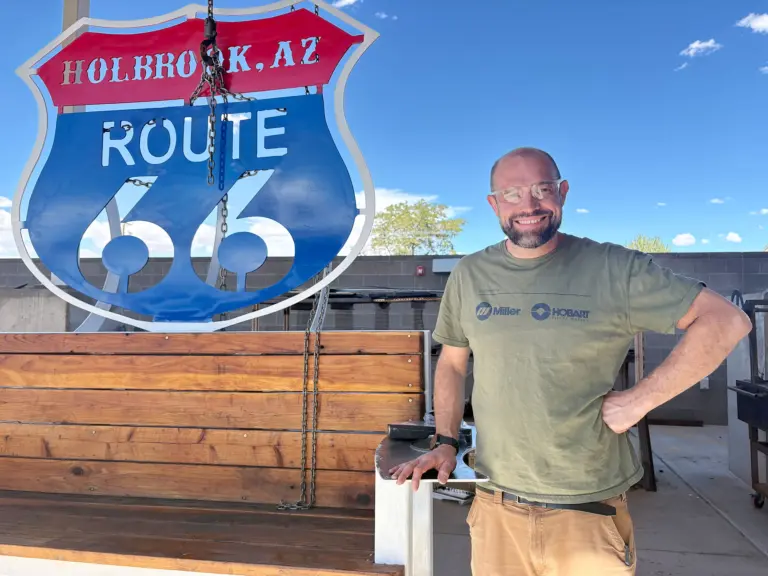
La Posada Hotel owners Alan Affeldt and Tina Mion are working with other interested parties to convert the former train depot directly adjacent to the hotel into a Route 66 fine art museum, which will harbor works of well known artists, including renowned light and space artist James Turrell.
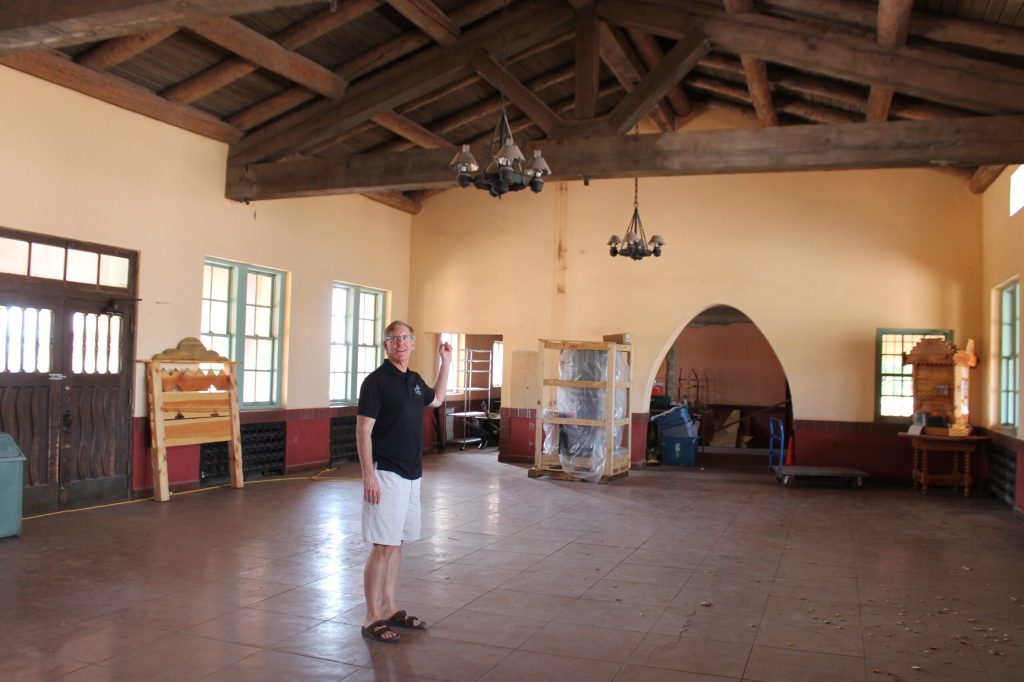
The depot’s design reflects the imagination of La Posada architect Mary Colter, with a blend of Mission Revival architecture and Spanish Colonial with Native American motifs and rustic elements that have become a landmark style throughout the Southwest. The train depot emphasizes this with features that include high cathedral ceilings and wooden doors that are of western and Native American styles.
After five years of planning and with a matching grant of $750,000 from the Transportation Enhancement Program through the Arizona Department of Transportation, groundwork has already begun not only on the train depot building, but on the surrounding property as well. The grounds surrounding the museum will feature gardens and a skyspace by James Turrell, as well as a 1950s Santa Fe Pleasure Dome railcar that was a recent acquisition of Affeldt’s that was brought to La Posada by Amtrak at a cost of $1. The Pleasure Dome features a private luxurious dining room named the Turquoise Room, the namesake of the hotel’s fine dining restaurant.
“This museum will tell the story of fine art on Route 66. Kitschy art is so prominent, there is nothing for the well known artists from here,” explained Affeldt. The main gallery will also feature works pertaining to James Turrell’s Roden Crater project, a large-scale artwork inside a volcanic cinder cone located northeast of Flagstaff. Since access to the actual crater is very exclusive, the train depot will “be an overview of the crater,” said Affeldt. The interactive exhibit will provide insight into the project, featuring 3D models of the crater as well as a holographic projection, allowing the viewers to see various spaces within the crater.
There will also be two slightly smaller galleries, one that will be a rotating exhibition space and another that will feature the largest Navajo rug ever created, which Lorenzo Hubble commissioned Navajo weavers Sam and Julia Joe to create in 1932. It’s the largest single loom Navajo weaving in existence, measuring to 26-by-36 feet.
Affeldt feels that Winslow is the perfect place to exhibit these works, rather than well established art museums in a larger city. “The surreal experience is what makes it so interesting,” he noted.
Along with other interior ideas that are planned is a map of Route 66 that will be projected on the floor throughout the depot. There is also a space in the depot where the sun aligns perfectly during the solstice. “The space will ground you to the earth and heavens,” said Affeldt as he pointed out the area in which the solstice installation will be placed.
Construction for the museum is expected to go to bid this summer and it may be opened the following year.