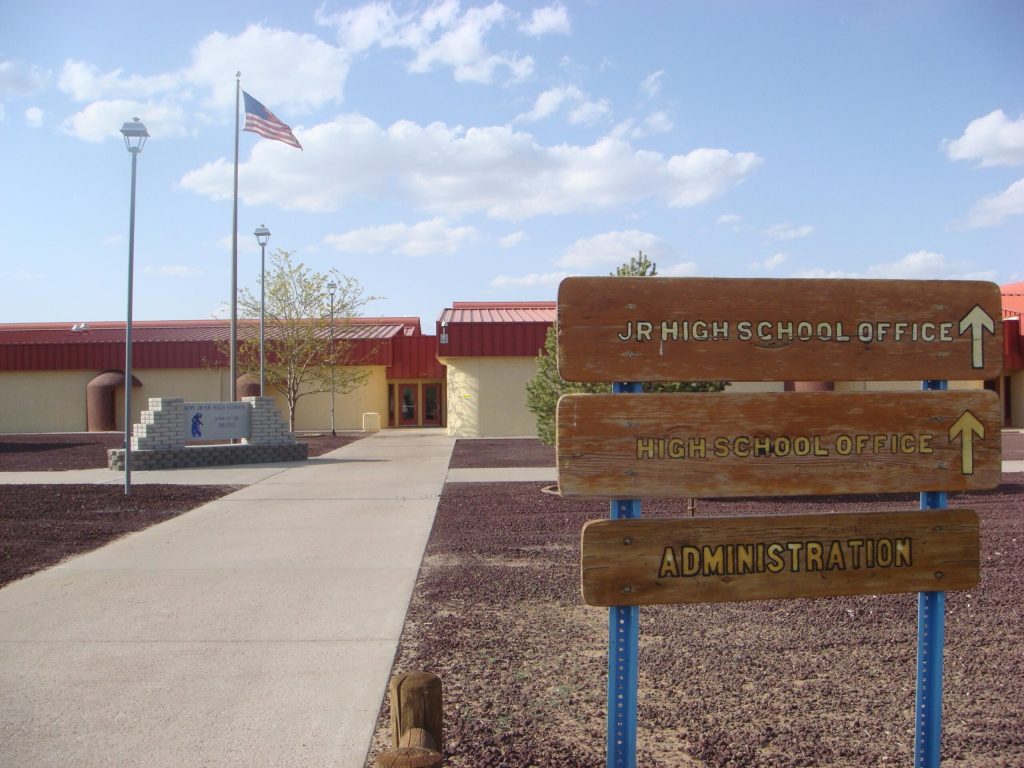
The Hopi Tribe has begun operating a unified school system this year after the U.S. Bureau of Indian Education approved the tribe’s application to consolidate its seven tribally controlled schools under a single governance structure.
The federal agency granted the approval on May 15, and the new Hopi School System formally took effect July 1. A yearlong transition period is underway during the 2026-27 school year, with the Hopi Board of Education overseeing the change.
The restructuring places all seven schools on the Hopi reservation in northeastern Arizona, including Hopi Junior Senior High School in Keams Canyon, under one administrative framework for the first time. Under the new arrangement, the schools will move toward consistent academic standards, unified operational policies and expanded student support services. Tribal officials have said the system is also intended to strengthen instruction in the Hopi language and culture.
The Bureau of Indian Education determined that the Hopi Board of Education met all statutory requirements under the Tribally Controlled Schools Act. The agency found no evidence that the transition would negatively affect students’ health, safety or educational interests.
The effort has been decades in the making. According to the tribe, planning for a unified system traces back to education policies adopted in 1981. In 2016, the tribe received a Bureau of Indian Education Tribal Education Department grant to study whether it could operate a consolidated system. A feasibility study completed in 2018 concluded that bringing the schools under one tribal education framework could improve academic continuity, operational efficiency and the development of culturally based curriculum. The Hopi Tribal Council then enacted the Hopi Education Code in 2019, which established the legal framework for the system and formally asserted tribal authority over education on the reservation.
Hopi Chairman Lamar Keevama described the federal decision as “a strong affirmation of the Hopi Tribe’s sovereign capacity” to direct the education of Hopi children. LeRoy Shingoitewa, chairman of the tribe’s Health and Education Committee, said the effort grew out of a recognition that longstanding challenges in the schools required a unified response.
During the transition year, principals at the individual schools will continue to manage day-to-day operations. Meanwhile, the Hopi Board of Education is establishing a central administration office and recruiting a chief school administrator to lead the system. The board is also filling vacancies through an election scheduled for Nov. 12, 2026.
Officials have said educational services and academic programs are expected to continue without interruption while the transition proceeds. The full shift to the new structure is planned across the 2026-27 and 2027-28 school years.