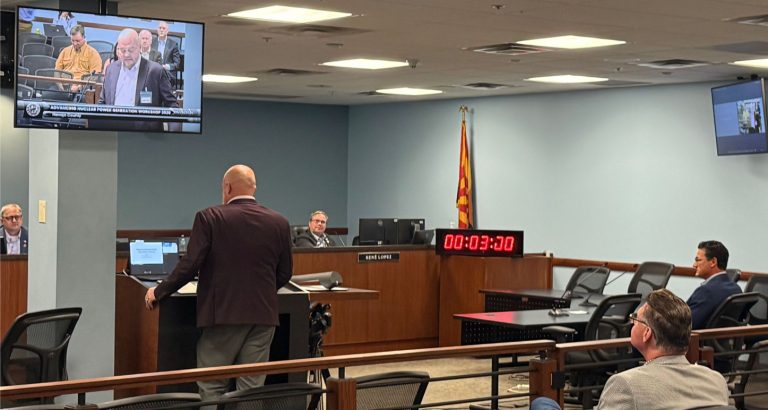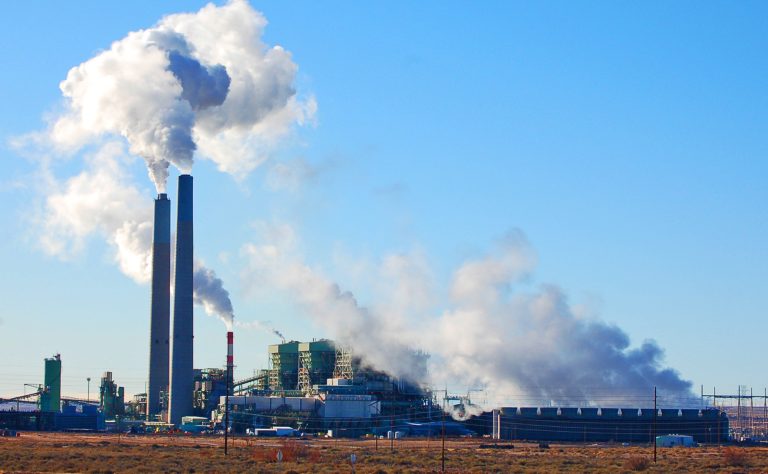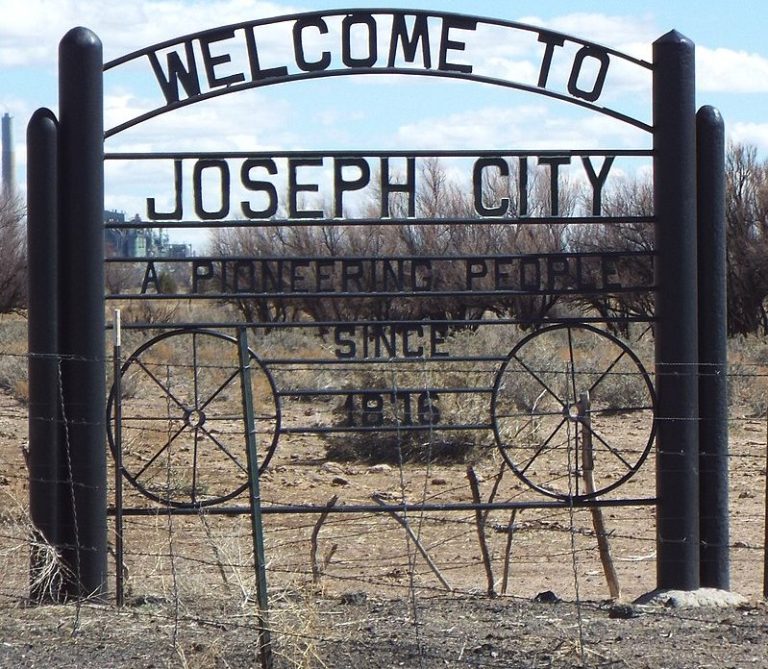
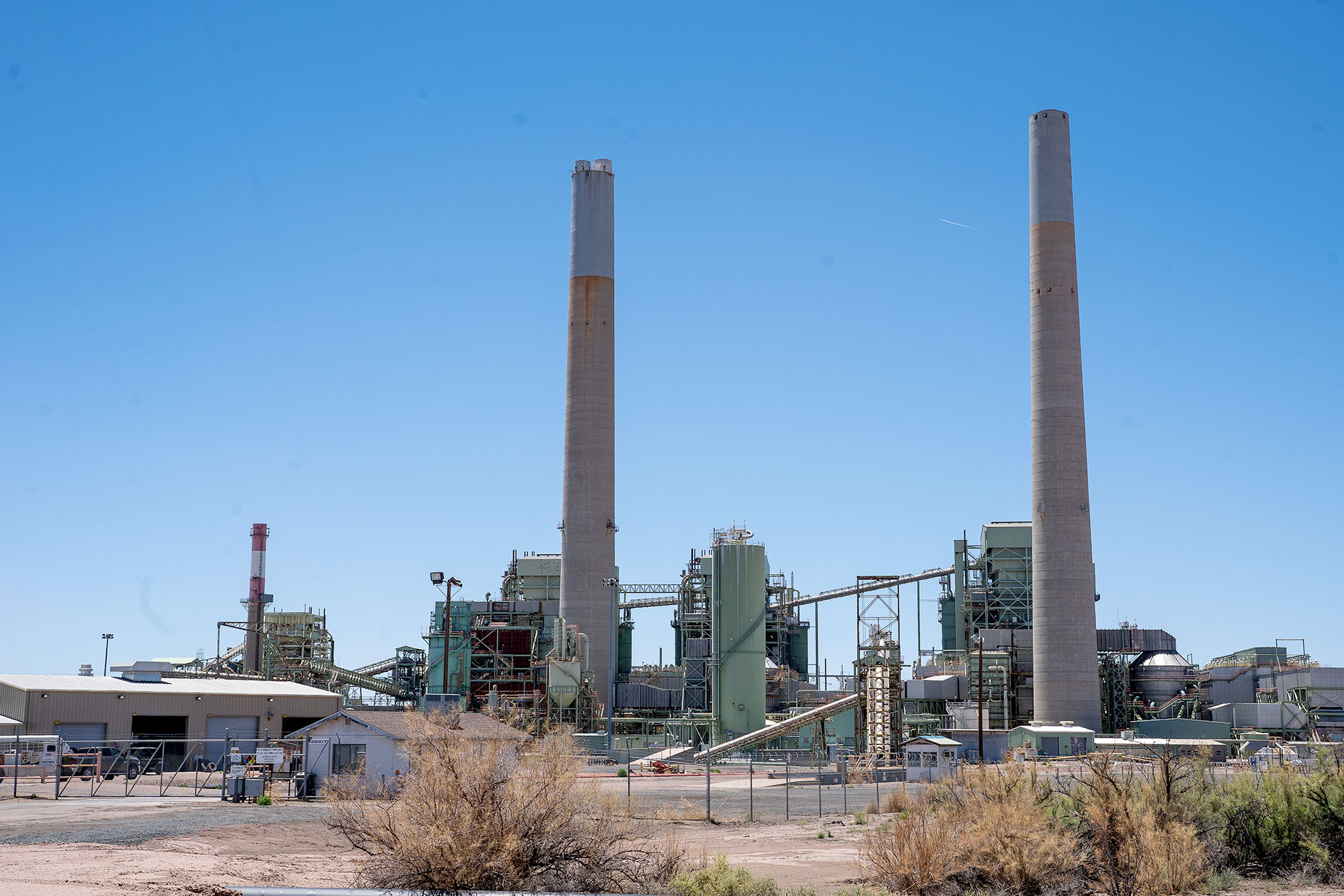
Coal isn’t coming back to Cholla but Cholla is coming back. Arizona Public Service announced on July 2 it will convert units 1 and 3 at the Cholla Power Plant in Joseph City from coal to natural gas, restoring roughly 380 megawatts of generation, the same output the two units produced on coal and enough to power about 61,000 homes. Construction is expected to begin in 2028 with operations targeted for 2029.
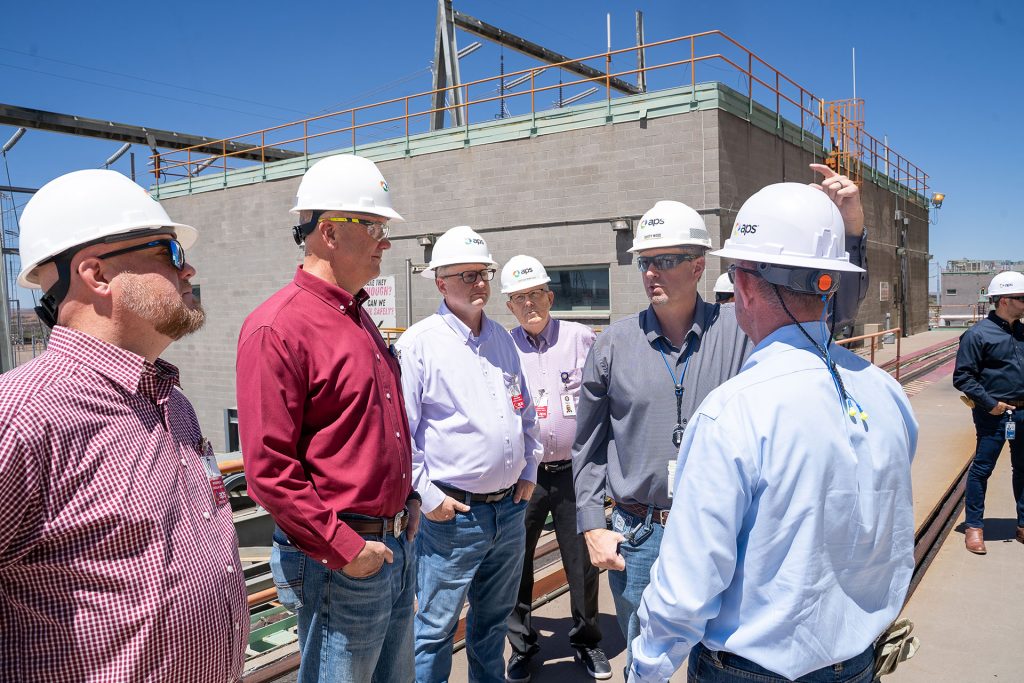
The announcement, which coincided with a site tour attended by APS executives, Arizona Corporation Commission Chairman Nick Myers and Navajo County officials, answers the question that has hung over the plant since coal operations ended in March 2025 under a federal regional haze agreement.
“As we think about what Arizona needs, it’s dispatchable, it’s renewable, it’s affordable energy for our customers,” said APS Senior Vice President of Operations William Mojica. “And this is a small step towards that, but today it’s a big step.”
“Cholla has been an important part of the communities of Joseph City, Holbrook, Navajo County and northeastern Arizona for decades and has been foundational to Arizona’s energy grid,” said APS Vice President of Generation Johnny Penrod. “Repurposing the Cholla Power Plant for natural gas allows us to build on that legacy.”
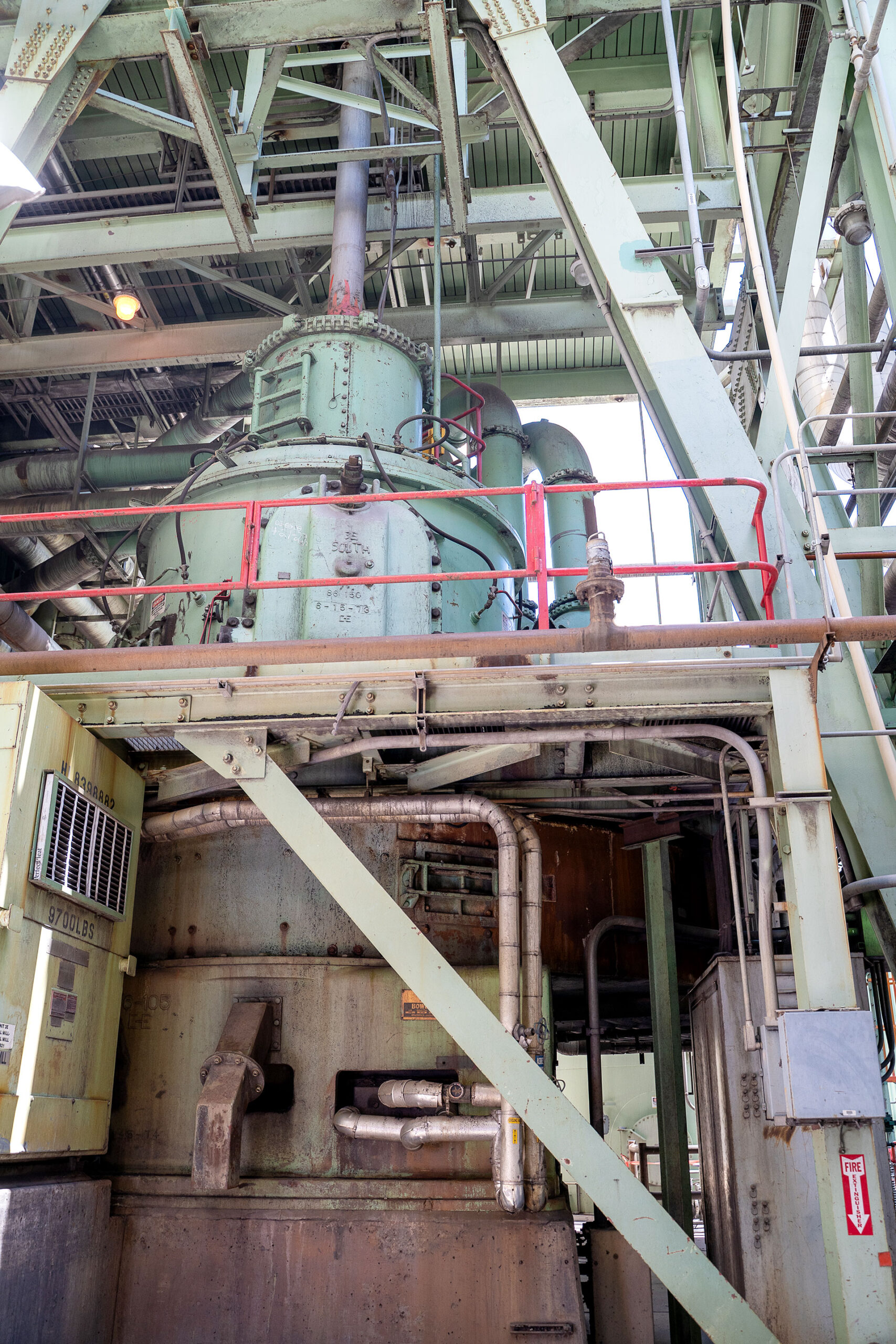
Unit 1, the original unit built in 1962, and Unit 3 will be converted, while Unit 2, retired in 2015, and PacifiCorp’s Unit 4, shut down in 2020, will be decommissioned and removed. The coal infrastructure that defined the site for six decades, including conveyors, silos, coal mills and scrubbers, goes away, but the boilers, turbines and generators stay, with coal pipes swapped for gas lines.
Mojica said, “The units don’t know any different on the fuel we’re providing them. We used to feed them with coal. We’re going to feed them with natural gas now. But for the most part, the facility will stay the same.” The decommissioning was planned years ago regardless of the conversion.
APS spent the past year with about 25 subject matter experts studying whether the conversion was feasible. What tipped the scales was what’s already there, including water rights sized for all four units, a rail siding, Interstate 40 and one of the most connected switchyards in the region, carrying 500kV, 345kV, 230kV and 69kV lines linking Four Corners and Coronado generating stations.
“Cholla has water infrastructure in place, great water supply, next to a transportation corridor,” Penrod said. “We’ve got the railroad with a siding, we’ve got the freeway here. It’s already got steel in the ground. It’s already here and it’s usable. I mean, we were just using it last year.”
Building the same capacity from scratch wasn’t a realistic option, Mojica said. “In the market today, to try to bring 380 megawatts in this time frame would be impossible. When you look at supply chain, when you look at land, when you look at everything.”
This will be the first coal-to-gas conversion APS has undertaken, but not the contractors. “They’ve done over 25 of them in the US, so this is not the first time it’s being done,” Mojica said, adding that more than 40 planned conversions in the Middle East were halted by war, freeing up contractor and material capacity for the U.S.
The economics of the decision trace back to the plant’s closure. As the Tribune reported last July, restoring Cholla to coal compliance would have required an estimated $1.9 billion in emissions equipment and maintenance, with coal’s cost of energy already nearly double that of new gas generation. APS is planning around a 20-to-30-year service life, though Penrod said it could go longer “if it was still affordable for our customers, if it was still needed.” The project also doesn’t foreclose bigger ideas for the site, and asked about nuclear generation at Cholla, Penrod said the conversion “is its own separate stuff… this doesn’t prevent that.”
The jobs picture is smaller than the coal era, when the plant employed as many as 400 people. “Probably, by the time everything is said and done (there will be) 35 to 40 full-time jobs here,” Penrod said. “There will be some contractors that come in and go out.” The difference is coal itself. “We had three employees on shift out here, a crew, 24 hours a day, with the coal,” a plant official explained. “With the gas, you don’t need that anymore. You’ll just be up on the pipeline. That is part of your reduction of force when you go to gas.”
Construction will support hundreds of jobs, per APS, and a separate 35-mile gas pipeline must be built to feed the plant, a project expected to take four to five years. Officials estimated indirect employment could run five to six times the direct count but said they haven’t fully calculated it. As Navajo County Supervisor Jason Whiting noted, “just by being in operation again, local food, restaurants and things like that will be impacted again.”
With APS customers reacting to a current rate increase, officials drew a hard line between those costs and this project. “The rate hike that’s happening now hasn’t encompassed any of these costs. None of the data center stuff, it’s all money spent three and four years ago,” Commissioner Myers said. “Make sure that distinction is out there, because there’s a lot of misinformation about that.”
Penrod said affordability drove the evaluation, and on large new loads like data centers he laid out three principles. “One is showing that we have reliability, we’re not going to bring on too many data centers that we jeopardize the reliability of the grid for everyone. Second thing is we’re not going to shift costs. The third is that we’re going to preserve capacity for organic growth in our community.”
The plant itself will run differently than it did on coal, shifting from baseload operation to dispatchable generation that ramps up and down as the grid needs it, particularly in the late afternoon when solar fades. “If they need us, they call us, and we go,” Penrod said. “Or if they don’t need us, they call us, and we shut it down, as opposed to, like, a solar field where it’s going to generate when it generates.”
The demand behind it all is staggering, with APS expecting a peak around 8,500 megawatts this summer and roughly double that within 10 to 15 years. “It took us 130 years to get to 8,000,” one official said. “We’ll double it in 12 years.”
The project does not depend on the proposed Desert Southwest Pipeline. Instead, Cholla will be fed by a new dedicated line of roughly 30 to 35 miles off the existing El Paso system, a 16-to-20-inch pipe replacing the 4-inch line that serves the site today, representing its own significant construction employment for the region.
The project now enters formal permitting. “We still have to get an air permit from the Arizona Department of Environmental Quality, we’ll be filing that paperwork this month,” Penrod said. “We still have to get a certificate of environmental compliance from the commission.” Visible activity is expected on site starting next year, and APS plans open houses, newsletters and updates at www.aps.com/chollaconversion, with a public community event expected in the coming weeks.
For the Joseph City Unified School District, the timing question is urgent. As the Tribune reported in February, the Auditor General’s Office listed JCUSD among the nine highest-risk districts in Arizona, with enrollment down 11% since 2022 and operating reserves collapsed from $888,728 to $20,798. Bryan Fields, who was the JCUSD superintendent at the time told his board in February he was hopeful new industry “can add to the taxing district, particularly if Cholla Power Plant should begin producing power.” A press release provided by APS states the plant “will also provide meaningful tax revenue to the area and help stimulate new economic activity,” but power and full tax value don’t arrive until 2029, while the district’s crunch is now. How a two-unit gas plant will be assessed compared to the old four-unit coal operation remains to be determined.
Whiting, who met repeatedly with APS leadership to advocate for the conversion, said the decision “will strengthen our local economy, create jobs and support our schools,” calling it “probably the biggest announcement in Navajo County in over a decade… This is a great day for America, a great day for Navajo County.” For a plant sitting on the side of the interstate and communities waiting for the fate of a large county asset, the next chapter now has a schedule.