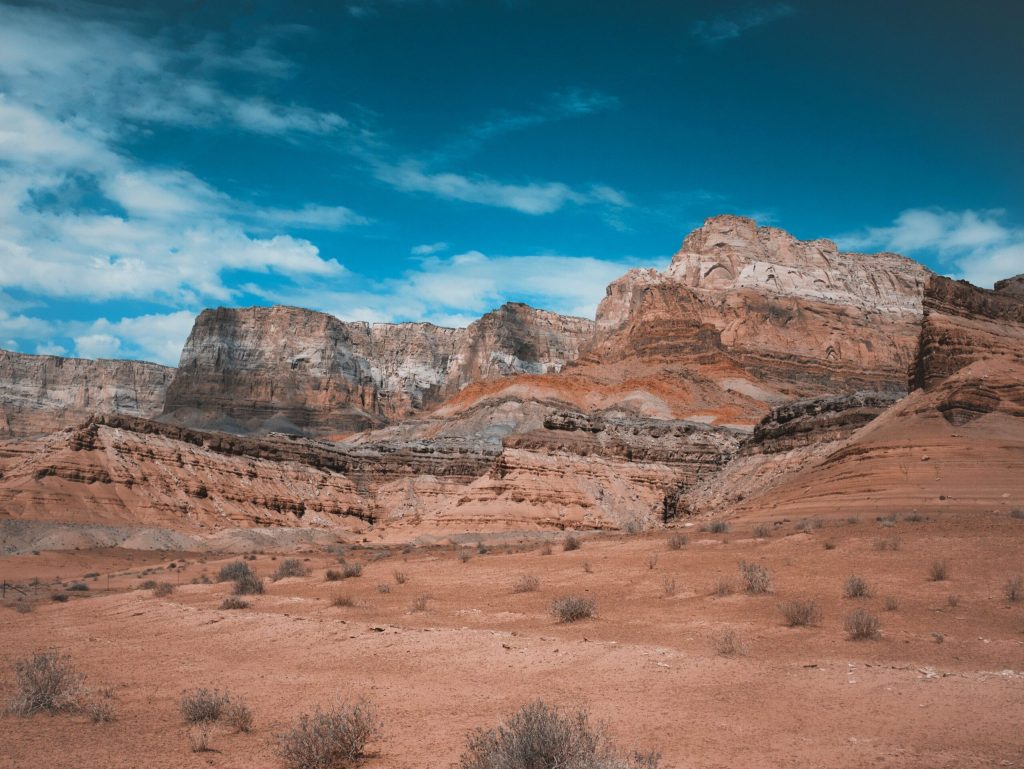
For decades, the high desert south of Interstate 40 near Winslow has been a patchwork. Land the Hopi Tribe has grazed cattle on for generations sits stitched together with parcels the State of Arizona owns, a checkerboard of ownership that has frustrated ranchers, complicated management and stood as an unfinished promise for nearly 30 years. That checkerboard is now being taken apart one filing at a time, and much of the land in question lies in Navajo and Coconino counties.
The U.S. Justice Department and the Department of the Interior recently announced they had filed to transfer more than 45,000 acres of Arizona state trust land into federal trust for the Hopi Tribe. It was the second such filing in 18 months, following a first round of more than 20,000 acres in December 2024. Together the two actions cover some 65,000 acres, and they are only part of a larger effort that will ultimately move roughly 110,000 acres of state land into Hopi hands, fulfilling the terms of a settlement Congress passed in 1996.
For a region where questions of land, water and sovereignty are never far from the surface, it is one of the most consequential shifts in ownership in a generation.
The transfers are being carried out through an unusual legal tool called a “friendly condemnation.” Normally, condemnation is what governments do when they take private property against an owner’s wishes, the kind of eminent domain used to clear a path for a highway. Here it is the opposite, because Arizona has agreed to the process. Condemnation is simply the legal mechanism that lets the state hand over land it holds in trust, which it cannot otherwise give away outright.
Under each filing, the Hopi Tribe deposits money with the U.S. District Court for the District of Arizona the state, $3.9 million for the first round in 2024 and $8.4 million for this second round. Once the deposit is made, title passes to the United States and the Interior Department immediately places the land into trust for the tribe. The land being transferred is interspersed with property the Hopi already own and have long leased for ranching and eliminating that interspersed ownership is the whole point.
“Today’s filing starts the process of eliminating the interspersed ownership that characterizes much of the lands the Hopi Tribe uses for ranching in northeast Arizona,” said Todd Kim, then the assistant attorney general for the Justice Department’s Environment and Natural Resources Division, when the first action was announced. “Arizona will receive just compensation for the land, and the Hopi Tribe will no longer have to deal with checkerboarded ownership, which will help improve its use for ranching and other agriculture activities.”
The legal backbone is the Navajo-Hopi Land Dispute Settlement Act of 1996, which ratified a 1995 agreement resolving one of the longest-running land disputes in the American Southwest, a tangle that ran for decades between the Hopi Tribe, the Navajo Nation and the federal government. That law authorized the Hopi Tribe to acquire up to 500,000 acres of land in northern Arizona to be taken into trust. Over the years the tribe purchased more than 161,000 acres of private land from willing sellers but the state trust parcels woven through those holdings, about 110,000 acres of them, remained in limbo. The current filings are what finally move them.
For the state’s chief executive, finishing the job has been a point of pride. “For decades, the State of Arizona has failed to complete the promise enshrined in the Navajo-Hopi Land Dispute Settlement Act of 1996,” Governor Katie Hobbs said in June. “I’m proud to do what five governors before me did not. When I became governor, I made a pledge to work with tribal communities as partners in governance to create opportunity, security and freedom for every community throughout our state. This historic land transfer will help us do just that by following through on a longstanding promise.”
For the Hopi people, the language has been less about policy and more about renewal. “Today is a historic day and a day for celebration for the Hopi Tribe, the promises made to the Hopi Tribe by 1996 Navajo-Hopi Land Dispute Settlement Act are being fulfilled,” said Hopi Chairman Lamar B. Keevama when the June filing was announced. He thanked Hobbs and the state land commissioner by name, then reached for an image drawn from the season. “The Hopi People are in the process of planting their corn,” Keevama said. “I pray that this land reacquisition is a newly planted seed that will provide abundant benefits for the Hopi Tribe. It is fitting that this historic moment coincides with such an important time.”
When the first transfer was announced in December 2024, then-Chairman Timothy L. Nuvangyaoma tied it to the Soyal’ang ceremony marking the Hopi new year, calling it “the start of the New Year and the revitalization of life.” Federal officials have framed the transfers as part of a broader commitment to tribal self-determination. Interior Secretary Doug Burgum called the recent transfer, “a significant milestone in fulfilling long-standing commitments to the Hopi Tribe,” adding that placing the land into trust strengthens “the tribe’s ability to steward its resources, expand opportunities for economic development and exercise greater self-governance.”
This is not a distant tribal-affairs story. The federal notice formalizing the transfer is titled, in plain terms, for Coconino County and Navajo County, and the parcels sit south of Interstate 40 near Winslow, land many local residents drive past without a second thought. The shift raises practical questions worth watching. State trust land generates revenue for Arizona, much of it earmarked for public schools and land that moves into federal trust comes off the state and county tax and lease rolls.
For Hopi ranchers, the change is more immediate. Consolidated ownership means an end to negotiating around a maze of state parcels, and simpler grazing, fencing and water management across land the tribe considers both economically and culturally significant. The transfers are not finished, either, since the 45,000 acres filed in June still leave tens of thousands of acres of state land to go and federal officials say more condemnation actions are anticipated. Combined with the private land the Hopi already hold, officials describe the ultimate goal as bringing more than 270,000 acres into united tribal ownership.
The precise figures, for those keeping count, come to 110,759.17 acres of state trust land identified for transfer, with a little over 7,500 acres of subsurface mineral interests carved out. The full price is still coming into focus one filing at a time because the remaining parcels have not yet been appraised and filed in court. What is settled so far is the money already on the table, $3.9 million for the first round and $8.4 million for the second, or about $12.3 million for roughly 65,000 acres, which pencils out to around $185 an acre on the earliest tranche. State and tribal officials have estimated the full consolidation of about 110,000 acres will cost the Hopi more than $20 million by the time the last parcels are valued. Thirty years after the promise was written into federal law, the map of northeastern Arizona is quietly being redrawn, and the next chapter will be filed, like the last two, in a federal courthouse, one deposit at a time.