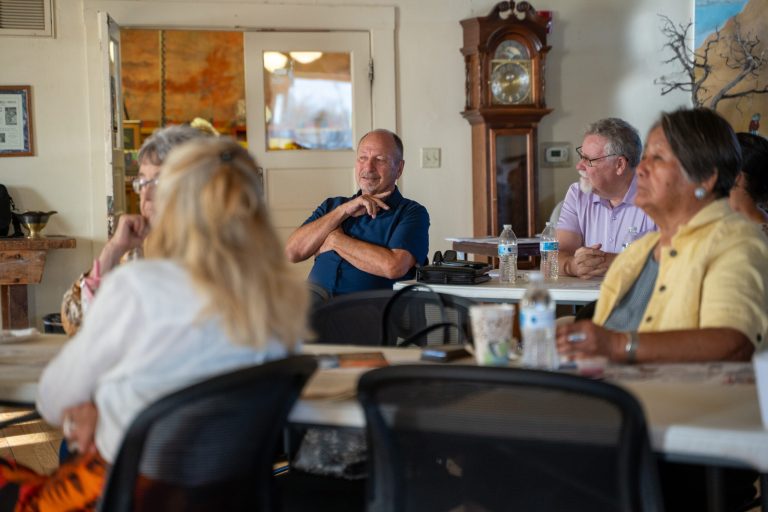
“This year operations will be lean,” Winslow City Manager David Coolidge told city council and staff during last week’s budget work session. The city is planning to spend about $1.4 million more from its general fund than it takes in during the fiscal year that begins July 1, a gap driven largely by the scheduled July 15 expiration of a 1% city sales tax that has helped fund both city operations and Little Colorado Medical Center.
The proposed budget calls for $10.07 million in general fund revenue against $11.44 million in expenditures. The general fund pays for police, fire, parks, the library, the courts and most other day-to-day city operations.
Coolidge told the city council the deficit is intentional. Knowing the tax was set to expire, the city deliberately built up a roughly $1.5 million surplus while planning the current fiscal year to cover most of next year’s gap. “We’re anticipating a $1.5 million surplus in the current year, purposely,” Coolidge said. The general fund balance, which started fiscal year 2026 at about $3 million, is projected to reach about $4.5 million by June 30 and then drop back to about $3.1 million by the end of fiscal year 2027. Coolidge said the approach works for one year but could not be repeated a second year without drawing the fund balance below levels staff considers safe.
The expiring tax is known locally as the hospital tax. Three-quarters of every cent it collects has gone to the city’s general operations and the remainder has gone to Little Colorado Medical Center. The tax was originally on track to be put before voters for renewal in 2025 but Coolidge told the council that a state law prohibiting Arizona cities from holding stand-alone elections in odd-numbered years pushed the renewal vote to 2026. The result is a gap of roughly six months during which the tax cannot be collected, even if voters approve a renewal, because a renewed tax cannot legally take effect on July 16 immediately after the prior tax expires. “It will cost the city about $1.5 to $2 million,” Coolidge said.
That gap is the main reason the budget projects city sales tax revenue at $3.62 million in the general fund, down from $4.6 million the prior year. Combined with a parallel sales tax line in the city’s Capital Projects Fund, total city sales tax in the proposed budget is $6.15 million, a 14% reduction. Coolidge said that if voters do not approve the renewal at the November 2026 election, the city will need to revisit its spending plan in January, including the possibility of closing some facilities.
About 80% of the general fund pays for personnel, Coolidge said and only about 20% pays for operations. The proposed budget includes a 5% wage increase. Despite that increase, total general fund expenditures rise only about $48,000 year over year, because staff stripped out operational costs to absorb the raise. “We are bare bones on operational funds,” Coolidge told the council, noting that maintenance schedules in some departments will lengthen as a result.
Public safety dominates general fund spending at $6.52 million, or about 57% of the total. Police accounts for $5.19 million of that, fire for $1.32 million and sworn officer salaries are the single largest line in the budget at $1.76 million. General government totals $2.95 million, parks and recreation $1.32 million and community and economic development $653,000. The city clerk’s office shows the largest percentage increase among general government departments, rising from $172,600 to $225,100, mostly because of a contracted services line that grows from $10,000 to $53,000.
Most of the city’s other funds operate near balance. The Water Fund shows a $472,000 projected deficit, which Coolidge attributed entirely to the city’s $800,000 share of a $3.3 million water tank project funded mostly by a $2.5 million federal grant. The federal notice to proceed for that project arrived the day of the budget meeting. Without the match, Coolidge said, the water fund would run a surplus of $200,000 to $300,000. The Wastewater Fund shows a $335,000 surplus, partly because capital fund dollars are absorbing several wastewater projects to help the fund maintain its bond covenants. That fund carries about $6.8 million in remaining debt, the largest of any city fund. The Sanitation Fund shows a $30,600 deficit and the Highway User Revenue Fund, funded by Winslow’s share of Arizona’s gas tax, shows a $14,000 surplus on $1.54 million in revenue, with one street department position currently vacant and unfilled. The Airport Fund balances at $3.96 million, but $3.7 million of that is federal and state grants for airport projects, plus a $103,500 transfer from the Capital Projects Fund to cover the city’s match. Coolidge said the airport itself generates only about $55,000 a year in rents and landing fees and that no airport in the country operates without federal support.
The Capital Projects Fund is projected to take in $3.16 million and spend $2.81 million, ending the year with a $5.3 million fund balance, of which about $4 million is reserved for levee work.
The fiscal year 2027 capital plan includes $500,000 for street improvements, with the city pausing its regular crack-seal and fog-seal program for one year to address roads like Kinsley Avenue that need major repair. It also includes $400,000 in continuing payments on the I-40 freight port property the city purchased near State Route 87, $200,000 to rehabilitate the Ford lift station, $150,000 to finish downtown restroom renovations, $80,000 for cemetery improvements and a range of smaller items. The two dedicated taxes that fund the Capital Projects Fund do not sunset until the mid-2030s.
The city’s total budget across all funds is approximately $30 million, but Arizona caps countable city expenditures at roughly $21.5 million through what is known as the state expenditure limitation. Grant funds and long-term debt are excluded from the cap, which is part of the reason the city often uses equipment leases rather than direct cash purchases for vehicles. Two long-standing debts retire soon: a water utility revenue bond will be paid off in about two months and the equipment lease used to buy most of the city’s leased fleet vehicles makes its final payment in July 2026. The city’s fire ladder truck lease retires in July 2027.
Coolidge told the council that staff would make minor adjustments totaling roughly $50,000 in either direction before bringing the tentative budget back on Arizona’s required state forms. The substantive picture is unlikely to change. Whether the city has to revisit its spending plan in January will depend on what voters do in November, when they are expected to be asked to renew the 1% tax that has supported the city and its hospital for years.