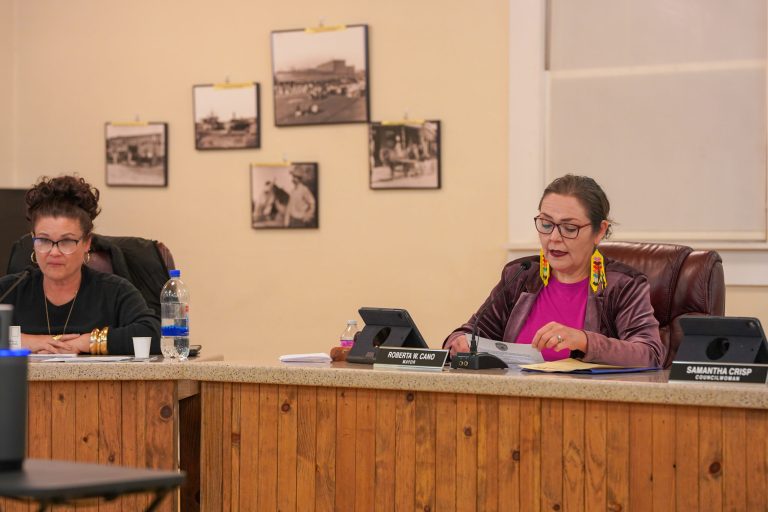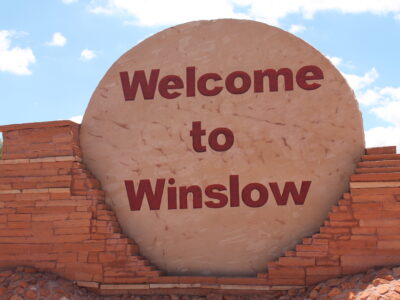
The Winslow city council met last week, the week of Thanksgiving. Typically the council cancels the second meeting in November in observance of the holiday and travel schedules around the meeting. However, the city decided to cancel the first meeting this month instead because it landed exactly on Veteran’s Day.
During last week’s meeting City Manager David Coolidge said recent changes to SNAP benefits will require many recipients to log 80 hours a month of work, training or volunteering once they recertify and the city intends to turn that mandate into a structured opportunity.
Human resources staff are working with each department to identify tasks that can be done by volunteers and organize them into an easily accessible list. “We’re working on putting together a volunteer board,” Coolidge told the council, explaining that the public-facing list will show the types of jobs available and how many hours can be earned in each. He called it a way to help residents meet new federal requirements while also filling real needs in city operations.
“Obviously, it would be a benefit to the city, but at the same time, it would benefit the recipients in helping them meet those requirements,” he said. The goal is to have the program operational and visible by Jan. 1, giving residents a clear path to meet federal rules without having to leave the community to find opportunities.
Coolidge also briefed the council on implementation of a new state law that will require cities to offer pre-approved housing plans that can move through permitting much faster than custom designs. The law obligates municipalities to build a library of standard plans in four categories: single-family homes, duplexes, triplexes and accessory dwelling units.
Instead of Winslow buying plans outright, the city will create an application process so architects can submit their designs for full plan review and, once approved, have them posted online as ready-to-use options.
“The basis of the program is that the plans have to already have gone through plan review and as long as no changes are made, they are easily permitted,” Coolidge said. Under this new model residents who choose a pre-approved plan would only need to provide a site plan and truss plan and then work directly with the architect who designed it. The city would handle the permit administratively, without additional hearings.
Coolidge said Winslow is working with other White Mountain communities to develop a regional library of designs so architects have more incentive to participate.
He noted that the first deadlines come quickly: single-family homes and accessory dwelling units must be in place by July 1, 2026, with duplex and triplex options required by Jan. 1, 2027. For the state, he said, the intent is simple, “eliminate the red tape and hopefully build houses faster. That’s the goal.”
Winslow resident Steven Rogers stood at the podium and described his experience with homelessness, “After a 22 year addiction to meth, it caused me to be homeless and out on the in and out of jail and seeing the unimaginable before my very eyes and becoming afraid to ask for help or to even say that I’m hungry,” he told the council. Rogers said he has now been clean and sober for three months after a recent stay at the Bread of Life Mission in Holbrook, which he described as the place where he “came face to face with my Heavenly Father and [was] standing in the midst of my own salvation.” From that experience, he said, emerged a vision for a coordinated response to homelessness that centers on dignity, structure and faith-driven support. He urged the city to convene a task force bringing together all of Winslow’s churches, first responders, detox and treatment providers, health care centers, businesses and residents to create a unified plan. To make that possible, he asked the city to “streamline permanent zoning and liability concerns so churches and nonprofits can safely offer overnight shelters, meals, and recovery programs” and to back partnerships that connect people exiting homelessness directly to jobs and permanent housing. He warned that “people are dying on our streets while resources are unused because of red tape and the lack of coordination.”
Following Rogers’ testimony, Mayor Birdie Cano thanked him and said city staff would reach out to continue the conversation about his proposal.
Another speaker, Claudia Duran, a former law enforcement officer and the wife of Fire Chief Michael Duran, stepped forward simply to offer gratitude as a new resident and thanked the council and law enforcement for their service to the city.
In other business, the council:
* Approved an ordinance to sell a waterline easement to Off-Grid Development, LLC for $1 located at city owned property at 102 E. First St.
The next meeting of the Winslow City Council will be held at 6:30 p.m. on Tuesday, Dec. 9, in the meeting room located at 523 W. Second St.