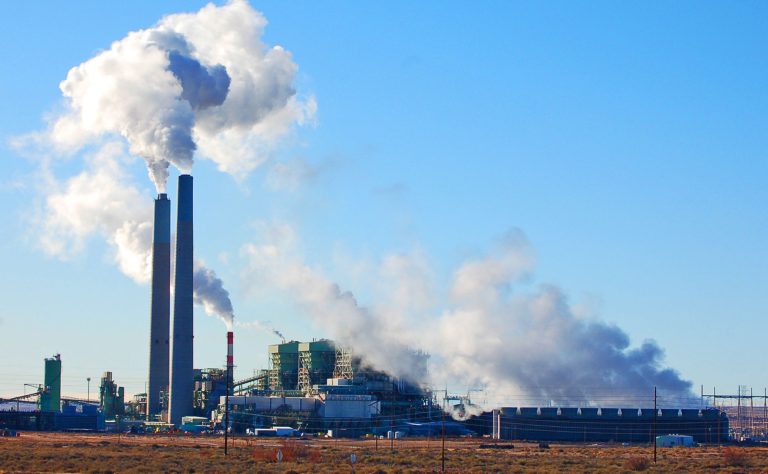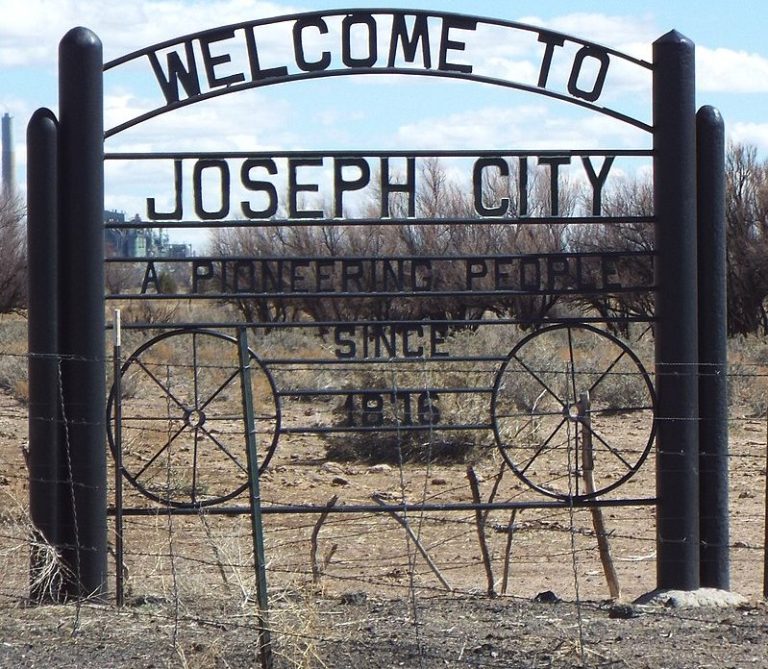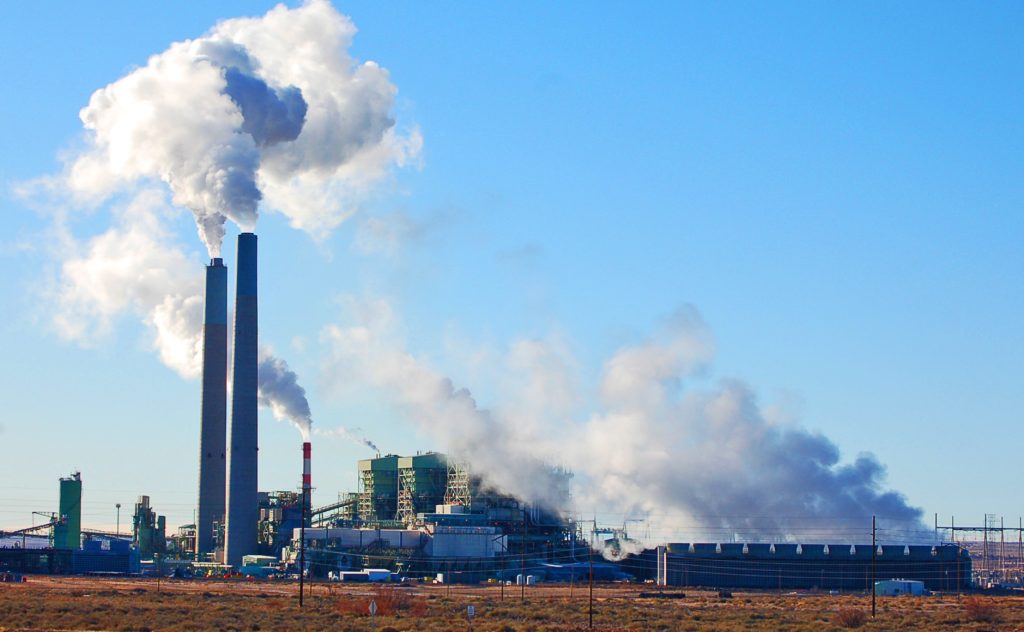
President Donald Trump’s executive order back in April aimed at supporting coal-fired power plants has renewed local interest and discussion about the possibility of reopening the Cholla Power Plant in Joseph City. Since then, there has been calls from people at the local, state and federal level continuing to advocate for coal generation. However, despite these calls, reopening Cholla as a coal-fired facility remains highly unlikely due to significant financial and regulatory challenges.
Originally, the Cholla Power Plant was slated for closure primarily because it did not meet Environmental Protection Agency (EPA) standards. The plant’s owner, Arizona Public Service (APS), negotiated the shutdown with the EPA to avoid costly lawsuits, with the expectation that regulatory requirements would force the plant offline by April 30, 2025. APS ceased electricity generation at Cholla in March 2025.
“President Trump’s coal plant Executive Order wisely allows certain plants to comply with a less stringent version of Obama-era EPA standards, but the Clean Air Act still legally prohibits non-compliant coal-fired operations for plants like Cholla,” said Arizona Corporation Commission (ACC) Chair Kevin Thompson. The ACC is the body that regulates APS and would have to approve to such reopening’s and its effect on ratepayers.
By the time Cholla officially ceased operations, market conditions had shifted, making coal-generated electricity more expensive than alternatives. Chair Thompson explained, “The levelized cost of energy generated at Cholla Power Plant around the time of closure was already nearly double that compared to a new natural gas power plant for the same dispatchable generation capacity.”
Bringing the plant back into compliance with current environmental regulations would require an estimated $1.9 billion in investments, including “the installation of costly selective catalytic reduction equipment (SCR’s) as well as much needed plant maintenance costs,” Thompson said. These expenses would become “the burden of Arizona Public Service ratepayers.
“Managing highly intricate systems like our electrical grid is far more complicated than a slogan on a bumper sticker,” Thompson added. “Continued calls from certain elected officials to reopen Cholla does nothing more than promote financially reckless solutions that would burden APS ratepayers with nearly $2 billion dollars in additional costs.”
Federal air quality regulations remain a significant factor limiting coal plant operations in the region. “The Regional Haze Rules put in place by the Obama EPA plays a major role in limiting operations and is exactly why the Navajo Generating Plant was closed in 2019,” Thompson noted.
The Arizona Corporation Commission is working with federal partners to explore long-term solutions to ensure reliable and cost-effective power for Arizona. These include the possibility of supporting existing coal-generation operations beyond 2031, utilizing the Cholla site for natural gas re-powering in the near term and providing a site for new nuclear generation over the long term.
Vice Chair Nick Myers said, “Even if we succeed in making the necessary EPA changes to keep coal plants cost-effective for Arizona ratepayers—and are able to keep those plants operational—the state’s rapid load growth means we will still need additional natural gas to support future power generation.” He added, “Natural gas, along with the development of new, advanced nuclear technologies, will ensure Arizona remains a leader in energy production for generations to come.”
The Commission has approved several new natural gas plants currently under construction to address any short-term generation capacity gaps caused by Cholla’s closure. Efforts are also underway to expand the capacity of critical regional natural gas pipelines, which are currently fully subscribed, to fuel generation essential for a stable electric grid.
While some local, state and federal voices continue to advocate for reopening the coal plant, the ACC emphasize that the financial, regulatory and technical hurdles make this option impractical.