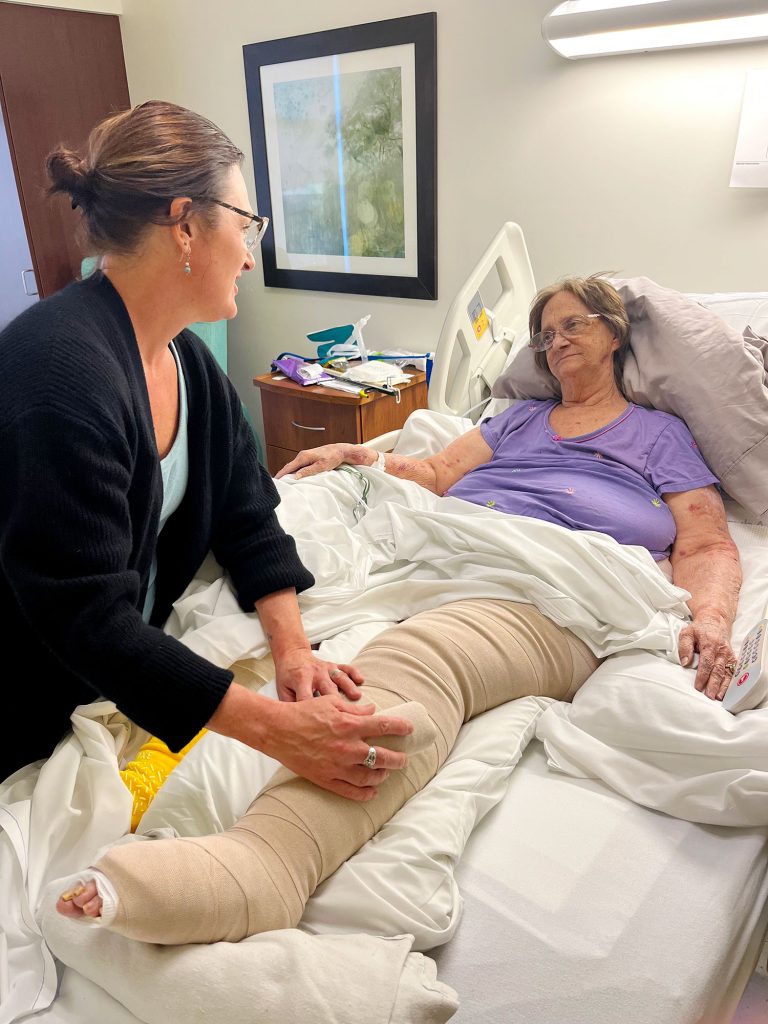
For many who are addressing their health care needs in Northern Arizona, factors that determine the choices being made include quality of care and the distance from home. Stephanie Martinez, senior clinical liaison for Rehabilitation Hospital of Northern Arizona in Flagstaff, is wanting area residents to know that when it comes to rehabilitative care, their services are some of the best to be found and they are close to home. According to Martinez, this year Rehabilitation Hospital of Northern Arizona will be ranked in the top 5% of rehabilitation hospitals in the entire country, meaning that those who go to the hospital will receive top notch service. This ranking comes from the Uniform Data System for Medical Rehabilitation (UDSMR), a non-for-profit corporation that was developed with support from the National Institute on Disability and Rehabilitation research, a component of the U.S. Department of Education. It ranks rehabilitation facilities based upon care that is patient-centered, effective, efficient, and timely.
The facility’s Director of Marketing & Business Development Donna Ray explained, “We are part of a bigger health care group called Ernest Health and they have hospitals across the country that specialize in acute rehabilitation, which is what we do at our hospital,” adding that this facility has been in operation for the past seven years.
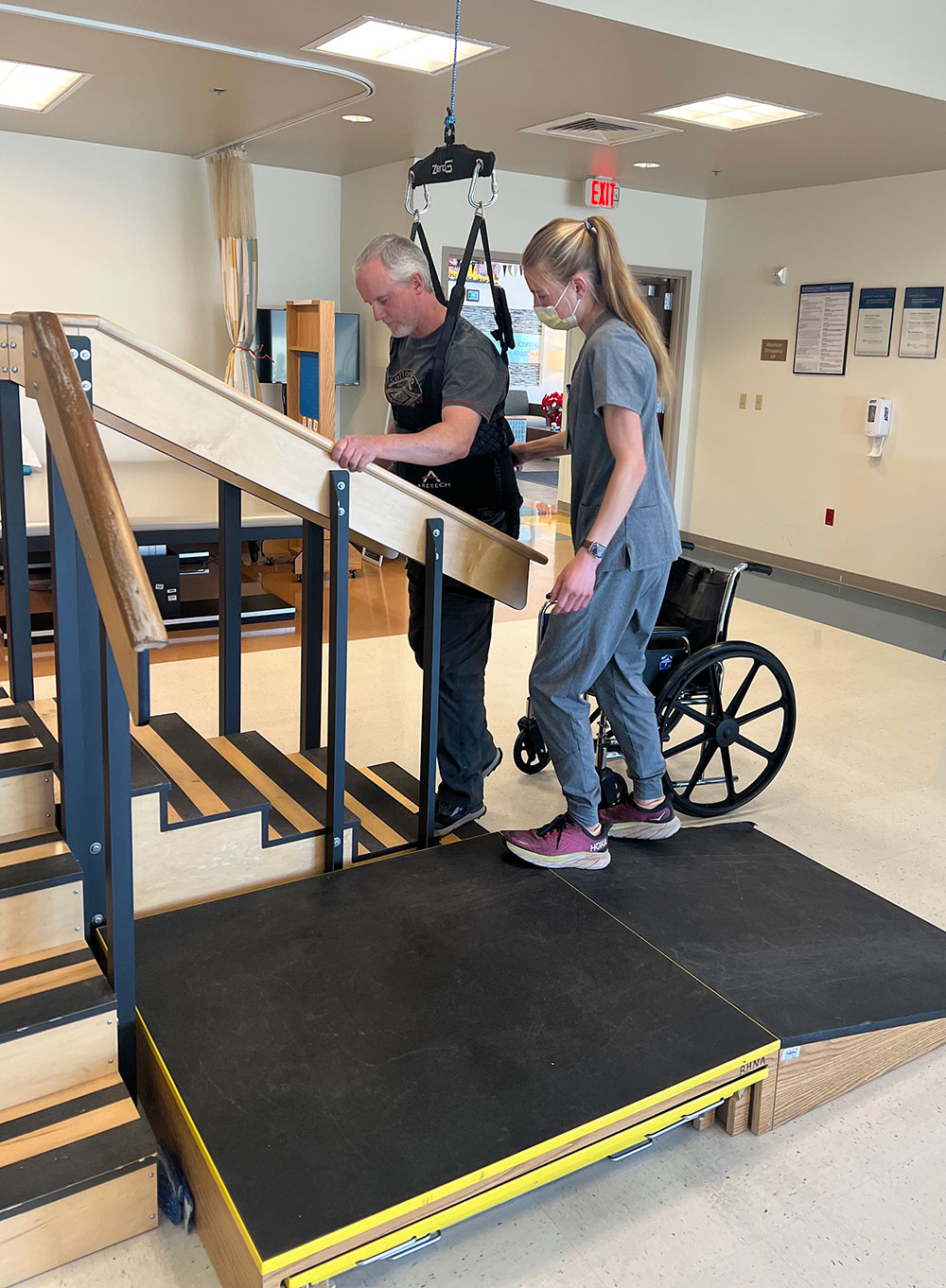
Martinez spoke about the technology utilized in the hospital, including the ZeroG and Balance System, which is a robotic, body-weight support system mounted to a motorized trolley that rides along an overhead track. “This is a unique tool, especially for stroke patients, amputee patients and spinal cord injury patients. There’s a computer and you can program how much gravity to give individuals. So, when they’re first starting out, we will do most of the work for them and then as they get stronger, we start adding gravity back so that they are doing more of the work. A lot of times when someone’s mobility is taken away, they’re afraid of falling and when they’re in this body-type harness and they know that they’re not going to fall because the machine will catch them if they slip, that gives them the mentality of ‘I can try this and I can do better.’ It provides confidence.”
Another technology utilized is the Bioness system, which helps patients regain lost mobility or movement in their hands and feet. This system is especially useful for stroke patients, those who may have suffered a traumatic brain injury, multiple sclerosis, cerebral palsy, and patients with partial spinal cord injuries. The system uses electrical stimulation to help patients regain more muscle control, which in turn gives them more functionality and mobility. These services provide the latest methods to help patients obtain quality of life.
“Everybody wants to get home, there’s no place better than home and I can agree with them. But we need the long game. We can provide you the education, strength and tools to be successful so that you can remain at your home indefinitely,” explained Martinez, adding that the goal is to prevent a recurrence of an ailment that brought them to rehab to begin with.
Even if patients are sent to a Valley hospital for treatment, those patients have the right to say they want their rehab done closer to home. This not only makes rehabilitation more convenient, but it also increases the odds of completing therapy when it’s first needed. “What will happen is that they will go home and have a failure in the home and then it’s a little bit harder to bring them back. I try to emphasize that they are giving up the smallest amount of time for a lifetime of success,” said Martinez.
Martinez, who has been a nurse for 26 years, was raised in Holbrook and understands the challenges facing residents when it comes to quality care close to home. “A lot of people in these small communities don’t know that they have accessibility to resources in their backyard. When I first started nursing in Flagstaff, it was such a hardship because there were no rehabs in northern Arizona, they had to go to Phoenix. It’s expensive to pay for hotel rooms, gas money, food, all of that while you’re trying to be supportive of a loved one while they’re going through a life-changing event.”
To ease that burden, the rehabilitation hospital has a program called Family Attendant. “We take on that cost because we believe that healing involves the whole family.” This service includes providing a cot or rollaway bed in the room with the patient where one family member can stay. Also provided are meals for the family member while they are staying at the center with their loved one.
Martinez emphasized that the Rehabilitation Hospital of Northern Arizona is not the same as other rehabilitation services available in northern Arizona, which are skilled nursing facilities. “At our facility you receive three hours of therapy, five to seven days a week. That’s compared to 45 minutes in a skilled nursing facility. Another difference is skilled oversight. A doctor or nurse practitioner will see them at least three times a week, if not more depending on what’s going on with them. Whereas in a skilled nursing facility they might not see them but once a week.”
Martinez encourages those who find themselves in need of rehabilitation services to contact their facility and ask what they provide to ensure that they receive the best treatment for their recovery. To learn more about Rehabilitation Hospital of Northern Arizona visit their website at https://rhna.ernesthealth.com/.