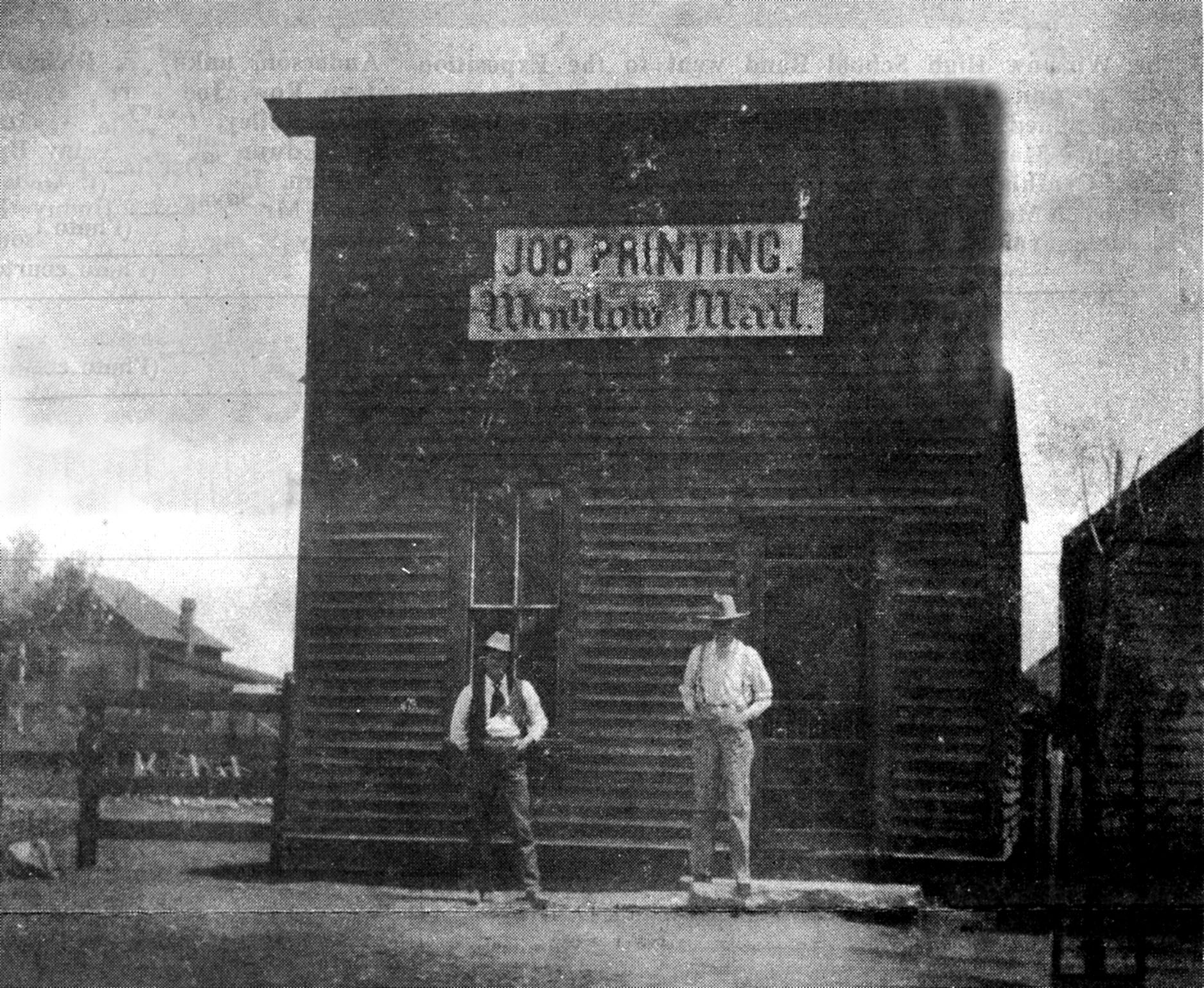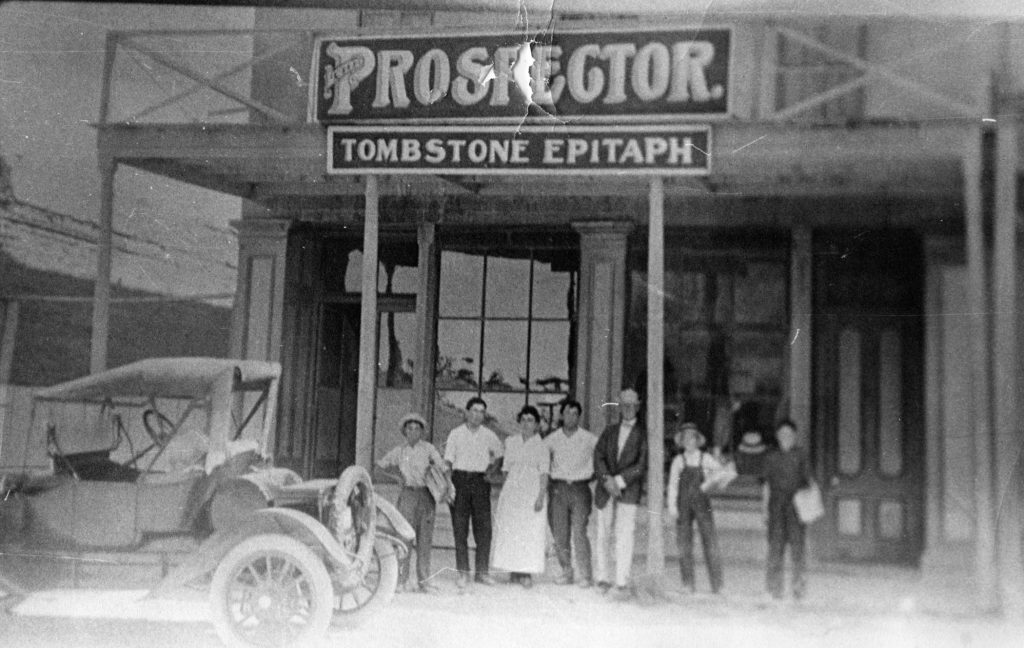
In early January, 1926, the Holbrook Tribune-News was sold to the Giragi brothers, who were publishers of the Tombstone Epitaph and The Winslow Mail, as well. Carmel, Columbus and George bought the Mail from Sam W. Proctor a year earlier. The Giragis hired John Burns to be the editor. Burns was already employed at the papers when they named him editor. One year later, Columbus Giragi became editor of the Tribune-News.
During the week of Nov. 28, 1930, the Holbrook Tribune-News moved into its new building at 200 E. Hopi Drive. The paper was published from this location for nearly 90 years. On the occasion of the move from the old office on Main Street, now Bucket of Blood Street, the editor of the Coconino Sun wrote a letter to the editor. It read in part, “Editor Columbus Giragi of the Holbrook Tribune-News has moved his periods, commas, asterisks and printing plant to a new home just completed. We congratulate you, Columbus, and wish you no happy returns of the moving day, but much joy in better quarters.”
In 1931, V.P. Richards, who would be the next owner of the Holbrook and Winslow newspapers, went to work for the Giragi brothers at the Winslow Daily Mail. Richards sold advertising, reported and worked in the print shop. When the Mail discontinued daily publication, he became editor.
Giragi added a column to the paper called “Sparks from the Grindstone,” which help set the tone of the paper for years to come. A variety of topics from current events to controversial moments found their way into print.
On Oct. 15, 1937, Columbus Giragi stepped down as editor of the Holbrook Tribune-News. Bob Eunson served as editor until 1941, when he moved to the Phoenix Bureau of the Associated Press.
Platt Cline, who was the managing editor of the Coconino Sun in Flagstaff, became the Tribune’s next editor. Cline had a great interest in Arizona history and submitted articles to magazines on much of Holbrook’s history. In 1976, Cline published a book, “They Came to the Mountain,” in which he focused on the history of Flagstaff, and touched on the history of Winslow, Holbrook and the area.
At 7:30 a.m. on April 17, 1933, Carmel L. Giragi, 38, and his pilot, Jack Irish, crashed 30 minutes after leaving the Winslow Airport for Phoenix. After an extensive seven-day search, the plane was found, along with the bodies of both men. Giragi was buried in the Winslow Cemetery. Business houses in Winslow were closed and by order of Governor B.B. Moeur, the flags at the capitol flew at half-mast.
The Winslow Mail printed Giragi’s life sketch, which read in part, “Born in Tombstone Sept. 12, 1894, Carmel L. Giragi entered the employ of Wm. H. Hattich, the publisher of the Tombstone Epitaph, in his early teens. With his brother, Columbus P. Giragi, he purchased the Epitaph from Hattich in 1912, selling the business to W.B. Kelly of Safford in December 1925, and purchasing The Winslow Mail at the same time. A short time later they purchased the Holbrook Tribune-News.”
A few months after Carmel’s death, his brothers purchased the Coconino Sun in Flagstaff. It seems that the brothers were on a buying frenzy. They appeared to have purchased the Snowflake Herald from Sarah Smith in February 1934. On Feb. 9, Mrs. Smith was no longer listed in the masthead of the paper. The Herald Publishing Co. was then listed as publisher. No article in the paper gave a reason for the change, but it was noted in Snowflake’s “Centennial Memories” that the paper changed its location to Holbrook, and its last edition was published in June 1942. V.P. and J. Morris Richards would later resurrect the Herald.
In September 1935, Columbus Giragi’s editorial praising McNary for not having a single person on relief (government assistance) won nationwide attention. Entitled “Brave McNary,” the piece suggested that McNary was perhaps the only town in the United States or maybe even the world to have no citizen on relief. Time Magazine, Collier’s and others wrote about McNary until President Franklin D. Roosevelt read Giragi’s editorial and sent him a letter at the Tribune-News.