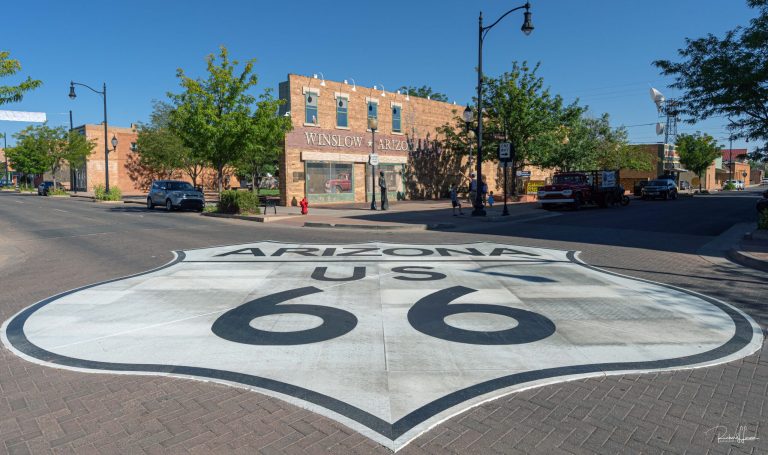
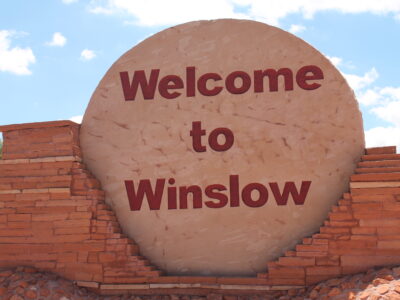
At the recent meeting, the Winslow City Council tabled two agenda items and are set to revisit them again at one of their June meetings. Both involved the I-40 Tradeport Corridor (I40TPC) project and Adam Wasserman from GLD Partners, one of the partners in charge or organizing this project. This initiative, involving municipalities, counties and private industry across California, New Mexico and Arizona, aims to create a logistics and trade corridor powered by clean energy.
In 2023, the U.S. Department of Transportation designated the I40TPC as a Regional Infrastructure Accelerator. This designation recognizes the project’s plan to develop interconnected TradePort Hubs in Kingman, Winslow, and the Albuquerque region in New Mexico. This designation also is a signal to investors both public and private that the government supports this initiative.
The project involves several partners, including Bernalillo County, Sandoval County, the Village of Los Lunas, all in New Mexico and the cities of Winslow and Kingman. It is being pitched that it will attract over $1.5 billion in infrastructure investment over 20-25 years, creating 75,000 to 100,000 new jobs across the corridor.
However, the jobs being created may or may not align with Winslow’s overall goals. Recently the city’s general glan, that has not been adopted yet, had a new draft that included language that would require the council to evaluate these projects based on the quality and quantity of jobs it provides versus the negative impacts. City Attorney, Trish Stuhan, assured those present at the meeting and council that this agreement was just to develop a strategy and does not bind the city to any future commitment to the plan.
Wasserman in his presentation to the council was asked by councilmember Jim Maclean to explain exactly how Winslow benefits from these types of projects. The project details laid out in the agreement to join a coalition to develop the project shows Winslow, while getting new infrastructure investments necessary to make the project work, has several projects that are vague and undefined.
In the agreement it outlines that Winslow, and most of the other sites, will get what they call a Truck Mobility Hub. The document defines this hub as, “Truck Mobility Complexes are 50-acre next-generation logistics assets that are a strategic combination of advanced mobility truck services, clean energy, logistics, and short-term inventory management hubs.” Language like this from both the agreement and Wasserman in his presentation garnered some negative reactions from some members of the public and MacLean. Maclean even going as far as to call Wasserman’s responses “vague” and “non-answers.”
MacLean also admitted that because of his recent vacation he hadn’t had the chance to read the agreement until earlier that day and was uncomfortable with passing it at that time, which was what began the council’s ultimate decision to table.
The next agenda item had to be passed at the same time as the corridor and it was a commitment of $75,000 for lobbying costs for the project. These funds would be considered an investment as the city would earn much more in increased taxes if the project goes through. The only questions left is whether its supported and right for the citizens of Winslow and the region at large.
The council also adopted its budget for fiscal year 2025 with one significant change. During a recent work session, city officials realized that the tuition reimbursement program for employees had been left out of the initial draft. After reinstating this program, the budget now shows a $20,000 deficit in the $37 million budget for next year.
The budget, described as “tough” by City Manager David Coolidge, faces challenges due to a new state tax collection mechanism that has reduced urban revenue sharing compared to the previous year. This reduction has constrained the city’s financial flexibility, despite a projected 5% increase in sales tax revenue from growing business activities.
To address the budgetary constraints, the city has introduced new fees and increased existing charges for services such as public records requests, construction permits, recreational activities, and infrastructure maintenance. These measures aim to offset the fiscal pressures and maintain essential services. The city also must get rid of their curbside recycling program in order to make the budget work.
In early May, The Tribune reported in detail about the city’s budget discussions, including these new fees, the impact of reduced state funding, and the overall financial challenges. For more comprehensive coverage on these budgetary issues, visit tribunenewsnow.com.
In other business, the council:
* Appointed Ross Black to the Historical Preservation Commission.
* Approved a program to incentivize affordable housing development by offering waived fees, expedited processing and more lax regulations on things such as parking.
The next meeting of the Winslow City Council will be held at 6:30 p.m. on Tuesday, June 11, in the meeting room located at 523 West Second St.