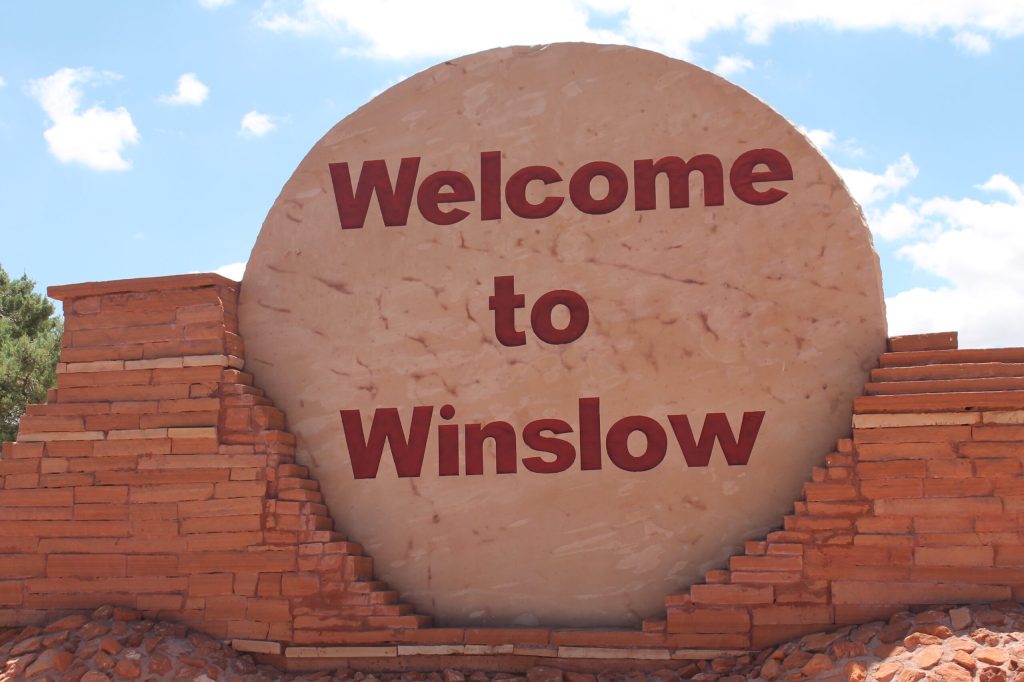
At a recent City of Winslow council meeting, Dan Jackson, vice president of Willdan Financial Services and the city’s water and wastewater rate consultant, addressed the council with a comprehensive overview of the challenges and necessary adjustments for the water utilities sector.
Jackson explained the familiar situation the city is in by saying, “I do work all over the country and internationally and all water utilities are facing the same challenges. Costs are going up and utilities have to find a way to pass through this cost while trying to minimize the effect of any increases on their rate payers.”
He emphasized the critical balance needed between passing costs onto consumers and investing in infrastructure to support both current and future population demands without overburdening ratepayers. Jackson highlighted the financial strain faced by the City of Winslow’s water utility, noting that for 2023, operating expenses were $700,000 more than projected in their last study which happened in fiscal year 2020-2021. He attributed this discrepancy primarily to inflation, explaining, “It has hit all of our household budgets and it hit the city of Winslow’s water utility very very hard, and it caused a lot of your expenses to be at much greater levels.”
Jackson mentioned that the rate increases planned in the 2021 study were not fully implemented, as the city hesitated to raise bills during the onset of the COVID-19 pandemic, leading to the current need for a more significant rate adjustment. Many municipalities kicked the can down the road when it came to increases to utility costs during the pandemic to offer some relief to families struggling during that time.
Regarding water and wastewater usage, Jackson shared, “The average resident customer in Winslow use about 7,500 gallons of water and 5,000 gallons of wastewater and pay $75.94 for water and sewer and the state median is $83.14.” He indicated that Winslow’s utility customer base is predominantly residential, with future growth expected to add only a small number of new accounts annually. He also forecasted the city’s water sales to remain relatively stable, with current usage at just over 450 million gallons annually, expected to rise only to about 460 million gallons over the next decade.
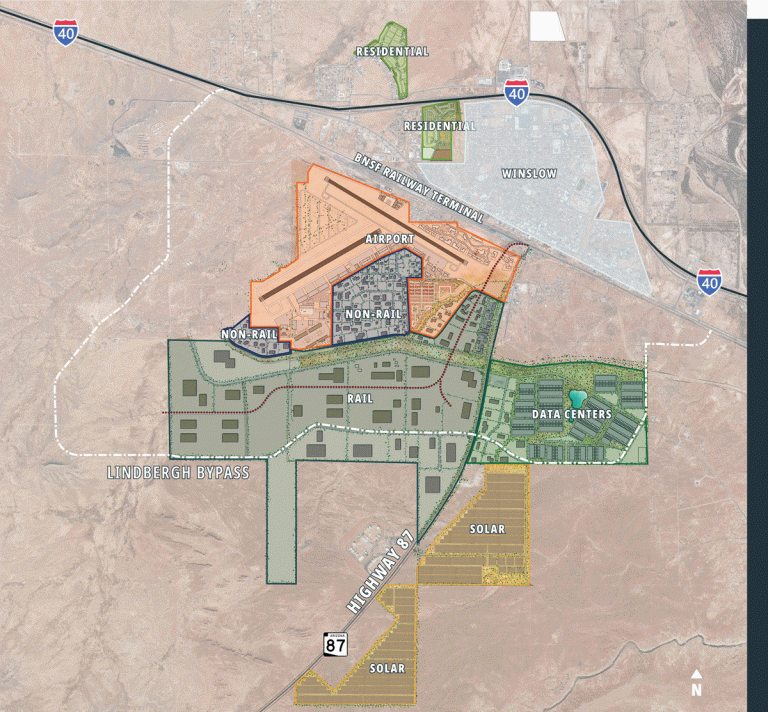
With Winslow in the midst of potentially unprecedented growth via the various projects the city is engaging in, it is unclear if projection that show minimal growth will be able to accurately predict the future needs of residents. Jackson’s plan also builds in adjustments throughout, which will aid in the city’s ability to adjust to an unpredictable future.
For future investments, Jackson spoke about the city’s projected $5 million in investments over the next five years, commending the city for its ability to fund these without accruing debt. He recommended a five-year rate plan with adjustments starting in July 2024 and then annually every January through 2028. This plan involves a 9% rate increase in July 2024 and January 2025, followed by a 4% increase in January 2026 and 2027, and a 3.2% increase in January 2028 and 2029. A 9% increase to the water bill represents another $6.31 on the average home’s bill according to the figures used in his presentation.
Councilmember McLean responded to the proposed rate adjustments, saying, “Being on a retired set income you scared me to death the first three minutes talking about inflation but for pretty much the price of a large fry I can handle this so I’m okay.”
Later in the meeting, City Manager David Coolidge provided an update on legislative matters, specifically the impact of the federal government’s budgetary issues on local projects. Coolidge highlighted a project for the construction of a two-million-gallon water tank that is pending funding, which if the federal government is not able to pass a budget soon the government will be shut down and the project may not survive. The city is seeking $2.2 million in federal funding for the project that will require another $800,000 of investment from the city to see fruition. Coolidge also explained another legislative issue the city has a vested interest in and is monitoring is that the state senate is passing many pieces of legislation to decrease the red tape developers face when building housing. Coolidge describes the situation by saying, “Many of these zoning bills would remove local control of development from municipalities and be governed by the state. Many of bills would eliminate requirements to notify nearby residents of any zoning changes or development, effectively removing the public’s input within the community.” Although the city and the state at large are looking for solutions to the housing crisis, taking away a city’s right to deny development that is deemed not a correct fit for the city would be a dramatic shift of power in favor of the state.
The council also reviewed the city’s audit, presented by Ben Hur from Fester & Chapman, the city’s auditors, revealing $83.8 million in total assets, with $53.8 million in capital assets, $18.3 million in cash and investments, and $5.4 million in pension assets. Total liabilities were reported at $29 million. The audit showed $23.4 million in total revenues, with expenses allocated across various departments, including $6.6 million for public safety and $3 million for wastewater.
The transition to a new general ledger system was identified as a source of two material weaknesses, leading Vice Mayor Samantha Crisp to inquire about remediation strategies in which Hur informed Crisp that the city has been advised on how to remedy these issues and they most likely arose from the city changing the software to manage the ledger and accidentally putting in incorrect info during that transition process, which are easily addressed.
The council also updated dates for the primary election happening later this year. The resolution changes the city’s primary election from August 6 to July 30, the registration date for the primary from July 8 to July 1, the deadline for candidates to file from April 8 to April 1, and the earliest date for candidates to file from March 9 to March 2. The dates for the general election remain the same; the election will be held on Nov. 5, and voters must register by Oct. 7.
In other business, the council:
* Approved a contract with McCauley Construction Inc for a pickleball court a parking lot for $266,986.
* Authorized the application of a grant to the Arizona Department of Transportation.
* Approved a utility easement between the city and Arizona Public Service.
* Approved a $500 donation to the Because We Care Committee for their annual graduation party.
The next meeting of the Winslow City Council will be held at 6:30 p.m. on Tuesday, March 26, in the meeting room located at 523 W. Second St.