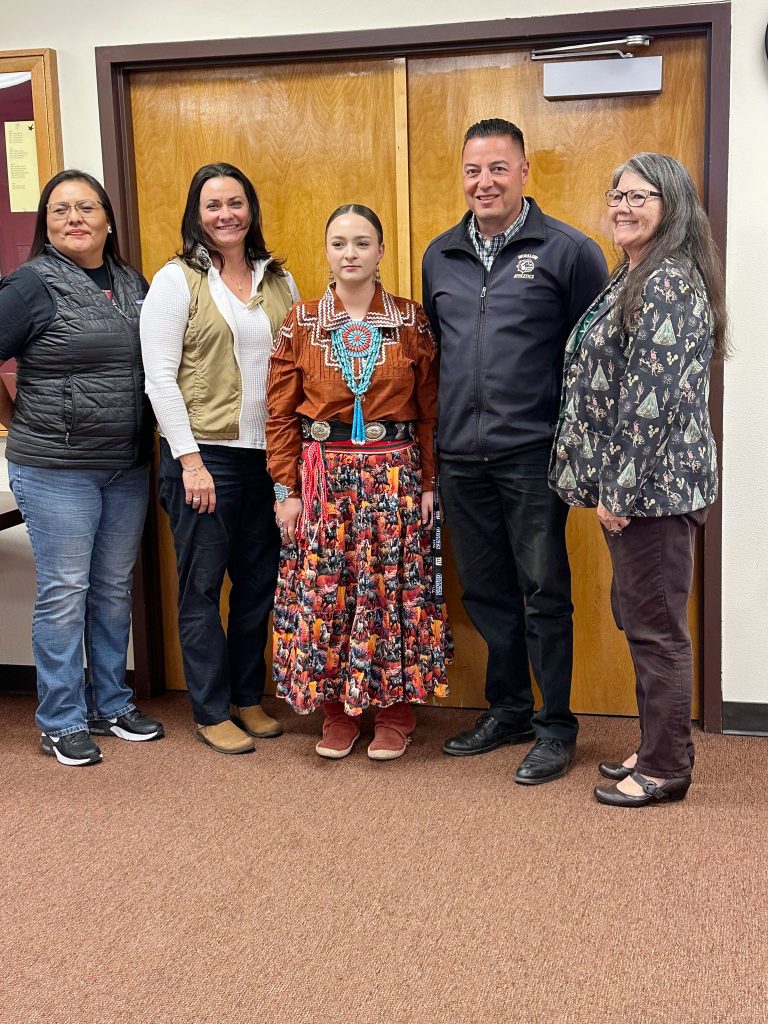
The Winslow Unified School District Governing Board’s recent meeting provided an in-depth look into the crucial roles played by the counselors at Winslow High School (WHS), shedding light on their diverse responsibilities and the impactful programs they manage to guide students toward success.
Penny Brimhall, who spearheads the Career and Technical Education (CTE) program, provided a comprehensive overview of the CTE offerings and how they intersect with her other role working with freshman in the counseling office. As the freshman counselor, Brimhall explained she plays a pivotal role in acquainting incoming students with the Education Career Action Plan (ECAP), a strategic initiative mandated by Arizona to ensure every high school graduate has a clear plan post-graduation. Brimhall’s proactive approach extends to junior high students, preparing them early for the expectations and opportunities the high school presents.
Laurel Poleyestewa, serving students with last names A-J, and Cecilia Estudillo, catering to the remaining alphabet, highlighted their dedicated efforts in personal and classroom meetings to discuss ECAPs, ensuring each student is on a path that aligns with their future aspirations.
Estudillo introduced “My Future Arizona,” a pivotal platform that allows students to explore real job listings and the educational pathways leading to those careers, thereby facilitating a more tailored and informed decision-making process for their futures.
They also explained that each student at WHS can expect one class to be dedicated to their ECAP and at least one individual meeting with their counselor each semester at a minimum.
The board’s interaction with the counselors revealed a collective concern for enhancing parent and student engagement with the ECAP platform. Board member Allen Leonard inquired about parental access to “My Future Arizona,” to which Estudillo confirmed availability, albeit through student-initiated access, highlighting the importance of fostering a collaborative environment in planning for students’ futures. So, parents of students at WHS can have them grant access on My Future Arizona if they want to take an active approach with their child’s ECAP.
Bryce Barris’s role in focusing on college and scholarship preparation underscored the district’s commitment to higher education accessibility. His unique position allows him to guide students, particularly seniors and proactive juniors, through the maze of college admissions and financial aid, emphasizing the district’s forward-thinking approach to education. Leonard pointed at possibly allowing all students at WHS access to Barris’ resources because there are scholarship dollars out there for freshman and it’s never too early to start that process.
The board’s deliberations post-presentation centered around methods to incentivize participation in counseling services and the significance of parental involvement in leveraging the opportunities available. They also talked about a revision in the high school’s handbook to clarify the criteria for achieving valedictorian status, addressing a need for transparency and setting clear expectations for students striving for this honor. There seems to be some confusion on the matter that prompted concern from the board and they want that to be clarified so students know what to expect if their goal is to be valedictorian.
During the same meeting, the board heard a presentation from Nathan Lindaman, the district’s special education director, who brought attention to the unique challenges and high enrollment rates in the special education program, attributing the variance to factors like the COVID-19 pandemic and the rural setting of the district. Lindaman’s insights into the difficulties of recruiting and retaining specialized staff, coupled with the financial implications of outsourcing essential services, painted a detailed picture of the hurdles facing the special education program.
The board also approved out-of-state travel for administrators to attend a conference focused on improving tier two teaching strategies, something Lindaman specifically stated needs help. Tier one is students in the typical classrooms while tier three is special education. Tier two is small groups that Lindaman explained are sometimes conducted by the general education teachers and sometimes by the special education teachers and this has created some issues. The conference will hopefully shed some light on best practices to help students in this tier of need.
The meeting also included for first reading several updates to district policies to fall in line with recommendations made by the Arizona School Board Association. There are 26 policies, Policy Advisories No. 763-786, that received updates but they will not go into effect until the second reading at the next meeting. These updates largely deal with updating language to meet new standards and do not change the intent of the policies.
In other business, the board:
* Authorized accepting a donation of a golf cart from Sal Hernandez to WHS.
*Approved the following hires: Evita Alianza, first grade teacher; Marjorie Coolidge, second grade teacher; Dustin Cluff, weights teacher and football coach; and Alexis Vargas, parent liaison.
* Approved the resignations from first grade teacher Jennifer Collazo and purchasing specialist Ruby Maine.
* Approved extra pay for the following Winslow Junior High School track coaches: Taylor Mills, Christie Bratt, Kimberlee Henling and Gary Roland.
*Approved the following student fundraiser requests: WHS Lady Hoop Club, calendar fundraiser; WHS Class of 2025, coed student volleyball tournament; and WHS student council for Bulldog Day concessions.
The next meeting of the WUSD school board will be a work session held at 6 p.m. on Wednesday, March 6, at the Winslow Chamber of Commerce in the meeting room located at 523 W. Second St.