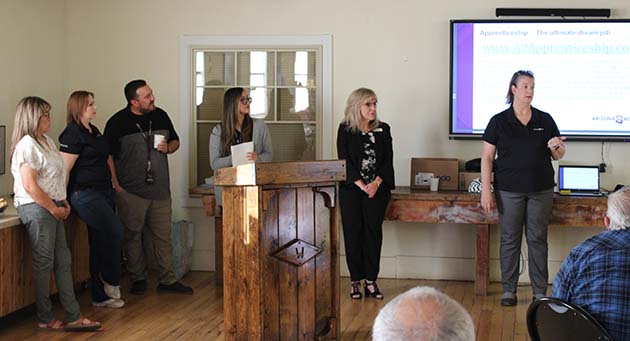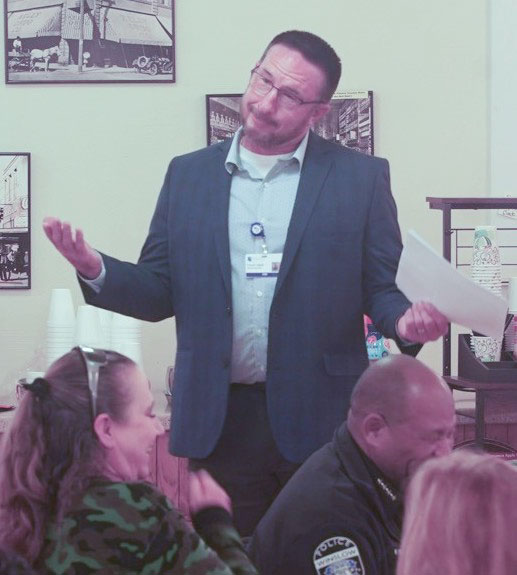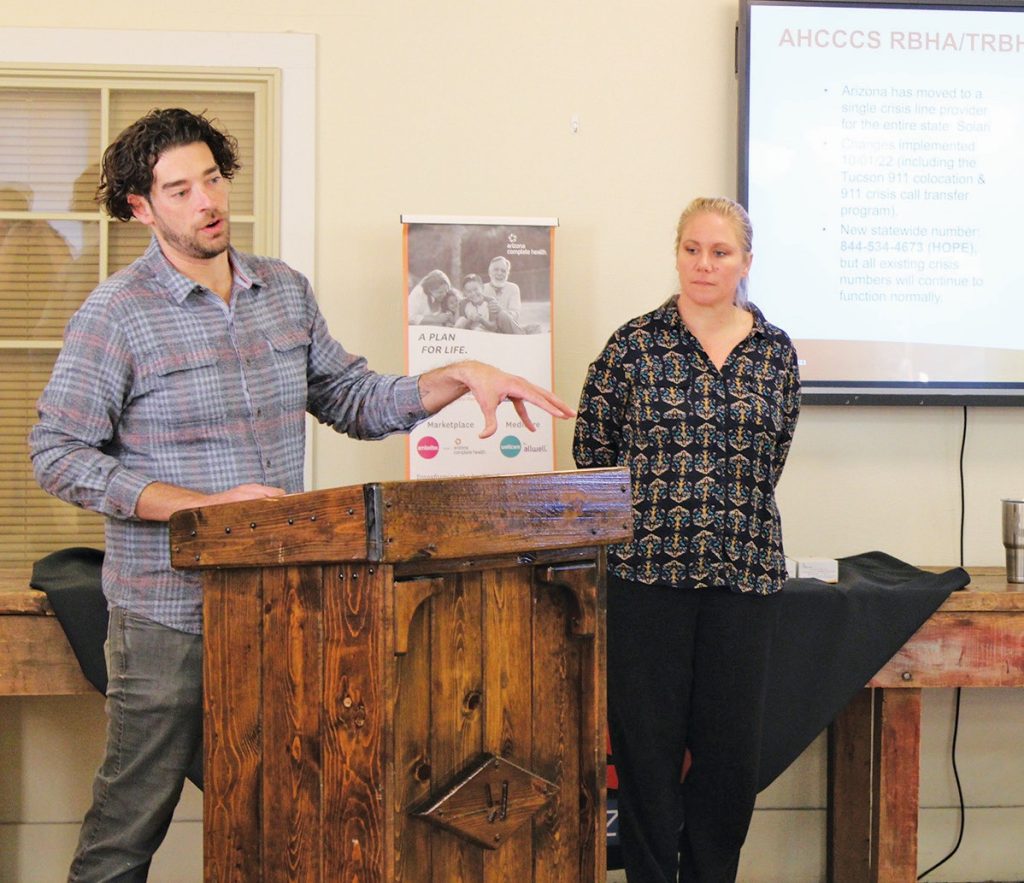
Good Morning Winslow, the monthly networking event hosted by the Winslow Chamber of Commerce, recently featured a presentation by Allison Hephner, the First Responder Liaison and Anthony Mancini the Community Relations Representative from Arizona Complete Health. They detailed the critical crisis services available through their organization, focusing on three main priorities: managing the seriously mentally ill population, administering a 24/7 behavioral health line and crisis system and managing the mental health block grant—a federal funding resource used for serving mental health resources, including programs that place mental health specialists in schools.
In her role, Hephner oversees the crisis system, ensuring its smooth operation and immediate problemsolving capabilities should any issues arise. Both speakers emphasized that crisis services offered by Arizona Complete Health are free and accessible to everyone, regardless of insurance status or financial ability. Hephner clarified the organization’s broad definition of a crisis as anything beyond an individual’s ability to cope, thus allowing anyone who feels they are in crisis to have access to necessary resources.
Arizona Complete Health’s crisis intervention approach includes a 24- hour hotline, mobile dispatch teams that serve communities, even remote communities, in the county and observation units designed to stabilize individuals. Hephner spoke a bit about the organization’s philosophy of stabilizing individuals in their own environment rather than take an individual somewhere else to be stabilized and then taken back to their environment where things may not be resolved.
One innovative aspect of Arizona Complete Health’s service is the direct dispatch through the phone number 988, enabling individuals in crisis to access mental health professionals immediately, circumventing the need for police or fire department involvement unless necessary.
Hephner, a former firefighter, spoke about how often times, especially in situations at schools, if a student is having a crisis, it may not help to have a large police or fire department presence that will attract attention from everyone else at the school. The mobile crisis team allows a crisis expert to come in and provide care under the radar and not attract unwanted attention.
Furthermore, Arizona Complete Health operates under a “no wrong door” policy, ensuring that anyone who seeks help, is guided to the appropriate care. This policy extends to their physical locations, where individuals are assisted and directed rather than turned away for any reasons.
Highlighting the importance of education, Hephner recounted her own transformative experience with trauma and crisis training, which she now offers to others, particularly those frequently facing crises in their jobs. This training is available to anyone interested, with the stipulation of a minimum number of participants to conduct a class. Hephner said that this training changed her life and allowed her to properly deal with the trauma she encountered regularly while a part of a fire department.
A critical point of the discussion was the need for more school resources for mental health crisis management. Hephner explained that funding is contingent on the frequency of calls to the crisis center from school districts, which has historically been low in Navajo and Apache counties. This lack of reporting has led to inadequate funding, despite the evident need for mental health resources in these schools. Hephner knows that there is a need for these resources from speaking to hospital staff and other mental health resources mental health providers in the area but funding is hard to provide when the data they’re allowed to use suggests that there are no issues with mental health in these communities.
The presentation laid out the very important access to care that Arizona Complete Health is able to provide to the community free of charge and how the public can take advantage of these services. The meeting concluded with Bob Hall, the Chamber of Commerce’s CEO, making an announcement that for December Good Morning Winslow will be canceled.