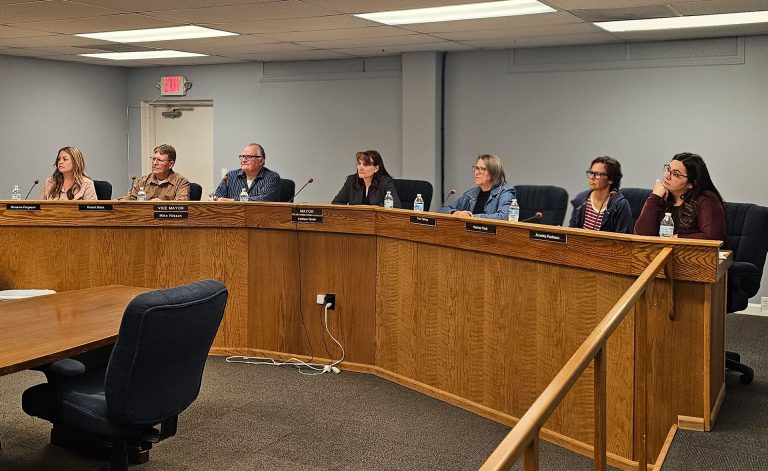
The Holbrook City Council convened Thursday, Jan. 12, in which the council had no action items but held discussions on several items.
Councilman Robert Black inquired regarding the hiring of a code enforcement officer, asking City Manager Ted Soltis who would be hired to take on the task with the retirement of the staff member who held that position. In reply Soltis stated, “I talked to staff and their recommendation is that we can handle it with the current staff that’s in place so we will not be hiring anyone. The current staff take will pick up the duties.”
Black expressed concern for that course of action, stating he believed the city needs someone who’s only job is enforcing codes. “Where we are now in Holbrook and how much we have to do to even get started going forward with Holbrook, we need a strong code enforcement officer. We’ve got to have somebody that not only finds the problem, but then stays with it. They’ve got to find out who’s responsible for it,” Black stated, “We need somebody from start to finish on this. I’m just afraid that if we tried to divvy that out with current city workers, we’re going to fall short again.”
Mayor Kathleen Smith asked Soltis the last time the code enforcement policy had been reviewed and he stated he couldn’t recall. She then asked if the city had a hearing officer, someone on staff who hears the cases related to code violations, to which Soltis stated there wasn’t one.
Her recommendation was that each council member review the policy and address the concern of hiring a code enforcement officer in more detail at the next work session.
Moving from that discussion, Black also asked about the potential need for hiring an economic development director, to which Soltis explained he is over economic development. This in addition to his duties as city manager and public works director. Rather than discuss it during this meeting Soltis wanted to address the issue during the budget process, which he noted begins in May. “One of the things that we really need to be thinking about before we start talking about spending money hiring people, we need to get into the budget process. When we get into the budget process, you’ll have a better feel for where we are financially,” stated Soltis.
Mayor Kathleen Smith stated she understood that there’s a give and take with making sure the budget is where it needs to be. “It doesn’t necessarily have to be a full time person as long as we feel we’re prospering as a community and that we have the ability to go to meetings and entice people towards economic development,” she stated.
Councilmember Mike Nilsson, who was in attendance telephonically, stated that it was his understanding that it’s the city manager’s job to run the city. “I don’t think we can tell who and how many to hire.”
Mayor Smith agreed stating, “We cannot say who to hire. But we can say if there’s a specific department head we feel is important. We do have the right to ask for that. However, we still have to do concessions, potentially in a budget. And that’s the thing. You’ve got to give somewhere.”
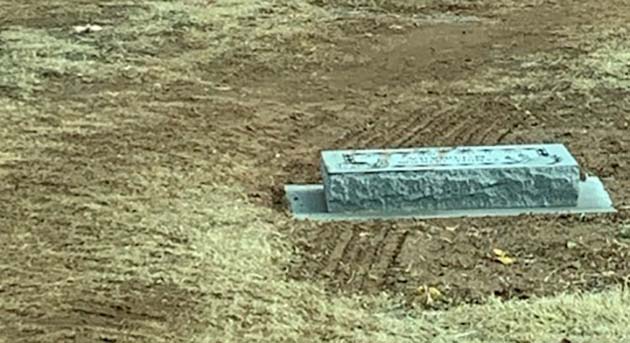
Another topic discussed by the council was the recurring damage to cemetery plots and headstones in the Holbrook Cemetery done by city and mortuary vehicles. This concern was already brought before council in March of 2022 after a family member of a deceased became upset after seeing what damage had taken place to a loved one’s burial site.
“A few citizens who have expressed their sorrows over the shape our cemetery is in,” stated Black, adding he visited the site himself the previous week. “In my opinion, the problem is the layout,” stated Black, “You can see where the vehicles they use ran over the headstones. But to this date today, that headstone has still not been reset.” Black explained he was not blaming anyone but had suggestions for improvement for alternative access into the cemetery that may minimize damage to existing grave sites, such as additional gates at the northeast or southeast end of the cemetery where the new cemetery plots are. He also suggested that at the very least, staff could come back and correct any damages that were made such as raking the dirt and resetting the head stones that were moved after being pushed out of place by the tire and tractor tread.
Soltis replied that how cemeteries are designed make it impossible to not run over plots. “Every plot touches every plot. And when you bury someone, you’d have to run over the next plot. I’m sorry, that’s just how it works. That’s how all cemeteries work.”
Smith asked Soltis if there was a way to mitigate the issue by opening gates or entering from a different location, to which he said that it would not be possible.
Smith said that perhaps the city should reach out to the mortuary and ask them to try to avoid gravestones. She also asked for the staff to think of other options to mitigate the issue in order to leave the gravesites in a respectful manner for the families that have loved one’s buried there. She suggested the matter be further discussed in the upcoming work session.
Mayor Smith then addressed the Growing Smarter legislation. Smith explained it was a legislation passed in 1998 with the intent of assisting communities in developing strategies for dealing with population growth. “The Growing Smarter and Growing Smarter Plus legislation requires cities and towns to adopt a general plan,” stated Smith, adding that it also states it must be completed every 10 years.
Smith said it was her understanding that the city’s general plan was its strategic plan and asked Soltis if that was correct. “We have an updated plan that was done in 2007,” he said, then veered off into discussion on the Brownfields plan as a supplemental plan. The Brownfields plan is an assessment study being offered to property owners regarding the feasibility of improving their blighted properties. “Bottom line is this, you are correct. Our plan needs to be updated it is an older plan. It is something we need to do.”
Smith explained that she investigated how the surrounding cities operate and found that some have a strategic plan that is three to five years plan that goes under the umbrella of their general plan required by the state. The general plan has certain elements, to which she pointed to the Town of Snowflake’s plan. “Basically, you have to identify land use, growth areas, circulation, open space, water resources, environmental planning, cost of development, economic development, historic preservation and administration and implementation.
“So we’ve got to decide, are we going to have two separate plans, the general plan that follows the legislation requirement from the Growing Smarter legislation, and then have a strategic plan that fits in there with a three to five year goals as you update, or do we just make our general plan our strategic plan because it’s required to be updated every 10 years,” stated Smith, adding that these plans will be a lot of work and include a great deal of citizen input. She recommended that council members do some homework on the topic so that it can be included as part of an upcoming work session.
The council then received an update on city goals for 2022-2023 by Manager Soltis who opened by talking about expenses incurred in 2022. “We had budgeted a 6.5% pay increase for July 1. We also had other increases due to the minimum wage increase,” stated Soltis, adding minimum wage went from $12.80 to $13.85 this year. “I have put together a draft budget, and I calculated for the next fiscal year we’re looking at about 6.42% cost of living increase, that’s going to cost us about $200,000.” He stated that the continuous increase in minimum wage will be an issue for the city budget in the future.
Soltis also mentioned the potential removal of a food tax. “Another issue that’s coming up is the legislature is contemplating sales tax revenues on food. That would cost the city $360,000. We don’t have that kind of money.” Soltis was referring to the Republican proposal in the state senate to remove the food tax as a measure to ease the burden of the rising cost of food and other necessities for Arizonans.
Soltis also listed the renovations and repairs the city currently has underway such as crack sealing, projects at the ball fields, restoration of the golf course bathrooms, renovation to the small museum at the petroglyph park, the driving range, the stabilization of the Bucket of Blood building, pool work and the ongoing project at the airport that is grant funded and being completed by contractors that has been bumped to the next fiscal year.
He noted that the city had a goal to pay $600,000 to the Public Service Personnel Retirement Safety (PSPRS) debt this year, which he noted was $6.8 million and has been reduced to $6.1 million over an unspecified amount of time, with the goal to decrease the PSPRS liability over a 10 year period.
He also noted that the Vac-Con, an industrial vacuum truck used by the city’s water/wastewater department, is older and required $50,000 worth of repair work in order to maintain it. “The good news is our new Vac-Con truck has arrived and is ready to go.” He noted that it was a very costly piece of equipment and that the city had to wait until there was sufficient revenues in a variety of funds including the water fund, wastewater fund and capital fund before it could be purchased. The city also received a track hoe for the cemetery to mitigate some of the damage taking place there. In addition, the sanitation department received a new back hoe.
The council also received an assessment update on the stabilization of the Bucket of Blood Saloon building from Robert Graham with the Brownfields Program, who explained the work that would need to be done on the building but no costs associated with that restoration was included.