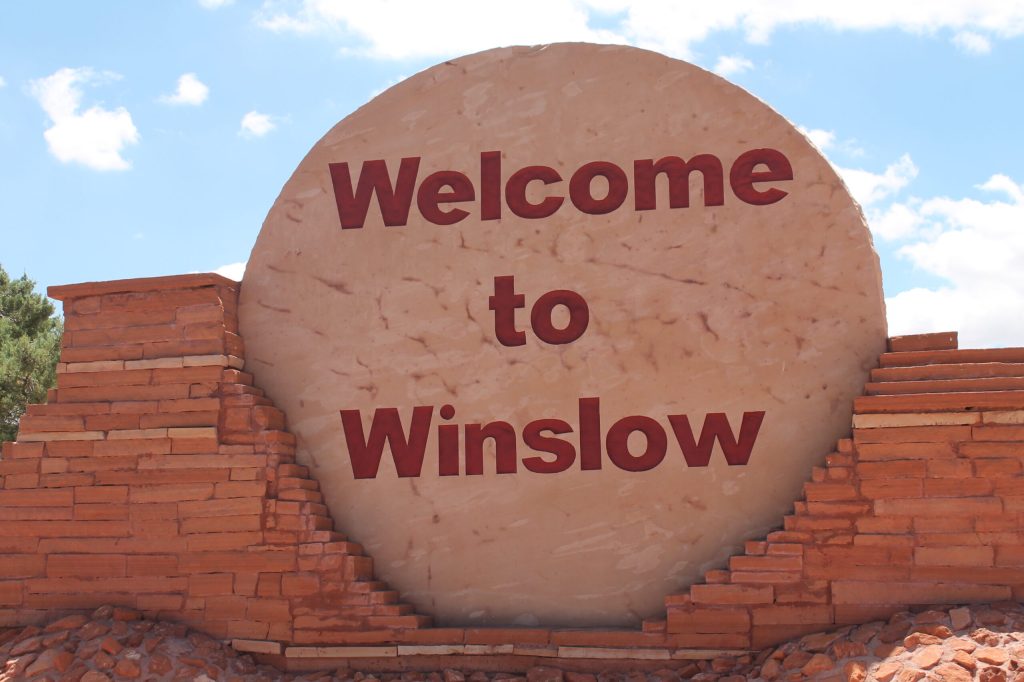
A housing shortage is impacting communities across the state. The City of Winslow is no exception, with city officials citing problems that are similar for communities throughout Navajo County.
As Winslow City Manager John Barkley pointed out, “Our situation in Winslow really centers around bridging the gap between two distinct products: cheap, dilapidated housing units and very expensive single-family housing.”
This poses a problem because there is an influx of residents expected in Winslow according to Barkley and Economic Development Director Una Wirekebau.
Wirkebau said, “We are about to have teachers at all levels including NPC (Northland Pioneer College), senior staff members, police officers and hospital workers of all kinds as well moving in to town as we grow.”
These concerns state leaders as well. In a recent study conducted by the Morrison Institute for Public Policy at Arizona State University (ASU), Alison Cook-Davis and other researchers said, “Several widely used policies can increase access to and affordability of housing. However, many of these are preempted or limited by Arizona law.”
Some of these tools, the study explained, are inclusionary zoning, rent stabilization and financing programs that can increase the supply of affordable housing as well as regulation of short-term rental properties.
Inclusionary zoning, for example, can be beneficial in that it creates affordable options for potential residents. The way that is explained in the ASU study is, “A large apartment complex would be required to have a percentage of units that are incentivized for affordability.” However, the study continues, “Arizona is one of a few states that prohibit local governments from enacting mandatory inclusionary zoning.”
If Winslow were to adopt a voluntary policy such as inclusionary zoning, the statutes would permit the local government to offer incentives to developers who volunteer to build affordable housing, as Cook-Davis explained.
Wirkebau added, “I have floated incentives for folks, including city-owned housing to ensure there are at least temporary accommodations in place. But this is still just an early discussion.”
“Even the rental housing market is almost non-existent right now.” Barkley noted. This, compounded with the fact that “affordable housing” labels come with a stigma that pushes some renters away, despite the median income in Winslow being just under $35,000 per year, exacerbates the housing issue.
Barkley is confident a solution will show itself in the very near future. “Our efforts have been to attract quality housing developers who offer a range of housing styles and densities and who demonstrate long-term commitment to our community.”
But that also comes with its own set of struggles. Wikebau explained, “We have plenty of developers looking to create housing here and around the county. However, with supply chain challenges, those timelines have been pushed out.”
In fact, earlier this year, the Winslow City Council was presented with a proposal from Sam Maytas, a contractor and developer based in Snowflake. In his proposal, Maytas explained his plan to build at least 200 apartments with mixed use space including a restaurant and other retail on 187 acres south of Winslow in the airport industrial zone.
He said, “The biggest, most immediate need for Winslow is housing. You’re going to have businesses that want to come in and they are going to need a workforce and a place for that workforce to live.” At the time, Maytas expected to break ground on the project before the end of the calendar year. But as Wirkebau said, “I honestly don’t see anything happening for six months or longer.”
Wirkebau had also been courting Impresa, a manufacturer of modular homes. As she said, Impresa would help alleviate both the housing and employment issues facing Winslow. Unfortunately, because of the cost of building a facility to begin manufacturing homes, this has been put on hold as well.
Winslow has also recently experienced an influx of short-term rental properties with landlords opting to rent spaces for three to six months instead of long term.
This is not unique to Winslow. According to the ASU study, “From June 2015 to June 2021, short-term rental listings in Arizona have increased 706%.”
It goes on to explained, “Arizona’s short-term rentals have an average stay of 3.3 days, an average cost of $282 per night and an occupancy rate of 67%. At these averages, an owner could collect over $5,750 per month, significantly higher than the monthly average long-term.”
There is no regulation of these types of rentals in Arizona. Cook-Davis said, “A frequent criticism of short-term rentals is they remove long-term housing units from the market, decreasing overall supply, which leads to greater demand and higher rental prices. The negative impact of short-term rentals on housing is even higher in rural areas, where housing units are less likely to be replaced than in urban and suburban areas.”
There are currently 17 active short-term rental options in Winslow alone, which has shrunk the market of available rentals.
Wirkebau added, “We do have an interested buyer and developer for Old Main, located at 800 N. Apache Ave. who plans to convert the space in to about 40 apartments. But this is being held up for various reasons and it will take at least a year just for the asbestos removal.”
Updating existing units and building more housing in Winslow is affected by global supply chain concerns. Winslow also faces challenges in infrastructure and a qualified workforce.
Despite these setbacks, Barkley and Wirkebau are both optimistic. She said, “We are thrilled to be working with several developers for numerous housing types in Winslow. Multi-unit apartments, townhouses and single-family homes all in a range of prices for both rental and purchase. Including some discussion on creating a rent to own program and other solutions.”
Barkley agreed saying, “I am very sure this will happen here very soon.”