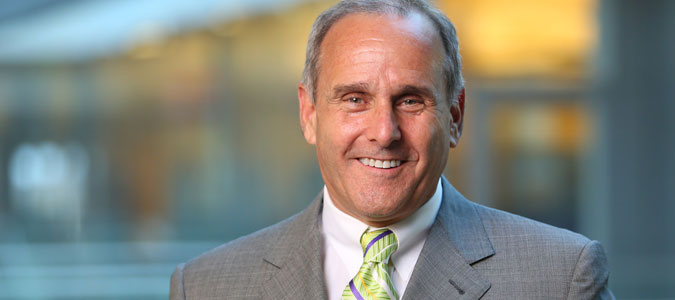
By L. Parsons Arizona State University’s Biodesign Institute is a nationally renowned research laboratory based in Tempe that combines research and top scientists to address disease and health problems throughout the world. The institute’s executive director, Dr. Joshua LaBaer has studied COVID-19 and believes that it is rapidly becoming the state’s number one cause of death. LaBaer explained that research shows Arizona’s leading causes of death are heart disease and cancer, which both kill approximately 12,000 people per year. LaBaer said, “All told, we have already lost over 11,500 Arizonans to COVID-19. At that trajectory, it will not be long until the virus moves into the top spot. In a matter of one week or two, because we are seeing about 100 deaths a day in our state, it will be the leading cause of death.” LaBaer explained that close to 9,000 of those deaths occurred in people over the age of 65. “So, it really is impacting that group, but there are 500 deaths in the ages of 20 to 44. That is a lot of people dying in that age group. It is hitting people in middle age as well and is a major cause of death.” Although the pandemic has impacted every age group LaBaer explained that this virus is particularly frustrating because for many people, it is a bad cold. “Maybe they have just a bad cough or lose their sense of taste and that’s it. So there is this wide disparity between those who get almost nothing in the way of symptoms, or even no symptoms at all, and if everybody got pretty sick and just some people died, like with the flu, people would probably be better behaved about it. Instead, what we are getting is people that they think they will be fine if they do get it, making this one of the biggest challenges that we face.” LaBaer and other notable scientists are calling on people to follow the standard COVID-19 precautions such as mask wearing and hand hygiene because, as he said, “Even though they themselves will not suffer, they could be the link in the chain that leaves someone else to die. That is a tough bit of logic for people to grasp sometimes.” Challenges in mitigating the virus have been many. “Probably the biggest error all along is that there was no unified message coming from the federal government on this. We were even getting conflicting messages from the White House. Privately, Dr. Debra Birx was contacting us as well as Governor Ducey and telling us to get people to wear masks, and not eat in restaurants and stay physically distanced. But publicly, our leader was saying it wasn’t that bad.” He has a positive outlook on the Biden administration and their mitigation strategy as well as the plan for improving the vaccine rollout nationwide. LaBaer continued, “I certainly feel like we have things to feel good about. Having leadership that acknowledges the importance of science is a positive. I have met Biden at a scientific conference well before he was considered a candidate, so he is a long believer in science. This pandemic has been eye opening for me. I have been a scientist for decades and I never expected our society to turn its back on science and just follow political issues in general. To politicize mask wearing? I mean, come on. I did not expect that at all.” Vaccines are going to play a key role in the next few months, LaBaer said. “We got lucky here with two vaccines with 94 percent efficacy. If we can convince people to get vaccinated, we have a real shot at managing it, and in the long run, not immediately, but maybe even eradicating this. In the short term, we can get it to a point where it’s no longer an epidemic and get back to some form of a normal life. However, to see an actual statistical impact on the spread, we need to vaccinate 50 percent of Arizonans. To get herd immunity, we need to get closer to 75 or 80 percent.” He stressed the importance of following through with the recommended two dose regimen as well as taking precautions even after you receive your vaccine. “This isn’t over even after you get a vaccine. We are seeing people get that first dose and say, ‘we don’t have to worry about it.’ In reality, it’s going to be another six months before we get enough vaccine out for it to really make a difference. One dose is not enough, so we have to make sure people are understanding that after the first dose, there is only partial immunity. You really need that second dose before you are totally protected. That said, we don’t know if after you have had your two vaccines, you will be carrying the virus. So we have to be careful until many, many more people are vaccinated. We want to get it to where everywhere the virus turns, it runs in to a brick wall of resistance so that it is isolated and unable to spread.” LaBaer used a metaphor to explain how both versions of the COVID-19 vaccine work. “Think about this vaccine like a criminal surveillance system to catch bad guys. What the vaccine does is it basically uploads an image of the virus to the immune system so that the immune system knows what to look for.” Researchers still do not have all the answers in the fight against this virus. For example, it is unknown whether or not the vaccine will protect against asymptomatic transmission by those who receive the vaccine. LaBaer said, “The clinical trials were designed to test for infection so their endpoint was never finding out if people had any virus, only if people get sick. There are certainly historical examples of vaccines stopping infection, but not transmission. I will tell you personally that I believe that this vaccine will prevent transmission but that is not official. These two vaccines, Moderna and Pfizer, they were designed to prevent the virus from getting into our cells. I took it as soon as I was able to because I run a clinical testing lab, I was in Phase 1 A and I jumped at the opportunity. I want to be protected, it’s a peace of mind that is almost hard to explain. I still wear my mask, but the likelihood of being infected is greatly reduced. In the near term, vaccines will make a difference.” Some people, according to LaBaer are hesitant to receive the vaccine for various reasons. One of those reasons is the possible side effects and adverse reactions that exist with any vaccine. “In the Moderna trial, none of the severe outcome cases were due to vaccine. They were all placebo. Over time, we will get even better at making better vaccines so research is going to be key. We should be aware of the new variants that you have likely heard about in the news. They have the potential for impact because the more a virus spreads, the more variants we will see. If these take hold in the United States, the number of people we need to reach herd immunity will increase. The good thing is, we won’t have to start the vaccine research all over again. The way these vaccines are designed allows us to change it slightly to attack those strains. So, even if we do see an influx in other variants of COVID-19, we are much better prepared than we were in March 2020.” LaBaer is hopeful and his department at ASU continues to do research and be on the leading edge of progress in COVID research. It is ASU that has built and is maintaining the large vaccination sites such as State Farm Stadium in Peoria. Over 7,000 people are being vaccinated per day at that particular 24-hour a day site and appointment slots are full through February. According to LaBaer, “This is a good thing. This means we are reaching as many people as we can in Arizona and will continue that. The federal government has announced that they plan to roll out another 100,000 vaccine doses in the very near future. There is a path forward, but we are not far enough along on that path to stop following the precautions. And get your vaccine.” To find information on how to be vaccinated against the COVID-19 virus in Navajo County, visit the county website at www.navajocountyaz.gov.