

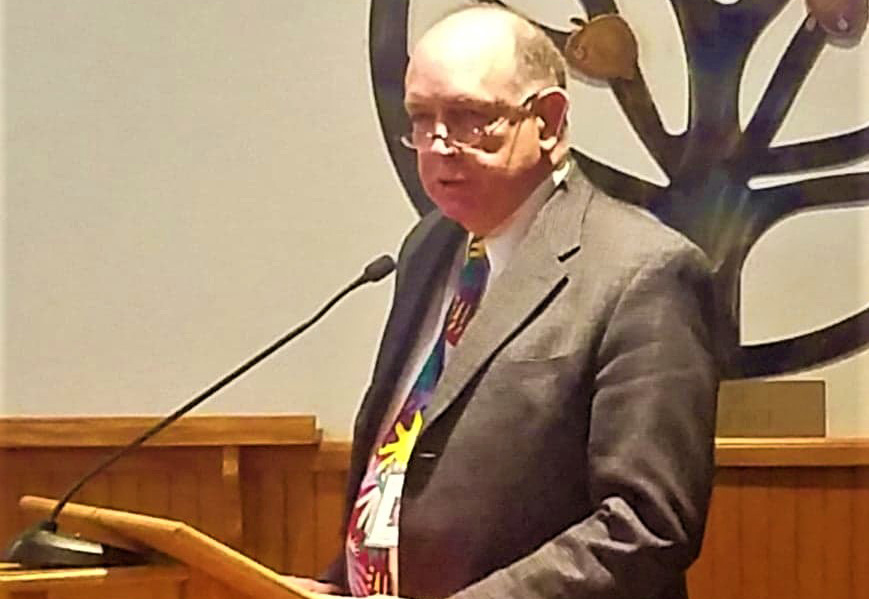
Navajo County Sheriff David Clouse was joined by County Attorney Brad Carlyon and Chief Probation Officer Jason Cash at last week’s Navajo County Board of Supervisor’s meeting. The trio has been working on a proposal for a local behavioral health treatment center and diversion program as an alternative to incarceration.
In the Navajo County Jail, 325 inmates are housed. Of those 325, it is estimated that 20 percent are facing mental health concerns that may have led to their incarceration according to Clouse.
He said, “Law enforcement is the first contact citizens have in an emergency. What we have seen in the last several years is a rise of mental health issues in our responses.”
Clouse went on to explain that law enforcement agencies across the county have steadily increased and improved their training related to how they respond to citizens suffering from various behavioral diagnoses. They are now more prepared to de-escalate situations that may be caused by a lapse in medication or an undiagnosed behavioral concern.
However, he explained, the county does not currently have any local residential treatment centers focused on helping those citizens to receive the support they need. Ultimately, the most common result is incarceration. “To send these people to jail for a mental or behavioral or medical event is not always the solution,” Clouse said.
Another reason for the need for a local treatment center is the case load placed on the county attorney’s office. According to Carlyon, “In each of my 11 years as county attorney, we have decreased attorney numbers. Part of the reason for that is the pay versus the case load. If I can’t address the issue in the criminal justice system by having an adequate number of attorneys, we need to tackle it at the other end and figure out how to reduce those caseloads.”
Carlyon continued, “Ten to 15 percent of cases that come to the county are serious and need the full attention of my prosecutors. The other 85 percent are the ones who cycle through because they have mental health or substance abuse issues. We don’t have adequate treatment in this county. Our probation department isn’t funded enough to be able to give the treatment needed so they cycle through, they get sent to prison and come back and do it all over again because the prisons don’t have adequate treatment.”
Few behavioral health services are offered locally, according to Carlyon. Those, he said, “Will treat the substance abuse, but not the criminality or the root causes, so we end up with sober criminals.”
Cost is yet another hurdle for those who need services. Carlyon said, “The only other way to get them treatment besides probation is if they have AHCCCS (Arizona Health Cost Containment System) or private insurance that covers the cost. We need to look at different ways of addressing these issues to get these people out of the system. We need to address holistically the issues that our citizens are facing. The system we have currently in Navajo County does not do that. We have to figure out how to address that void in behavioral health.”
Cash explained to the board that he currently has 500 high-risk probationers in Navajo County. The probation system does not handle misdemeanor cases, so it misses the opportunity to help seek treatment for low level criminals because of a lack of resources. “I see probationers that have a genuine desire to improve their lives. They want to get jobs, raise their children, and live happy and productive lives. Unfortunately, most of my high-risk probationers have been unsuccessful because they didn’t have the tools. They have a multitude of problems: substance abuse, distrust of authority, lack of education and negative peer influences.
“Probation has two main goals. To protect the community and to rehabilitate the offender. Incarceration is a short-term solution. If you incarcerate an offender, they will still have the same problems and will continue to commit crimes and create more victims,” said Cash.
Continuing, he stated, “Our problems lie in the responsivity. It is not because we don’t know what interventions are needed, it is because we don’t have those here and available to us. Probation really needs a behavioral health program to increase our access to professionals who are trained in targeting the needs of high-risk offenders.”
Clouse concluded, “We are doing all that we can to learn how to understand and treat these situations, but we are finding that we need more resources. We need more services to give these individuals rather than send them through the criminal justice system if we are looking for true reform and to reduce the rate at which we incarcerate.”
Carlyon asked the board to keep in mind that in the near future, this group will be coming to them for funding to release a request for proposal to bring in a behavioral health specialist to develop a business plan. “We need to work with professionals who understand what we need. We need a residential treatment program right here in our county. We think that we can provide services with no cost to the county for over 1,200 people a year.”
The presentation was informational only and no action was taken by the Board of Supervisors. District IV Supervisor Daryl Seymore said, “I will do whatever I can to support this as it moves forward. Thank you for your innovation in finding a way to help our citizens.”




