
/wp:image
wp:paragraph
/wp:paragraph
wp:paragraph
Just Google “broadband in rural America” and it is easy to see that it is a hot topic as lawmakers and leaders throughout the nation are working to bridge the digital divide, not only to increase economic development in the rural areas of the country, but also to save the historic roots for both non-tribal and tribal rural communities.
/wp:paragraph
wp:paragraph
The release of the 2018 Broadband Deployment Report by the Federal Communications Commission highlighted just how underserved rural America is. The study found that 80 percent of the 24 million American households that do not have reliable, affordable high-speed internet are in rural areas.
/wp:paragraph
wp:paragraph
On a federal level, the result was the Consolidated Appropriations Act of 2018, an ambitious initiative designed to rebuild America’s infrastructure while investing in rural America. The Act added nearly $600 million of additional funds to the coffers of the United States Department of Agriculture (USDA) to expand the rural broadband infrastructure in underserved rural areas and tribal lands.
/wp:paragraph
wp:paragraph
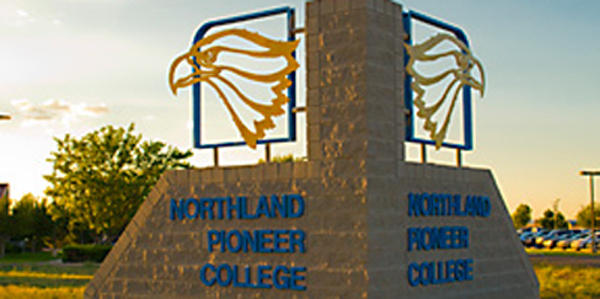
On a local level, P.J. Way, vice president and chief information officer with Northland Pioneer College (NPC), is passionate about the new businesses and new development he feels that broadband would bring to the communities in both Navajo and Apache counties.
/wp:paragraph
wp:paragraph
“We have a good, high availability work force in this county,” said Way. “We have a local community college, which services specific needs like nursing, as well as fire and police sciences. We have so much to offer new businesses with our high availability of employment, good educational systems, from our K-12 districts as well as the community college and low property tax rates compared to most of the state, which creates good value for homes; businesses should be flocking here.”
/wp:paragraph
wp:paragraph
But without a solid broadband infrastructure, businesses cannot easily sustain what they are doing. Even people from the Valley who want to live in the region and telecommute are unable to. The result is lost revenue for everyone.
/wp:paragraph
wp:paragraph
Way noted that for NPC, the idea of broadband would not only lower costs but open new avenues of service to all of their communities. Way estimates that NPC pays approximately $20 to $22 per megabytes per second (mbps) of service. “By comparison in the Valley, most community colleges are paying between 89 cents and $1.10 per mbps of service.”
/wp:paragraph
wp:paragraph
Without broadband, keeping NPC’s network viable has taken on a life of its own. Way said they have had to continually look at ways to leverage technology to improve their bandwidth consumption. “We have built our network better so that we have internal redundancies, but that doesn’t help us when the Internet Service Provider (ISP) goes down.”
/wp:paragraph
wp:paragraph
Since Way began working with NPC four years ago, the IT department has taken the bandwidth from 50 mbps to 200 mbps. “We have also become more intelligent in the way we consume our bandwidth. We have taken our consumption inside our classrooms from about eight to 10 mbps down to less than two mbps. Within that we have a higher quality of service and a higher availability. We are using 1080p (high-definition) quality in some areas, so we have leveraged the technology that is out there.”
/wp:paragraph
wp:paragraph
While building the internal network has helped NPC to stay even with the tide of technology, the current internet infrastructure in Navajo County has had little to no new development in the recent years. Mention broadband or even additional coverage in outlying areas that are struggling, and it always comes back to money.
/wp:paragraph
wp:paragraph
“I think the key is to get broadband established in the county,” said Way. “I keep hearing the chicken versus the egg thing around here. Our communities in general don’t have enough businesses to build a broadband infrastructure from a cost effective standpoint.”
/wp:paragraph
wp:paragraph
As is often the case in rural areas, technology marches on with no thought to those it has left behind, but that is where the federal programs can make a immeasurable difference to Navajo County as well as the neighboring counties.
/wp:paragraph
wp:paragraph
Starting with Navajo-Gila County Information Technology Education Consortium, a group of 51 schools and libraries in Navajo and Gila that came together to make application for E-rate funding to create a broadband network between the schools and library, to the new e-Connectivity funding being offered by the US Department of Agriculture, there is a greater chance than ever that Navajo County might be able to embrace broadband and electronic connectivity as the modern-day necessity it has become.
/wp:paragraph
wp:paragraph
The more internet service providers available, the greater the service will be. Consumers can shop for speed, quality and/or price, instead of being forced to take what is available, if there is something available. From online medical assistance to online classes and online businesses, the opportunities are literally endless.
/wp:paragraph
wp:paragraph
Way agreed that there are still a lot of unanswered questions surrounding broadband. “There is an old adage that says, if you do what you have always done, you will get what you have always gotten. If we want to change this, then we as community members need to advocate for this. We need to reach out to people of influence. Ask those in leadership what we need to do to make this happen.”
/wp:paragraph
wp:paragraph
“What I love about what I do is that I am servicing this beautiful area of people who need to stay where they are planted and have an opportunity to grow,” concluded Way. “The people here need to build their own cultures and their own societies and you can’t do that if you are leaving and not coming back. That would be a tragedy to the world. We are trying desperately to keep our facilities and develop programs for both the tribal and non-tribal communities by developing technology to help our young people stay.”
/wp:paragraph
wp:paragraph
According to a recent press release issued by the USDA, on Dec. 13, 2018, approximately $200 million for grants will be made available (applications due to USDA by April 29), as well as $200 million for loan and grant combinations (applications due May 29), and $200 million for low-interest loans (applications due by June 28).
/wp:paragraph
wp:paragraph
Projects funded through this initiative must serve communities with fewer than 20,000 people with no broadband service or where service is slower than 10 megabits per second (mbps) download and one mbps upload.
/wp:paragraph
wp:paragraph
Google USDA Community Connect Grants for more information.
/wp:paragraph