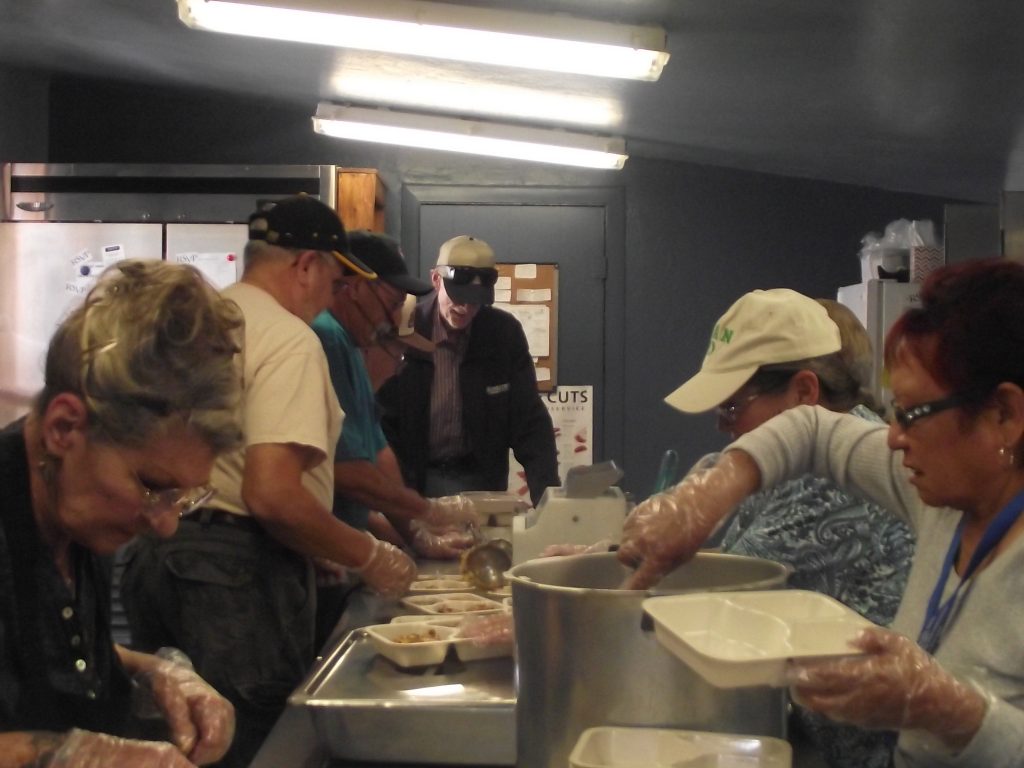
This month marks the 15th annual “March for Meals,” a month long, nationwide celebration and awareness event for Meals on Wheels.
Winslow Council on Aging’s March for Meals celebration will include “Everyone is a Champion” week March 20-24, a week that allows elected officials and the community to deliver meals to clients. This Saturday (March 25) the fifth annual one-mile march and breakfast will be held beginning at 8 a.m. Community members are invited and encouraged to participate in the march, which begins and ends at the Winslow Senior Citizens Center, 212 E. Second Street, and to enjoy breakfast, courtesy of the Council on Aging.
Those not participating in the march are welcome to have breakfast for a contribution of $5. This event has proven to be a viable fundraiser for the Meals on Wheels program in Winslow. Members of the Council will be sending self-addressed envelopes to local businesses in hopes of receiving pledges toward the cause. The community may donate in any amount by visiting the Senior Center.
The Meals on Wheels program offers many benefits to its clients. The meals provided are nutritionally sound as determined by a nutritionist, are freshly prepared daily and are delivered five days a week to between thirty-five and forty clients per day. However, upon asking both clients and volunteers what they view is the most important benefit to Meals on Wheels, each person said, “human contact,” according to Executive Director Monica Hernandez.
“The volunteer may be the only person the client sees that day,” Hernandez said, explaining the need for a cognitive volunteer base. “Together, we can keep seniors living independently, healthier at home and feeling more connected to their community as they age.”
Volunteer Beverly Jaramillo recounted a story in which she delivered a meal to a client that she saw everyday. The woman, Beverly said, “was usually very feisty. On that day, she just was not herself, I knew something was wrong.”
Jaramillo was able to convince the client to see a doctor and it was proven that she was, in fact, in poor health. Jaramillo said, “I know they took her to a hospital in Phoenix, but I am glad I saw her that day.” This situation is not an everyday occurrence by any means, but it can and does happen.
Jim Larremore, who serves as the vice president and treasurer of Winslow’s Council on Aging said, “If you’re going to do it, do it right. We don’t go in grumpy or hateful, we go in with a smile. We may be the only person that person sees that day.” The interaction offered by volunteers delivering meals can not only spot differences in physical health, but combat feelings of isolation as well.
The American Society on Aging states that something as simple as, “an uplifting conversation that introduces hope and joy into the morning may influence physical activity, healthy food selection, or the choice to engage further in proactive social relationships later in the day or week.”
Winslow Council on Aging depends heavily on grants and funding from various government agencies to provide Meals on Wheels, the largest piece coming from the Northern Arizona Council of Governments (NACOG). The Council submits a request for funding every four years, and is usually granted funding to continue.
Volunteers for the Meals on Wheels program are given background screenings and are encouraged to possess CPR and first-aid training in case they are faced with an emergency. In caring for vulnerable clients, they may be the first point of contact for seniors in need of medical attention.
Jim Larremore expressed concern for this year’s request, which is currently being prepared. “The thing is, if we lose our funding, we are still going to do Meals on Wheels, we have a few other grants and we will find ways to get the money.” One of those ways is donations from the public. The Winslow Council on Aging is always looking for volunteers, as well as contributors. For more information on how you may donate and/or participate in the March for Meals March, contact Monica Hernandez at (928) 289-3341 or visit the Winslow Senior Citizens Center, Monday through Friday, located at 212 E. Second St.